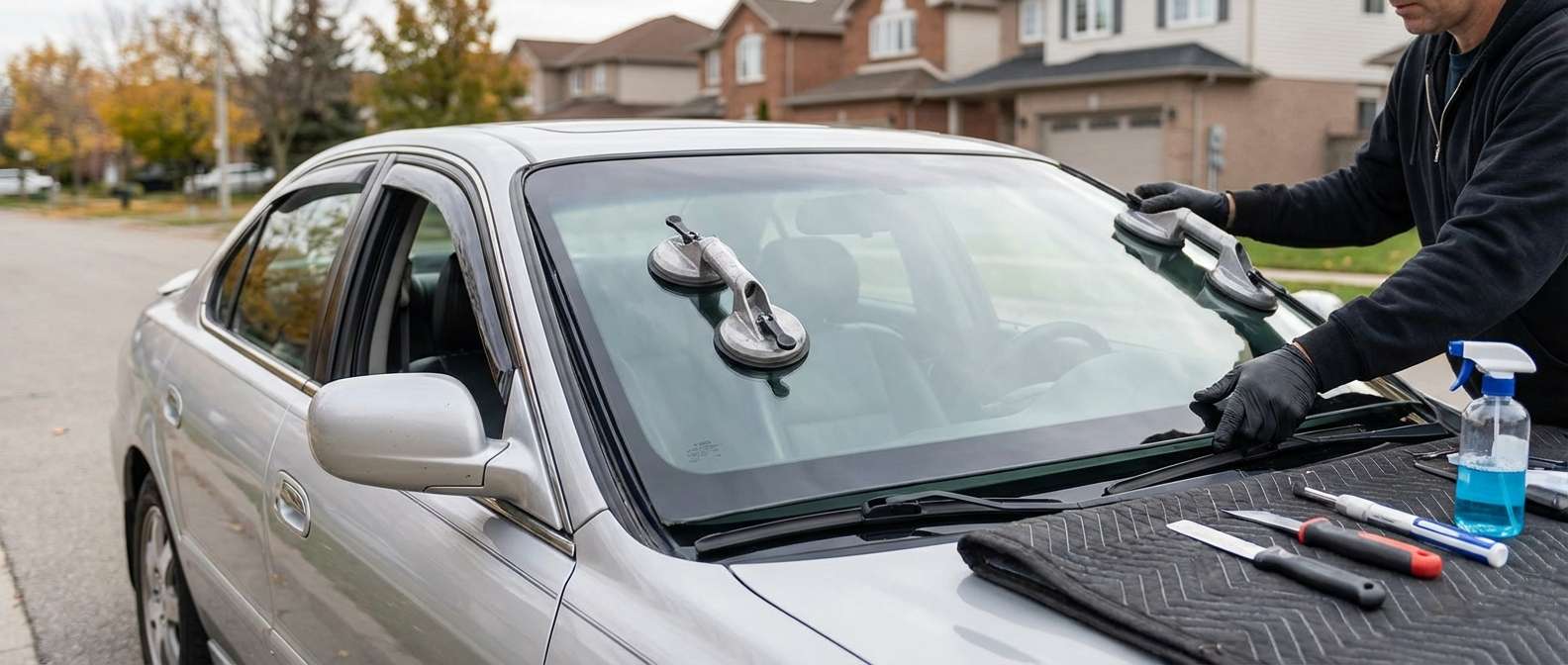
Identifying the Tint and Shade Band on Your Acura TL Glass
Matching the replacement windshield on this car comes down to reading the tint strip across the top of your existing glass and confirming your exact model year. While Honda engineered these windshields without modern electronics like rain sensors, forward-facing ADAS cameras, or lower wiper de-icer grids, they did produce subtle variations across the production run that determine whether you need NAGS part FW02106 or FW02326.
Every factory windshield originally supplied under Honda part numbers 73111-S0K-A00, 73111-S0K-A10, or 73111-S0K-305 used green solar-absorbing safety glass with an integrated rearview mirror mounting button glued to the inner face. However, the glare-reducing shade band across the top varies by interior trim and cataloging:
- Blue shade band (GBN): The glass carries a soft green body tint with a distinct dark blue gradient band across the top border. Look at your glass against an overcast sky; if the visor zone shows an ocean-blue tone, your car takes the GBN variant of FW02106.
- Green or gray shade band (GTN): Found frequently on cars with neutral cabin trims, this version uses a neutral gray-green gradient strip that blends seamlessly into the standard solar green glass body.
- The 2003 transition (FW02326): While earlier 3.2TL sedans consistently pull FW02106 listings, certain late-run 2003 models catalog under FW02326. Checking the manufacturer bug stamp etched into the lower passenger corner of your glass will tell me which NAGS benchmark matches your cabin setup.
| Windshield Code | Primary Applications | Top Shade Band | Rearview Mirror Mount |
|---|---|---|---|
| FW02106 GBN | 1999–2002 (and select 2003) | Blue Gradient | Factory Button Included |
| FW02106 GTN | 1999–2002 (and select 2003) | Green/Gray Gradient | Factory Button Included |
| FW02326 | 2003 Specific Listing | Gradient Band | Factory Button Included |
Surrounding Trim, Sunroof Drains, and Perimeter Hardware
Unlike the two-door CL coupe which uses frameless side glass, this sedan features fully framed doors that mate against fixed A-pillar architecture. The windshield itself is surrounded by a three-sided reveal molding kit (referenced in the glass trade as GGG 2106 V or WFSF2106RC). Because this upper and side rubber trim sits flush against the roofline, failing to anchor fresh perimeter damming leads to loose, whistling moldings that flap at highway speeds.
Whenever I fit an aftermarket windshield to this vehicle, I cover the glass itself against defects for one full year and stand behind my installation workmanship for as long as you own the sedan. That long-term seal is critical on these cars because the factory power sliding sunroof routes its internal front drain tubes directly down the A-pillars, sharing tight physical space with the side glass pinchweld. If an installer damages those pillar seams or misplaces the lower rubber setting blocks (OEM 73126-S0K-A00), water bypasses the pillars and pools straight onto the cabin carpet.
Cowl Fitment and Lower Edge Alignment
The bottom edge of the windshield interfaces with a two-piece plastic cowl grille that rests directly beneath the 24-inch driver and 19-inch passenger wiper arms. This plastic cowl must interlock precisely with the lower edge of the new glass and its foam barrier strip (OEM 73125-S84-A00). If the cowl clips break or the plastic is forced out of position, rain cascading off the glass bypasses the engine bay runoff channel and enters the cabin fresh-air intake, soaking the HVAC blower motor under the passenger dash.
The radio antenna on these cars is baked directly into the rear backlite rather than integrated into the windshield laminate, meaning the front glass replacement requires no electrical pigtail connections or wire routing. Preserving the car simply relies on getting the right shade band code, seating the A-pillar garnish clips without breaking the trim, and locking the cowl grille tight against the bottom frit band.


