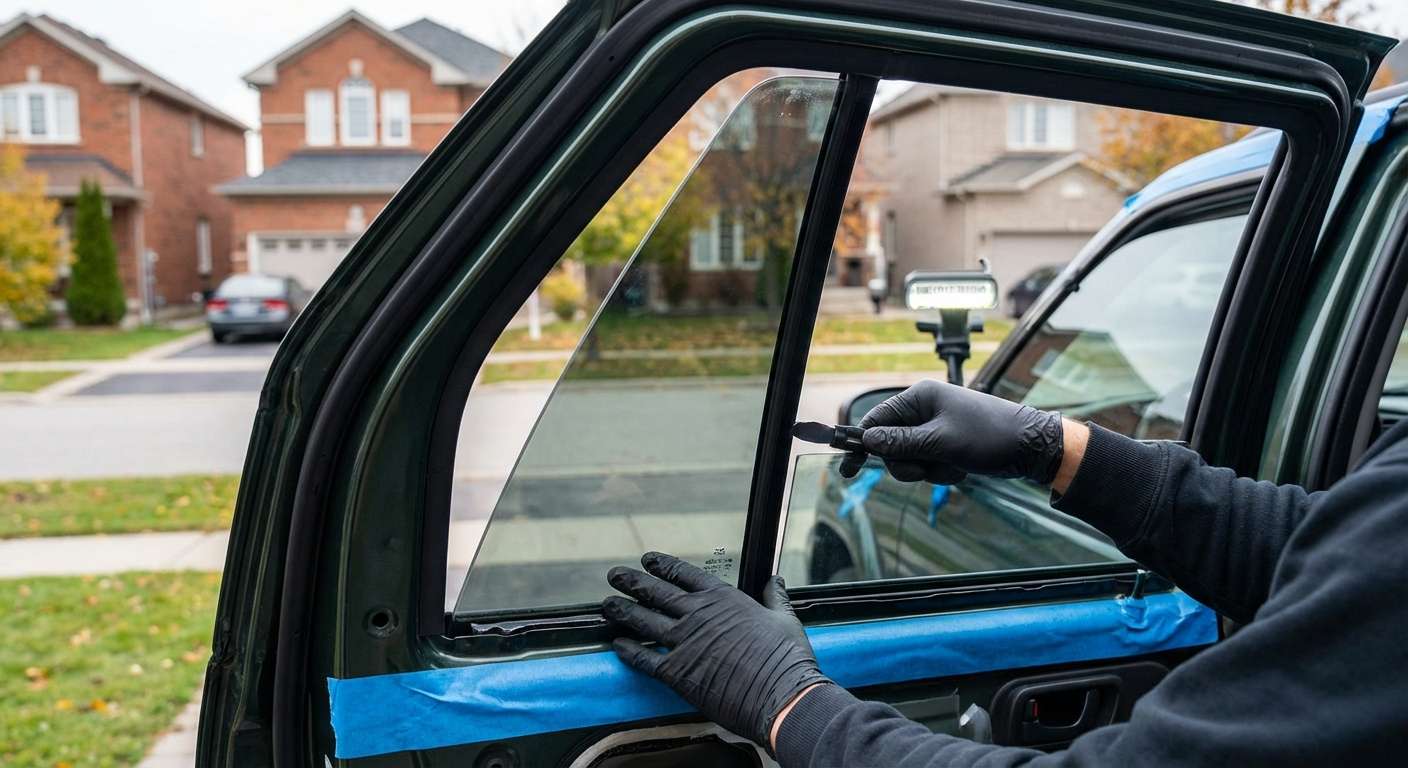
Identifying Your Rear Door Vent Glass Tint
Matching the fixed rear door vent window on your Pathfinder comes down to checking the factory tint shade against the rest of your door glass. Nissan built this stationary triangular window without any embedded radio antenna wires, defrost elements, or electronic sensors, so you only need to match the visual optical profile. Base XE trims commonly left the factory with a light, greenish solar control tint designed to block heat without significantly darkening the cabin. If your vehicle is an SE or LE trim, it almost certainly came equipped with deep factory privacy glass that looks nearly black from the outside.
To confirm what you have before ordering, hold a clean piece of white printer paper behind the opposite intact vent glass and view it in natural daylight. If the sheet maintains a visible green or clear hue, you have standard solar glass. If the paper is barely visible or heavily shaded, your vehicle uses privacy glass. Be cautious not to mistake aftermarket window film for factory privacy glass; many of these older trucks have aftermarket tint that has degraded into a purple shade or developed air bubbles over time. Since I arrive roughly an hour after you book, having this tint distinction figured out beforehand ensures I load the exact aftermarket replacement your truck requires.
Platform Variations and Division Post Hardware
The rear vent glass on the R50 platform interchanges directly with the luxury-trimmed 1997–2004 Infiniti QX4, which uses the exact same rear door architecture. However, it will never fit the full-size 2004 Pathfinder Armada, as that vehicle was built on the completely separate, larger WA60 full-size truck platform. The front doors on your Pathfinder do not utilize vent glass at all; only the rear passenger doors split the window opening into a roll-down main glass and this fixed rear triangle.
Unlike bonded glass that uses adhesive beads, this partition window is held inside the door frame by a rubber channel gasket and supported along its leading edge by a vertical metal division bar. This partition sash serves a dual role: it anchors the stationary glass while housing the vertical felt channel that guides the rear roll-down door glass up and down. Because replacement aftermarket glass comes as bare tempered glass, the original rubber channel weatherstrip must be intact and supple to prevent cabin drafts.
Post-Replacement Inspection Points
Once the rear door is reassembled with the replacement glass, check these specific areas to ensure everything operates correctly:
- Examine the wrap-around rubber channel gasket along the upper window frame to verify it is seated flat without pinched lips or gaps that invite highway wind noise.
- Cycle the main rear door window fully up and down to confirm the glass glides smoothly within the felt track inside the metal division post.
- Inspect the exterior belt molding at the bottom corner of the glass to ensure the outer weatherstrip wipe sits flush against the panel.
- Compare the light transmission of the newly installed glass against the roll-down window to confirm the solar or privacy tint matches the rest of the cabin.
- Verify that the interior door card fits tight against the moisture vapor barrier with no loose trim clips along the lower edge of the division post.


