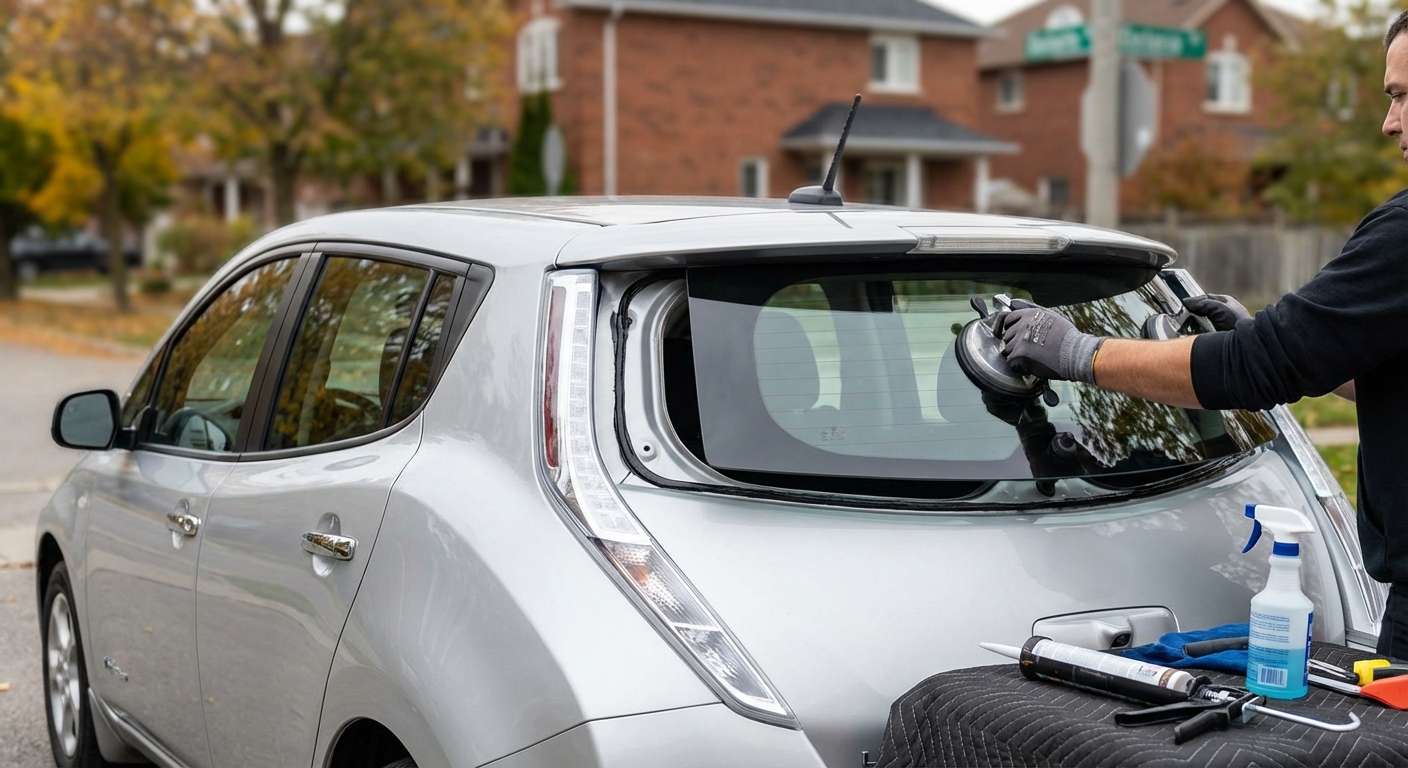
Direct Urethane Bonding and Rear Hatch Integration
The rear liftgate of this electric hatchback uses a stationary, solid tempered safety glass bonded directly to the steel frame. Every replacement panel incorporates an embedded grid of horizontal defroster lines to manage winter condensation, but the glass itself stays completely free of electronic sensors, forward-facing optics, or complex brackets. The only physical penetration through the glass is a single, factory-drilled pass-through hole positioned along the bottom border, which lets the rear window wiper spindle connect straight to the motor assembly tucked inside the hatch.
Replacing the back glass requires complete access to the inner liftgate structure. The electrical solder terminals for the defroster harness sit behind molded plastic interior surround panels that snap into the hatch framing. At the top edge, the glass tucks beneath the aerodynamic rear roof spoiler. This spoiler houses the Center High-Mount Stop Lamp (CHMSL) alongside the washer spray jet, and on SL trim models, it carries the distinctive photovoltaic solar panel dedicated to maintaining the car's 12V auxiliary lead-acid battery. Because this upper spoiler closely overhangs the glass perimeter, removing and setting the rear window requires deliberate care to avoid scratching the painted wing or pinching the 12V solar wiring run.
Trim Variations and Factory Glass Identifiers
While the overall shape and wiper cutout remained steady throughout the production run, Nissan separated rear glass options primarily by light transmittance and production year splits. Base S trims, along with certain early international configurations, shipped with standard green solar tint. Mid-level SV and high-tier SL trims received deep dark privacy glass that complements the rounded aesthetic of the tall, angular taillight housings.
Factory service data dictates that the upper and lower glass alignment spacers (such as Nissan part 90356-3NF0A or 90356-3NA0B) must be replaced whenever a broken back window is serviced, as these locating blocks compress upon initial setting and cannot be reused. I handle every replacement as a fully mobile service, travelling directly to your home or workplace across Toronto and the GTA to replace shattered rear hatch glass on site without towing delays.
| Glass Spec & Trim Style | Nissan Reference | Eurocode / NAGS Reference | Key Features |
|---|---|---|---|
| 2011–2012 Green Solar (S / Entry) | 90300-3NA0A | 6077BGSH | Clear/green tint, defroster tabs, wiper spindle hole |
| 2013–2017 Privacy Tint (SV / SL) | 90300-3NF0A | 6077BYPH / FB24800 | Dark privacy tint, integrated defroster, single wiper pass-through |
| Global / Alternate Reference | 90300-3NL0B / 90300-3NE0A | 6077 Series | Solid tempered hatch glass, direct-fit electrical spade contacts |
Protecting Hatch Components and Defroster Grid Traces
The compact cargo well of this EV places interior items very close to the steeply angled rear window. One of the most common issues on original rear screens is damaged or severed defroster lines, caused when tall boxes or luggage rub against the exposed conductive ceramic paint on the inner surface. A complete back glass replacement solves missing heating zones by providing a brand-new internal grid, restoring line-by-line defogging across the entire pane.
During the glass changeover, special attention must be paid to the rear wiper motor alignment. The rubber grommet sealing the glass pass-through prevents rainwater from seeping into the tailgate locking mechanism and latch electronics. Reassembling the hatch also involves verifying that the fluid line feeding the upper spoiler nozzle remains firmly seated, as an unclipped washer hose can drip down behind the inner trim and corrode the defroster power terminals.


