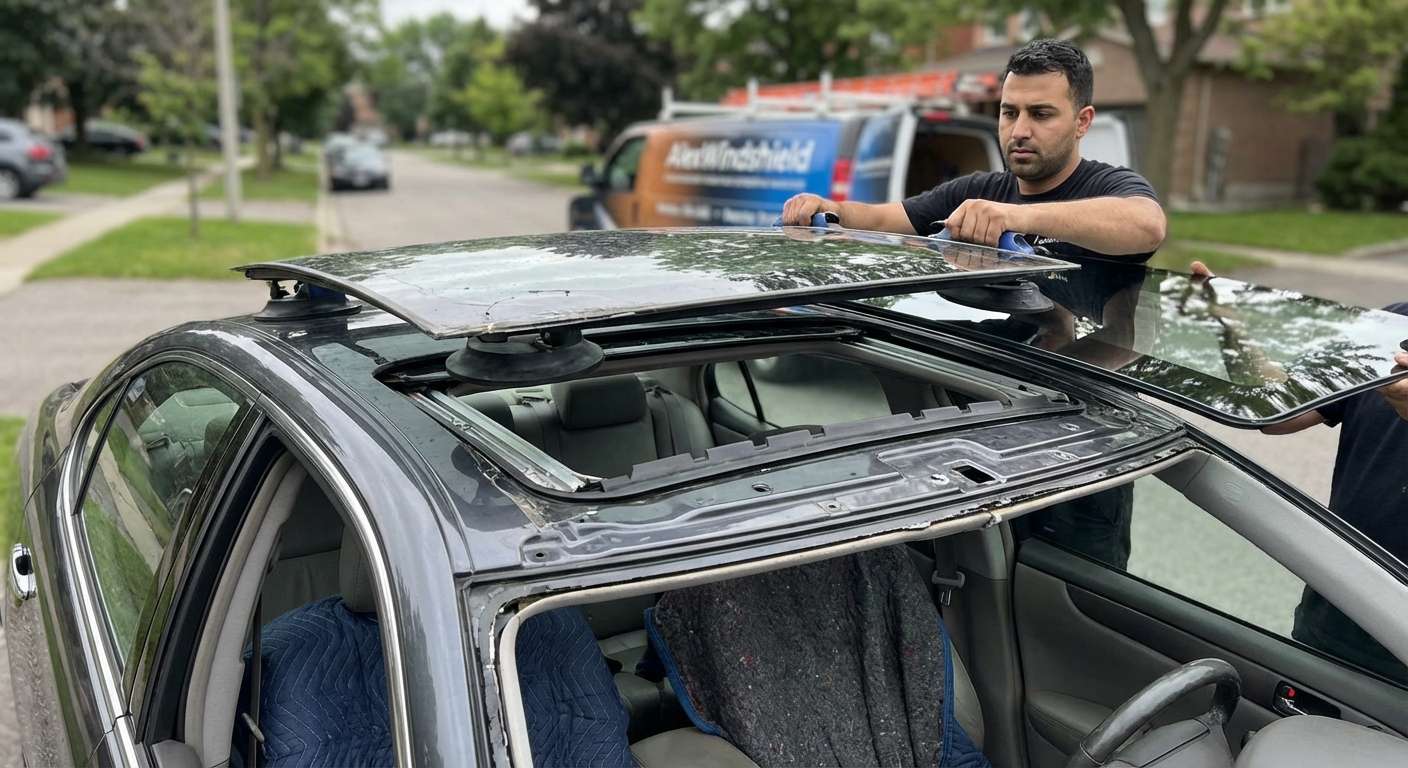
Addressing Water Ingress and Seal Failure on the XV30 Moonroof
The dark gray tempered glass fitted to this luxury sedan relies entirely on a perimeter weatherstrip that takes direct abuse from road grit and sun exposure. When owners report water accumulating in the front footwells or puddling around the overhead console switches, deteriorated rubber along the glass edge is frequently the source. The factory glass sub-assembly, originally listed under part number 63201-33090 and later superseded by 63201-33091, utilizes a wrap-around encapsulation seal matching part number 63251-30100. Over time, that rubber shrinks or hardens, letting high-pressure water from automated car washes bypass the outer edge faster than the internal drain tray can divert it. If the four drainage channels running through the A-pillars and C-pillars have picked up pine needles or silt, the backed-up water overflows the stamped metal cassette entirely.
A failing perimeter seal also introduces wind buffeting and distinct whistling above fifty miles per hour. Because the 4.0 mm nominal thickness solar-absorbing panel sits flush with the exterior roofline, even a two-millimeter drop caused by worn rubber or loose hardware disrupts airflow over the cabin. Ticking sounds or squeaks when driving over uneven asphalt usually stem from the glass shifting against the aperture frame. When I replace one of these panels, I provide a one-year warranty on the replacement glass alongside a lifetime guarantee on my workmanship, ensuring the installation stays tight, secure, and properly sealed against the elements.
Hardware Integration and Sliding Roof Mechanism
Replacing the glass on the ES 300 and ES 330 does not require dropping the vehicle headliner, because the mechanical attachment sits entirely above the passenger compartment. Lexus engineered the panel with a bonded steel mounting bracket running along both lateral edges. This perimeter frame bolts directly into the tilt-and-slide cable drive guides using four Torx shoulder bolts, arranged two per side. Accessing these fasteners involves gently unclipping the flexible accordion-style side garnish trim covers inside the vehicle while leaving the fabric sunshade—whether trimmed in charcoal, ivory, or gray—slid back inside the roof pocket.
The drive mechanism relies on a forward electric motor operating push-pull cables along side tracks. Because these assemblies feature automated jam protection and one-touch actuation, physical alignment during replacement is critical. If the replacement panel is torqued down slightly out of square, the motor senses excessive resistance along the guide rails and automatically reverses the travel or binds completely. Every replacement requires carefully leveling the four shoulder bolts to match the exact exterior sheet metal profile before the side finishers snap back over the brackets.


