Gasket or Urethane: Verifying the Freightliner M2 112 Glass Configuration
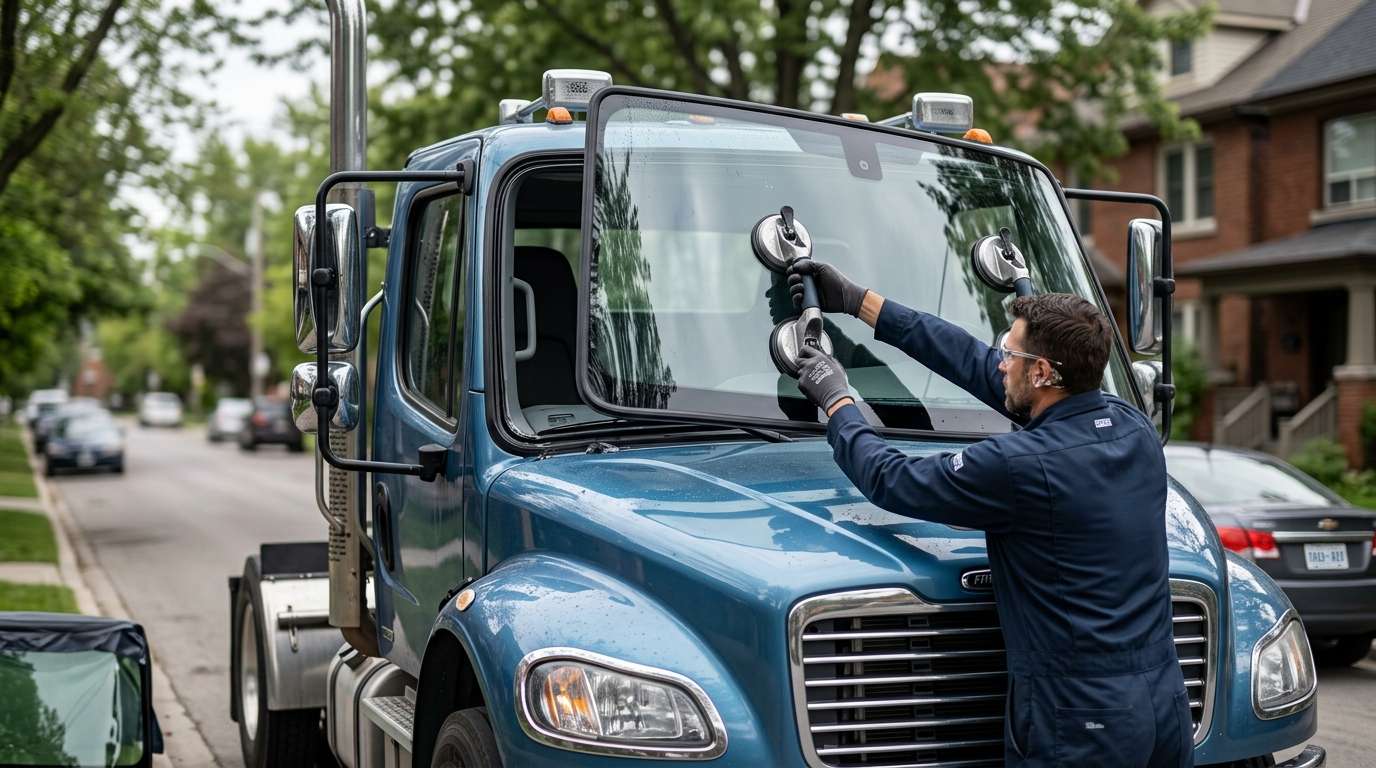
Replacing the windshield on the M2 112 requires identifying the mounting method before ordering parts, because Daimler used two distinct setups across the production run. Many vocational builds and early work trucks hold the massive 2,050 mm wide curved glass with an EPDM rubber wrap-around weatherstrip (OEM part number A18-67041-000), while direct-glazed versions bond straight to the pinchweld and require outer windshield edge trim (OEM part number A18-65735-000). Before I lay out the replacement glass, I confirm whether your cab uses that heavy rubber roped channel or a bonded urethane bead, because the glass perimeter tolerances differ between the two.
I also verify the glass tint and upper shade configuration against OEM references like A18-45300-003 and A18-68775-001. While this glass has no embedded defrosting grid—relying purely on the dash HVAC ducting—fleets order these trucks with varying solar green depths or dark upper glare bands. Because commercial trucks cannot afford extended terminal downtime, I operate entirely as a mobile service, traveling straight to your terminal, yard, or jobsite across Toronto and the GTA to replace the glass where the truck sits.
Exterior Obstructions and Cab Water Leak Origins
When an M2 112 arrives with water pooling in the footwells or dripping down the interior A-pillar trim, the windshield seal is often blamed, but the leak usually starts above the glass. The fiberglass exterior sun visor bolted to the cab roof directly above the windshield perimeter frequently leaks around its anchor bolts. Similarly, the five amber cab clearance markers and the welded cab roof seams allow rain to enter the double-walled steel structure. Water runs down the inside of the steel pillar and exits at the bottom corner of the dash, mimicking a failed windshield seal. I always inspect these upper penetrations before condemning the windshield perimeter.
The lower edge of the glass interfaces with the lower windshield dash seal (OEM part number 22-64298-000) and the stamped steel wiper cowl. This area demands close attention due to widespread issues with Trico wiper arm assemblies on these cabs—subject to NHTSA recall 23V-237 (DTNA FL926)—where stripped splines cause the heavy arms to slip or bind. If the wiper arms are not aligned correctly over the glass sweep zone upon reassembly, the linkage will score the new glass or fail entirely in heavy weather.
Driver and Fleet Post-Replacement Checklist
Once the new glass is seated in the cab, walk through these truck-specific checks before putting the vehicle back into freight service:
- Inspect the EPDM gasket (A18-67041-000) or outer reveal molding (A18-65735-000) along the upper cab header to confirm it lies completely flat without ripples under the visor brackets.
- Check the interior fit against the lower windshield dash seal (22-64298-000) to ensure the defrost airflow from the dashboard vents is not obstructed or misdirected.
- Examine the clearance between the lower glass edge and the stamped steel cowl panel to ensure no mechanical contact during cab flex.
- Operate the front wipers on wet glass to verify the splined arm hubs hold their park position firmly above the cowl without striking the A-pillar gasket.
- Check the inside A-pillar plastic trim after heavy rain or washing to verify no moisture is tracking down from the roof visor mounts or clearance lights above the glass line.


