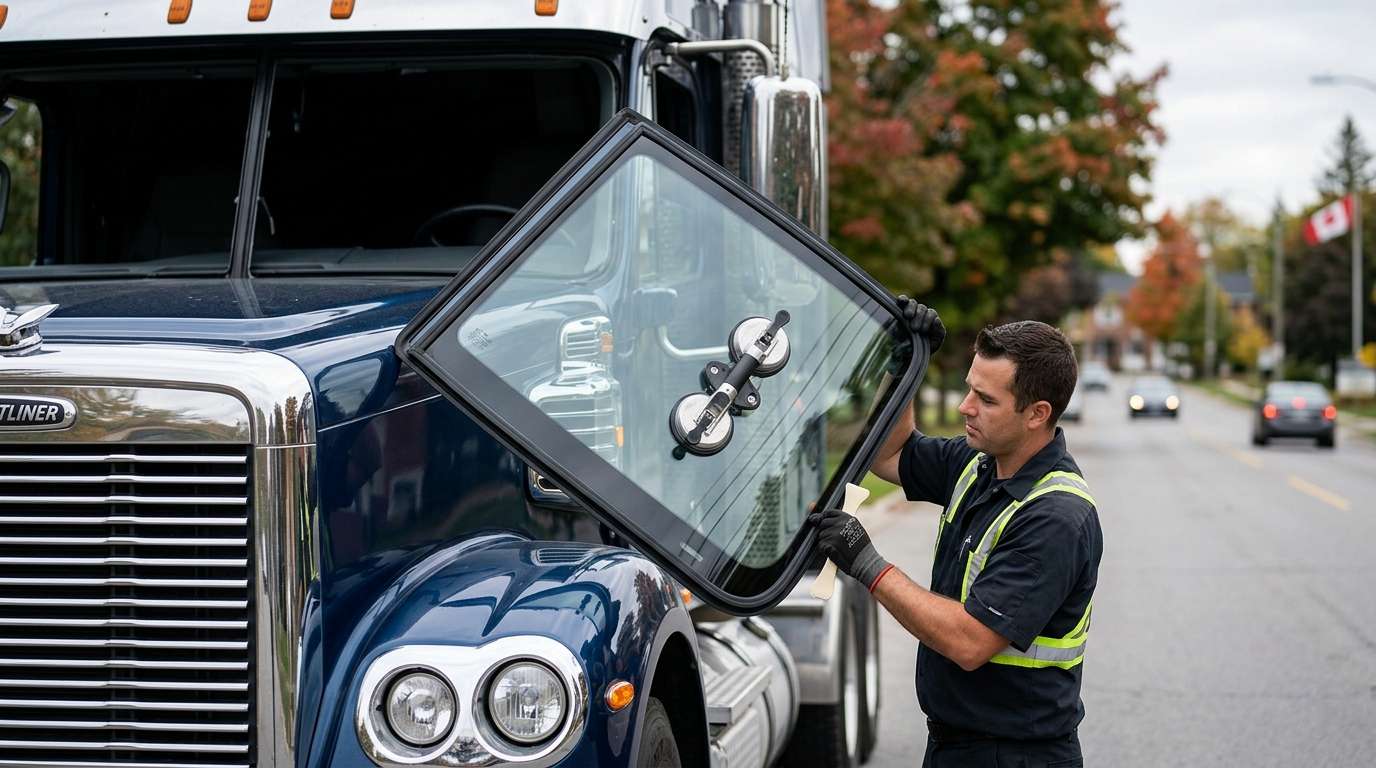
Split-Glass Layout and Part Numbers for the Century Cab Shell
Replacing the glass on this rig is different from modern highway haulers because it uses the classic split two-piece setup shared with the Century Class cab. A rock strike on the highway rarely ruins both sides at once, so you can service strictly the damaged side instead of replacing a massive single piece. The driver-side curved laminate panel runs under NAGS number DW1303, typically supplied with a green tint and an upper shade band as DW1303GBN or DW1303GTN. It crosses to the Alliance truck parts reference ABP N60B DW1303. The passenger-side pane takes NAGS number DW1302, or DW1302GBN and DW1302GTN, corresponding to Alliance number ABP N60B DW1302. Both panes are standard curved safety laminate with solar green tinting and an upper glare band, completely free of embedded rain sensors, defroster grids, or forward-facing camera brackets.
Between the two panes stands a central vertical divider bar made of aluminum or structural composite. This center post anchors the inner and outer channels of the heavy EPDM rubber weatherstrip, physically separating the left and right glass. Because the glass sits inside this rubber gasket channel rather than being glued to the cab frame with modern urethane adhesive beads, the structural load relies entirely on the grip of the gasket against the cab pinchweld aperture and that center divider.
Stopping Gasket Leaks Over Dash Wiring and CB Consoles
Drivers frequently deal with water intrusion along the upper gasket edge after miles of highway vibration and high-pressure truck washes. When the rubber seal ages and loses elasticity, rainwater slips around the perimeter lip and channels directly down onto the top-of-dash instrumentation, fuse blocks, and auxiliary wiring harnesses tucked beneath the cowl. Overhead, water can seep past the seal lip right into the upper console cubbies where drivers mount their CB radios and storage units. Whenever I install replacement glass for an owner parked at their yard or job site anywhere across Toronto and the GTA, I run a heavy bed of non-hardening sealant into the weatherstrip channels around both the cab pinchweld and the glass perimeter to permanently block those water paths.
The exterior sun visor bolted to the cab roof brow overhangs the upper windshield seam, shielding it from direct sunlight but also trapping moisture against the top seal edge. Ensuring the seal sits flat beneath that visor brow prevents standing water from working its way past the rubber corners during heavy downpours.
Clearing the Wiper Cowl and Interior Garnish Mouldings
The bottom edge of each glass panel terminates just above the painted exterior cowl panel, where the bottom-pivot wiper spindles emerge. These trucks run pantograph or radial wet-arm wipers equipped with fluid spray lines routed directly on the arms. Taking extra care around these linkages during glass work is critical, especially since these heavy assemblies have a history of linkage binding that spurred NHTSA Recall 23V-265 on various Freightliner cabs. Binding arms pull unevenly against the wet glass face and stress the pivot spindles seated below the rubber gasket line.
Inside the sleeper or day cab, the glass borders molded plastic A-pillar garnish mouldings that house the heavy-duty cab grab handles. The inner weatherstrip lip must sit flush against these pillar panels and the roof headliner trim without binding. When the EPDM gasket seats square against the cab lip, the central divider bar, and the interior garnish trim, the glass sits tight against highway wind resistance without buffeting or whistling.


