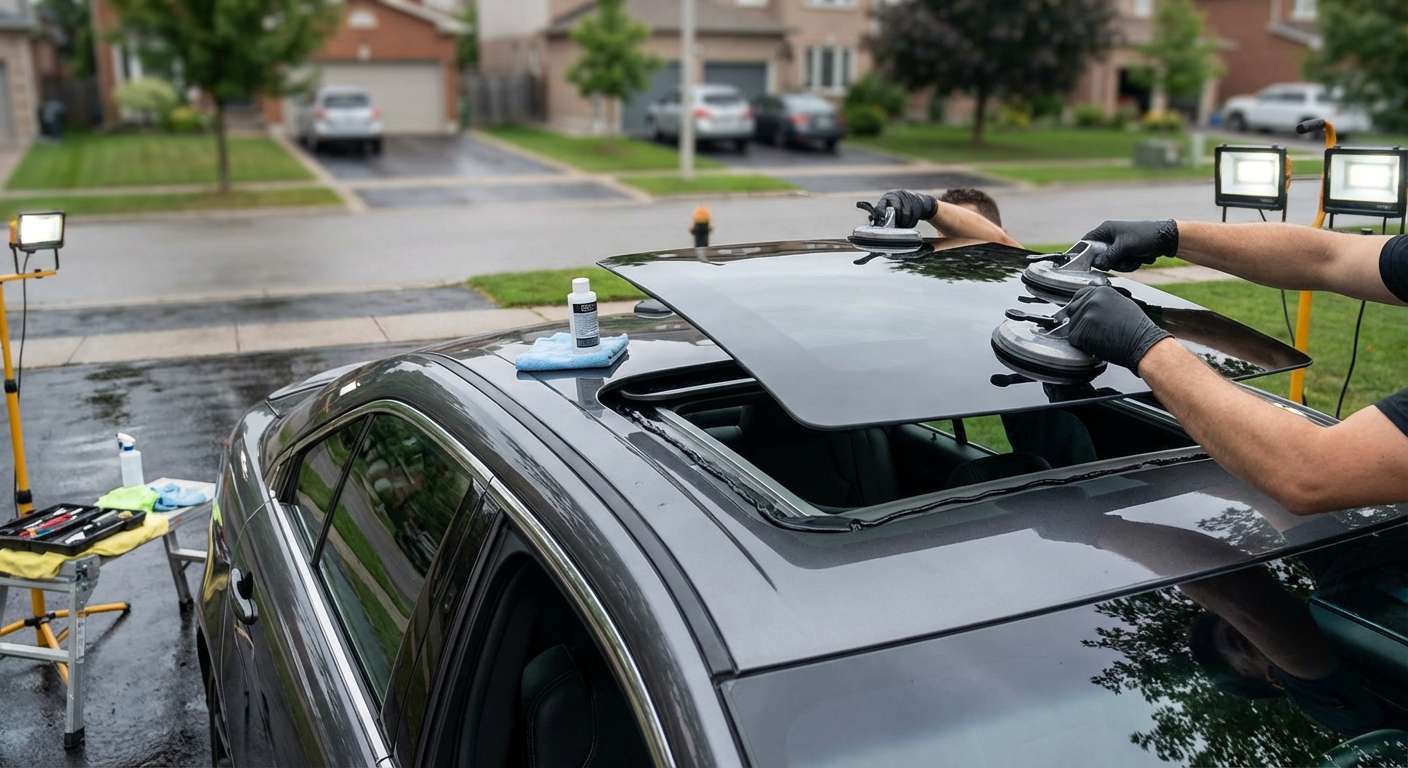
Tilt-and-Slide Glass Design on the Taurus Roof
The single-pane electric moonroof on this sedan uses a tempered glass panel with dark factory solar tint to reduce interior cabin heat. Ford engineered this panel as a modular unit with an encapsulated outer rubber seal molded directly along its perimeter edge. Unlike front windshields or rear quarter glass on this body style, the sunroof panel is entirely free of rain sensor brackets, lane-departure cameras, radio antennas, or defroster wire grids.
Mechanically, the glass mounts directly to the internal guide rail carriages rather than gluing to the roof skin. When the glass shatters from road debris or hail, the replacement does not require dropping the full interior headliner or removing the pillar garnish trims. I access the mounting points from inside the cabin by gently unclipping the flexible accordion-style rubber side bellows that mask the mechanism. Behind each bellows sit two Torx fasteners per side that lock the glass frame into the regulator guides. Once those four screws are backed out, the damaged glass lifts cleanly through the top of the roof aperture.
Trim Variations and Factory Hardware Differences
Sunroof availability varied significantly across the model run. While stripped-down fleet SE trims and the Police Interceptor Sedan typically feature a solid steel roof, civilian SEL trims offered the moonroof as an option, and the upscale Limited and twin-turbo EcoBoost SHO models frequently included it as standard equipment.
Between 2008 and 2019, Ford revised the overhead structure when transitioning from the earlier D3 platform variant to the redesigned sixth-generation body style. The glass dimensions, track spacing, and drive mechanisms are distinct between these eras:
| Model Range | OEM Glass Assembly | Drive Motor Unit | Roof Architecture |
|---|---|---|---|
| 2008–2009 | 5F9Z-74500A18-AA | 5F9Z-15790-AA | Carryover Five Hundred track layout |
| 2010–2019 | AG1Z-54500A18-A | AG1Z-15790-B (MM-1132) | Sixth-gen cassette with pop-up wind deflector |
When swapping a shattered panel at your house or office parking spot anywhere across the Greater Toronto Area, I verify the mechanical track shoes haven't jammed before securing the new glass. If a past mechanical failure caused the motor to skip teeth on the drive cables, the new panel will sit unevenly against the roofline.
Addressing Water Leaks and Track Component Clearance
Installing replacement glass also requires setting the correct physical height against the exterior sheet metal. The pre-bonded rubber gasket must compress evenly along the perimeter of the roof cutout. If the glass sits too low, water bypasses the outer barrier in volume; if set too high, excessive wind noise and highway buffeting develop over the leading edge.
Underneath the glass, the sunroof cassette relies on a catch tray to handle incidental moisture, paired with several peripheral components that must clear the panel during travel:
- Corner Drain Tubes: Four flexible drain hoses route down the A-pillars and C-pillars. If pine needles or debris plug the front lines, water overflows into the headliner around the overhead map lights and pools under the carpet.
- Spring-Loaded Wind Deflector: Positioned along the leading edge of the cassette, this mesh-and-plastic bar must pivot downward smoothly as the glass slides forward into the closed position.
- Interior Sunshade: A rigid, fabric-wrapped shade slides horizontally on lower internal channels independent of the panel; bent upper brackets can gouge the shade handle.
- Plastic Guide Shoes: Brittle plastic sliders within the metal rails can crack under load, causing the roof to tilt sideways or make loud clicking noises if forced shut against misalignment.
Aligning the replacement panel flush with the surrounding roof skin ensures the perimeter gasket seals properly against weather, protecting the interior fabrics and overhead motor electronics from water intrusion.


