Identifying Your Explorer Cargo Glass and Antenna Grid
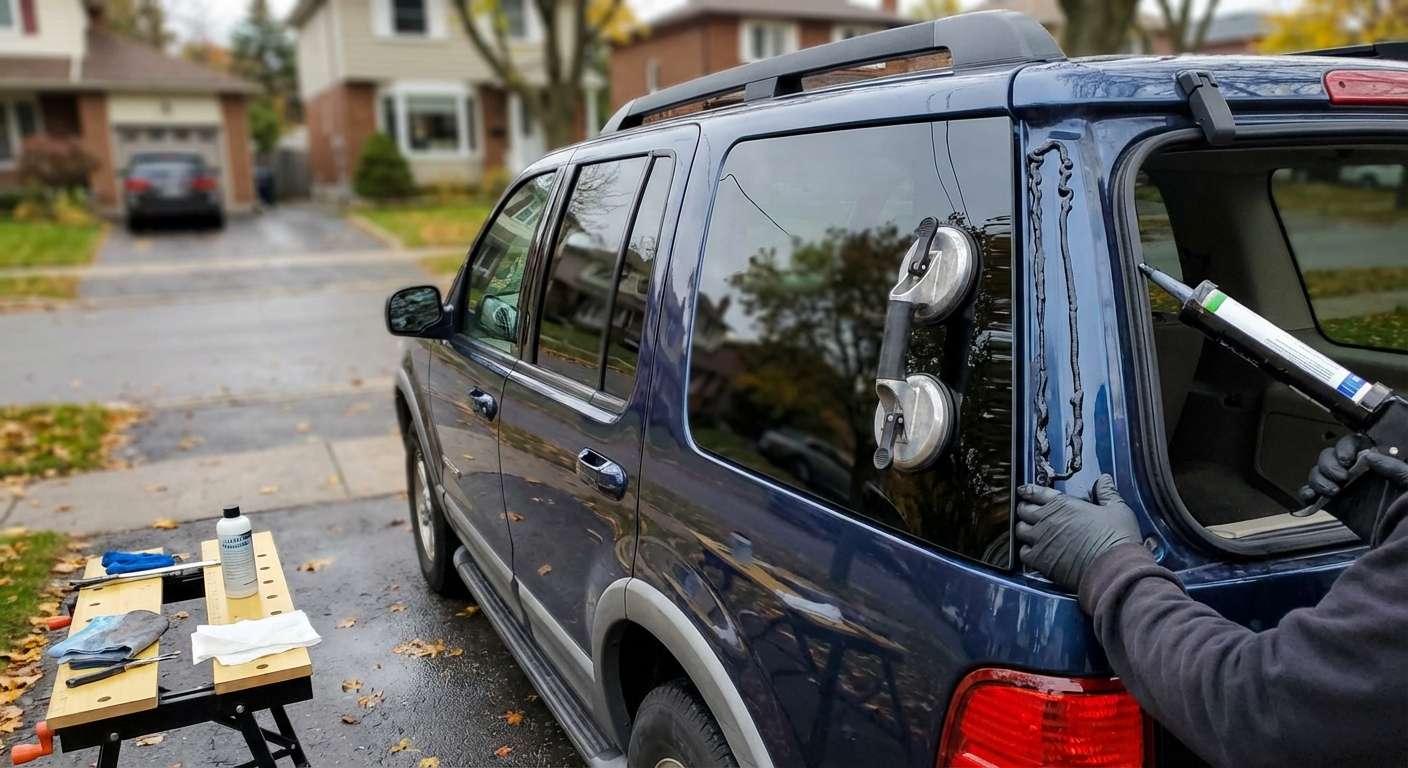
When the stationary side window behind the rear passenger door breaks, identifying the exact replacement part comes down to your trim line and electronics. The side cargo glass on this SUV sits securely framed between the structural C-pillar and D-pillar, tucked neatly beneath the outer roof rail channel. Unlike the infamous liftgate hatch window on these trucks—which hinges open separately and suffered notorious cracking issues around the wiper motor—the quarter glass is completely stationary and comes from the manufacturer as an encapsulated unit with a pre-bonded black outer perimeter moulding.
Replacing the driver-side glass typically calls for NAGS part DQ09878 (specifically DQ09878 YPY for dark privacy tint), corresponding to Ford base callout 7829701 (such as 1L2Z-7829701-AA). The passenger side, Ford base number 7829700, frequently presents an extra detail: an embedded wire radio antenna integrated right into the glass matrix. If your Eddie Bauer or Limited came factory-equipped with this side-glass aerial, matching that passenger-side grid is vital to keeping clear AM/FM reception without adding aftermarket antennas to your fender.
| Glass Position | OEM Base Callout | Key Glass Features |
|---|---|---|
| Driver Side (LH) | 7829701 | Encapsulated trim, factory dark privacy tint |
| Passenger Side (RH) | 7829700 | Encapsulated trim, factory privacy tint, optional embedded radio antenna grid |
Body Style Differences and Mid-Cycle Mounting Changes
Fitment errors happen most often when mixing up the different body styles built in the early 2000s. The quarter units discussed here fit standard four-door Explorer models along with the sister Mercury Mountaineer. They will not fit the two-door Explorer Sport or the Explorer Sport Trac truck bed cabin, both of which share front-end sheet metal but utilize entirely incompatible cabin lengths and quarter apertures.
There is also an internal split in how Ford secured this glass over its four-year run. When you confirm your booking, I usually arrive at your location within about an hour to get the fractured unit cleaned out and replaced. Early 2002 and 2003 builds often relied on integrated threaded mounting studs that passed straight through the sheet metal pillars to receive interior nuts, while 2004 and 2005 production shifted away from mechanical studs to a purely bonded installation. Reaching these anchoring areas or cleanly clearing out broken remnants requires disassembling the interior cargo trim, pulling loose the upper C-pillar molding, the rear D-pillar garnish, and unclipping the massive lower load-floor side panel.
Eliminating Cabin Whistles and Trunk Water Leaks
The cargo area in these trucks is notorious for trapping moisture if the quarter perimeter fails. Because the encapsulated black reveal moulding serves as both a cosmetic transition to the exterior paint and the primary barrier against the elements, any gap between the pinchweld and the outer edge creates an immediate vulnerability. Water seeping past a damaged quarter seal trickles straight down behind the interior plastic trim, soaking into the rear carpeting, pooling in the spare tire well, or corroding rear wiring harnesses tucked away in the trunk walls. A proper seal ensures the cabin remains dry and stops the high-pitched highway wind whistling common along the C-pillar seam.


