Electric Powertrain Acoustics and Nissan Leaf Door Glass Structure
Because the ZE1 platform lacks internal combustion noise to mask ambient sounds, cabin quietness in this EV relies heavily on the sealing around its fully framed door windows. Both the front doors (using OEM glass 80300-5SF0A on the right and 80301-5SF0A on the left) and the rear doors feature single-pane tempered safety glass with green solar-absorbing tint. Nissan chose not to use acoustic laminated glass or embedded defroster grids on these side windows across the S, SV, SL, and SV Plus trims, which means proper glass alignment inside the perimeter frame is critical. Any minor gap or misaligned run channel instantly translates into wind rustle along the B-pillar at highway speeds.
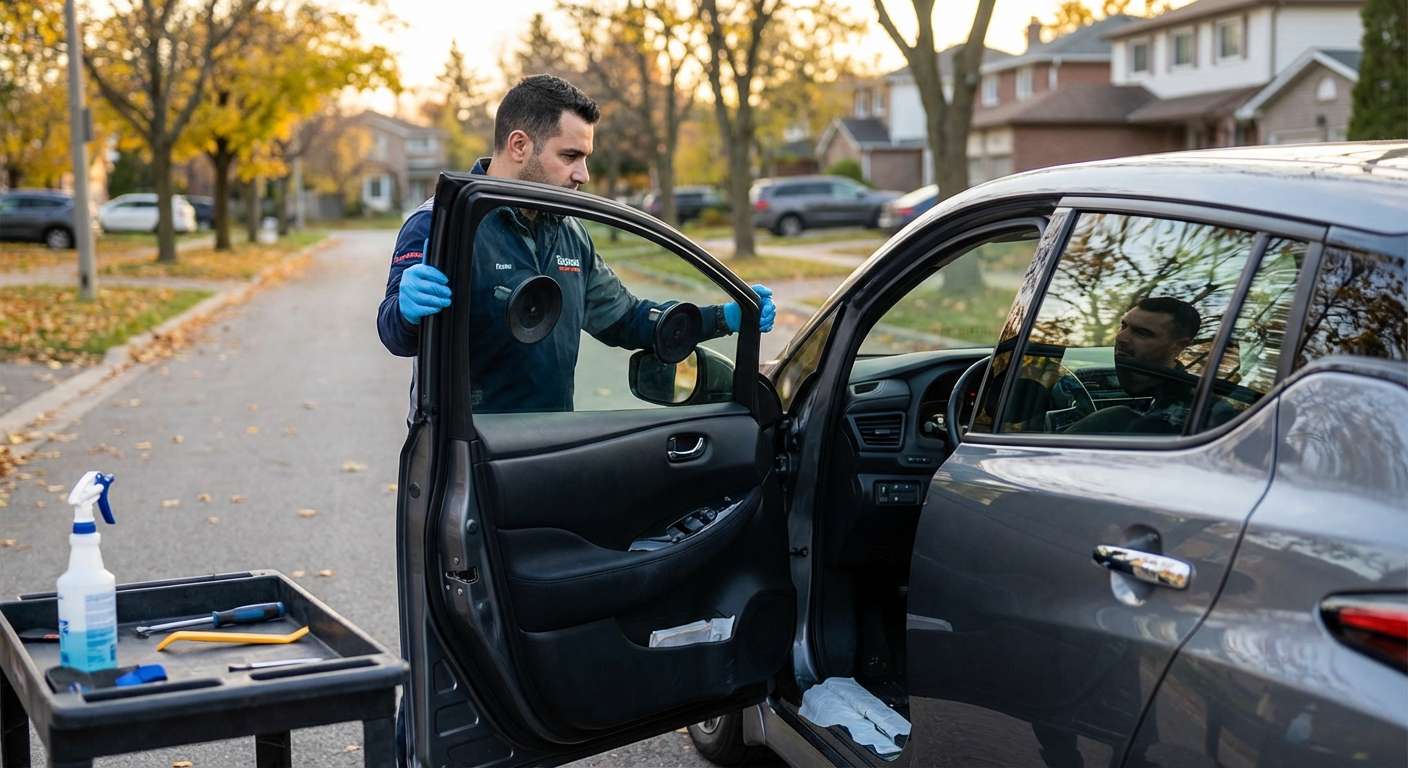
The roll-down mechanism itself relies on bolt-through glass sash brackets anchored directly into a single-rail, cable-driven power window regulator. When I travel directly to a client's driveway or office parking spot anywhere across Toronto and the GTA to replace side glass, dealing with the interior door cavity requires meticulous handling of the vapor barrier and the electrical harness connections. The rear doors introduce an extra mechanical element: a vertical division bar separating the movable glass pane (OEM 82300-3NF1A for the right rear) from the stationary rear quarter vent glass. If the movable glass is not seated squarely within that channel guide, the motor can strain against the frame.
Run Channel Seating and Mechanical Window Quirks
A frequent issue reported by Leaf owners involves side window chatter or glass rattling when a window is lowered an inch or two over uneven pavement. This almost always traces back to play inside the molded rubber run channels—specifically parts 80330-5SF0A and 80331-5SF0A on the front doors, or 82330-3NA0A on the rear. When replacing broken or scratched side glass, the new panel must sit parallel within these rubber guides to avoid excessive drag on the power window motor (such as rear motor unit 82730-3NF0A).
| Door Position | OEM Reference | Glass Specification | Key Structural Border |
|---|---|---|---|
| Front Right / Passenger | 80300-5SF0A | Tempered Solar Green | Perimeter run channel 80330-5SF0A |
| Front Left / Driver | 80301-5SF0A | Tempered Solar Green | Perimeter run channel 80331-5SF0A |
| Rear Right / Passenger | 82300-3NF1A | Tempered Solar Green | Division bar & channel 82330-3NA0A |
Binding inside these tight rubber channels can also confuse the anti-pinch sensor built into the driver's master power switch. If the glass meets resistance from an uneven run channel on its path upward, the regulator interprets the friction as an obstruction and automatically bounces the glass back down. Ensuring the sash bracket fasteners are centered while the glass sits fully home in its upper frame prevents this false trigger entirely.
Post-Replacement Inspection Checklist for Leaf Owners
- Inspect the green solar tint hue to confirm it visually matches the surrounding original factory side glass.
- Cycle the window fully upward and inspect the top perimeter frame to ensure the glass edge tucks evenly into the rubber channel from front to back.
- Test the one-touch auto-up function on the driver door switch to confirm the pane seals without reversing unexpectedly.
- Lower the window midway and gently tap the door trim to confirm there is no excess lateral play or rattling inside the sash mounts.
- Examine the vertical rear division bar to ensure the rear movable glass travels smoothly without catching on the stationary quarter seal.
- Take a brief test drive at road speed with the audio system off to verify there is no air hiss or draft entering along the top run channel.


