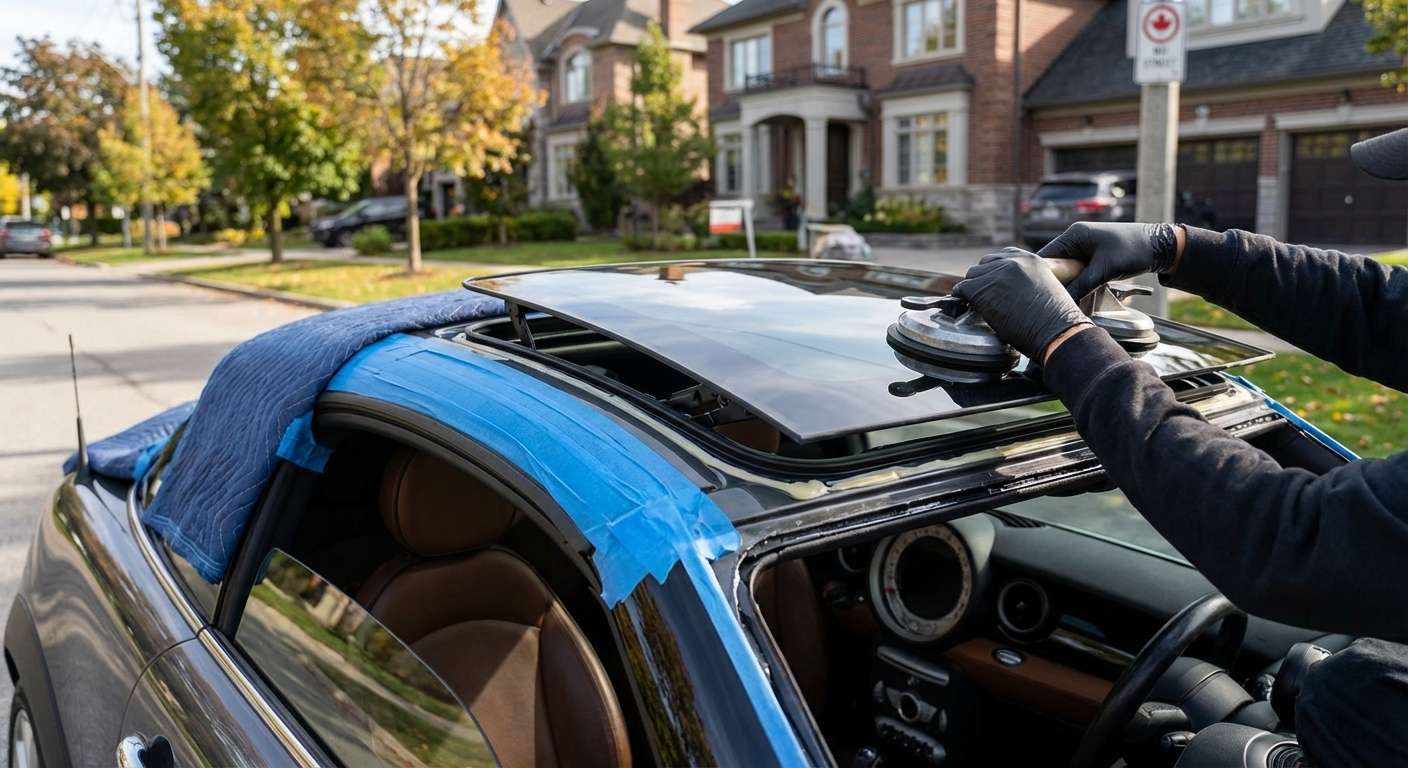
Understanding the Soft-Top Architecture on the MINI Roadster
If you are searching for a replacement overhead sunroof on this two-seater, the first thing I clarify is that this vehicle never left the factory with a sliding glass sunroof or moonroof option. While the R56 hardtop models utilize panoramic overhead glass (such as OEM 54107355231 or 54107355233) and the four-seater R57 convertible features an intermediate sliding fabric "sunroof mode," the R59 canopy is fundamentally different. It uses a single-purpose folding canvas soft top that operates strictly all-the-way open or all-the-way closed, whether your car has the base manual latch or the semi-automatic electric-hydraulic package on the Cooper S and John Cooper Works editions.
Because there is no overhead aperture, there is no NAGS or factory part number for roof glass on this car. When an owner calls me regarding broken glass or severe leaks in the overhead assembly, the issue almost universally stems from either the front windshield header seal, the frameless side window gaskets, or the heated rear window that is bonded directly into the convertible fabric.
Addressing Roof-Level Water Leaks and Bonded Rear Window Separation
The only piece of glass integrated into the fabric roof structure is the rear window, which features an embedded defroster grid and factory edge encapsulation. Unlike traditional glass set into metal pinchwelds, this unit is vulcanized or bonded straight into the canvas surround. Over time, road vibration and the tension of folding the canopy into the rear deck well cause the lower bond line to fail, leading to glass sagging and severe water ingress into the cabin floorpans behind the two seats.
Whenever an owner contacts me with glass concerns on this vehicle, I typically head out directly, aiming to reach your driveway within about an hour of the call so we can inspect the issue before water damages the underlying electrical modules. If your car has sustained damage near the roofline, I examine how the surrounding seals mate against the remaining glass surfaces. A damaged windshield top edge or failing upper seal will allow rainwater to bypass the header rail, pooling above the sun visors and mimicking a leaking overhead roof panel.
What to Verify After Glass and Header Seal Service
When service has been completed on the front windshield header or the rear window area of your folding soft top, you should perform a detailed physical check before driving.
- Inspect the contact line along the front windshield header seal to confirm the top fabric frame latches down evenly with no gaps or puckered rubber.
- Cycle both frameless door windows upward while the top is closed to ensure the top edges tuck completely into the roof side rails without pinching the weatherstripping.
- Examine the bonded perimeter of the rear heated window to verify the glass remains flush against the canvas edge without any visible adhesive gaps or lifted corners.
- Turn on the rear defroster switch on the center stack to confirm current flows across all integrated heating elements on the back glass.
- Release the center header latch and fold the canopy entirely back into the storage recess behind the headrests, checking that the rear glass folds cleanly without catching on the deck lid gasket.
Paying attention to these structural components ensures the weather integrity of your roadster remains sound, preventing interior moisture issues without relying on non-existent roof glass hardware.


