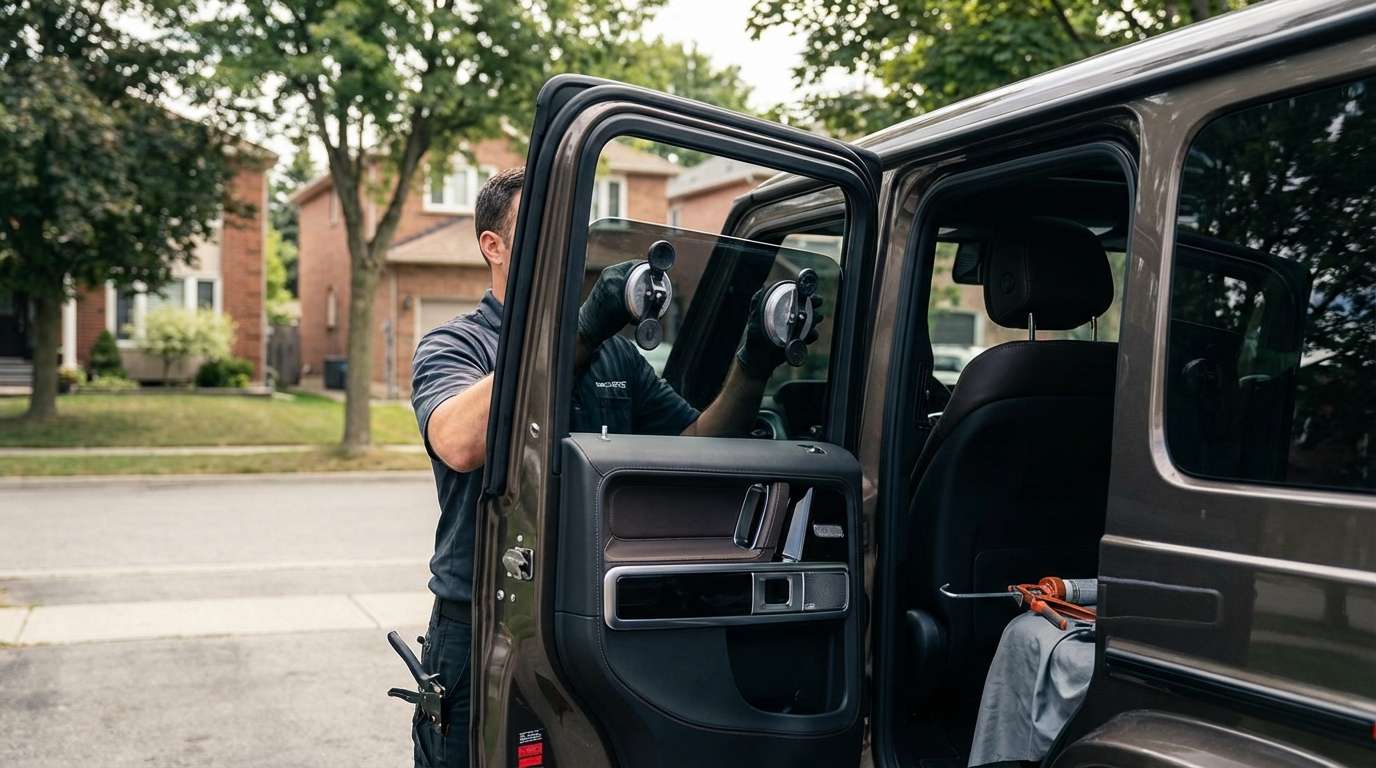
Why Catalog Listings Call It Vent Glass When Your Doors Have None
If you are looking for a broken side pane on your G-Wagon, the first surprise is usually the catalog nomenclature. Auto glass ordering databases frequently list parts for this vehicle under "vent glass," even though the side doors use a single, solid pane of drop glass that rolls directly into the door frame without any division bar or front triangular vent window. What these listings are actually referencing is the stationary side cargo glass set between the C-pillar and D-pillar in the rear luggage compartment.
Older pre-2019 models mounted those rear panes using traditional exterior rubber pull-in weatherstrips. On the redesigned W463A body, these rear quarter units are direct-glazed, bonded flush to the steel aperture using urethane. Just behind the rear edge of this glass on the exterior D-pillar sits the vehicle's functional cabin air extractor grille, which equalizes interior air pressure whenever the mechanical push-button doors are slammed shut. Getting the correct piece requires deciphering the exact equipment codes built into your specific build rather than relying on generic body diagrams.
Identifying Acoustic Glass and Tint Options on the Rear Cargo Panes
Mercedes-Benz produced several glass configurations for this rear aperture, and putting in the wrong unit will leave your cabin noticeably louder or create an obvious shade mismatch against the rear door drop glass. When I inspect your vehicle, I look for three specific build variations:
- Option Code 840 (Dark Tinted Privacy Glass): Deep factory pigment infused directly into the rear side cargo glass. Without this option, the glass carries a standard clear-to-light-green factory appearance.
- Option Code 851 (Acoustic and Heat-Insulating Glass): Laminated construction that sandwiches a sound-dampening acoustic PVB layer between two separate sheets of glass. If your G 550 or G 63 AMG has this option, replacing it with non-laminated tempered glass leads to immediate cabin booming and wind buffeting at highway speeds. You can confirm this on your vehicle by looking at the glass bug (the manufacturer stamp in the corner) for the Roman numeral "XI" or the word "Acoustic / Laminated," or by rolling down a front door window to check whether the top edge reveals two distinct glass layers bonded together.
- Embedded Antenna Grids: These rear cargo panels house delicate printed diversity antenna grids baked onto the inner glass surface for AM/FM reception and telematics. They connect straight into sensitive signal amplifiers buried behind the interior luggage compartment linings.
I stand behind my installations on these rugged trucks by backing my workmanship for the lifetime of your ownership, alongside a one-year defect warranty on the aftermarket glass panel itself.
Post-Installation Inspection Checklist for G-Wagon Owners
Because the rear cargo glass sits directly alongside heavy interior upholstery and exterior pressure-relief channels, you should take a few minutes to inspect specific areas once the replacement is completed:
- Radio Reception and Signal Clarity: Tune through your standard AM and FM stations to ensure the diversity antenna terminals were properly reconnected to the onboard amplifier harness beneath the C-pillar lining without signal dropouts.
- Flush Fitment to the Outer Body Line: Verify that the replacement panel sits evenly flush along its entire perimeter against the exterior quarter panel, ensuring the glass does not protrude beyond the body line near the D-pillar air extractor vents.
- C-Pillar and Luggage Area Trim Reassembly: Check that the interior cargo side panels, seatbelt guide covers, and upper pillar linings fit tightly into their factory mounting clips without gaps, rattles, or loose edges.
- Exterior Seal Gap Consistency: Examine the tight gap between the glass edge and the painted bodywork to confirm an even border all the way around the perimeter with no exposed internal adhesive or damaged paint.


