Off-Road Grit and Upright Glass Vulnerabilities on the W463A
The completely vertical side profile of the redesigned G-Wagon exposes its side windows to mechanical stresses unlike those on sloped, aerodynamic SUVs. Because the doors on the G550, AMG G63, and the electric G580 close into rigid, stamped steel frames with zero slope, stones thrown up from wide front tires strike the front door panes at direct, blunt angles rather than deflecting away. Beyond gravel impacts on the trail or highway, off-road silt presents an ongoing hazard to the glass operating system. Grit packs directly into the tight vertical rubber felt run channels, grinding deep vertical scratches into the glass surface during normal window travel and placing intense drag on the electronic cable-and-rail regulator.
Acoustic thickness variations add another layer of complexity. Vehicles equipped with the Acoustic Comfort Package use double-pane laminated safety glass with a noise-dampening interlayer on the front doors, whereas non-acoustic variants rely on single-pane tempered panels with standard green solar tint. If an aftermarket replacement pane does not strictly replicate the original laminate profile, the increased glass thickness causes the motor to bind inside the heavy-duty run channel. I stand behind every pane I install with a one-year defect warranty, pairing it with a lifetime guarantee on my own installation workmanship so the regulator travels cleanly without binding. When matching replacement glass for the rear doors, such as rear left pane A4637305502, the pane must also seat squarely against the vertical division bar that separates the drop window from the fixed rear quarter glass.
Addressing Wind Buffeting and Weatherstrip Compression
The upright, slab-sided body produces distinct aerodynamic pressure pockets along the side glass at highway speeds. Owners often notice an air hiss or buffeting along the top window frame if the glass does not engage the upper channel with precise clamping force. The window regulator must lift the pane firmly into the top weatherstrip header without cocking forward or lagging behind the B-pillar guide rail.
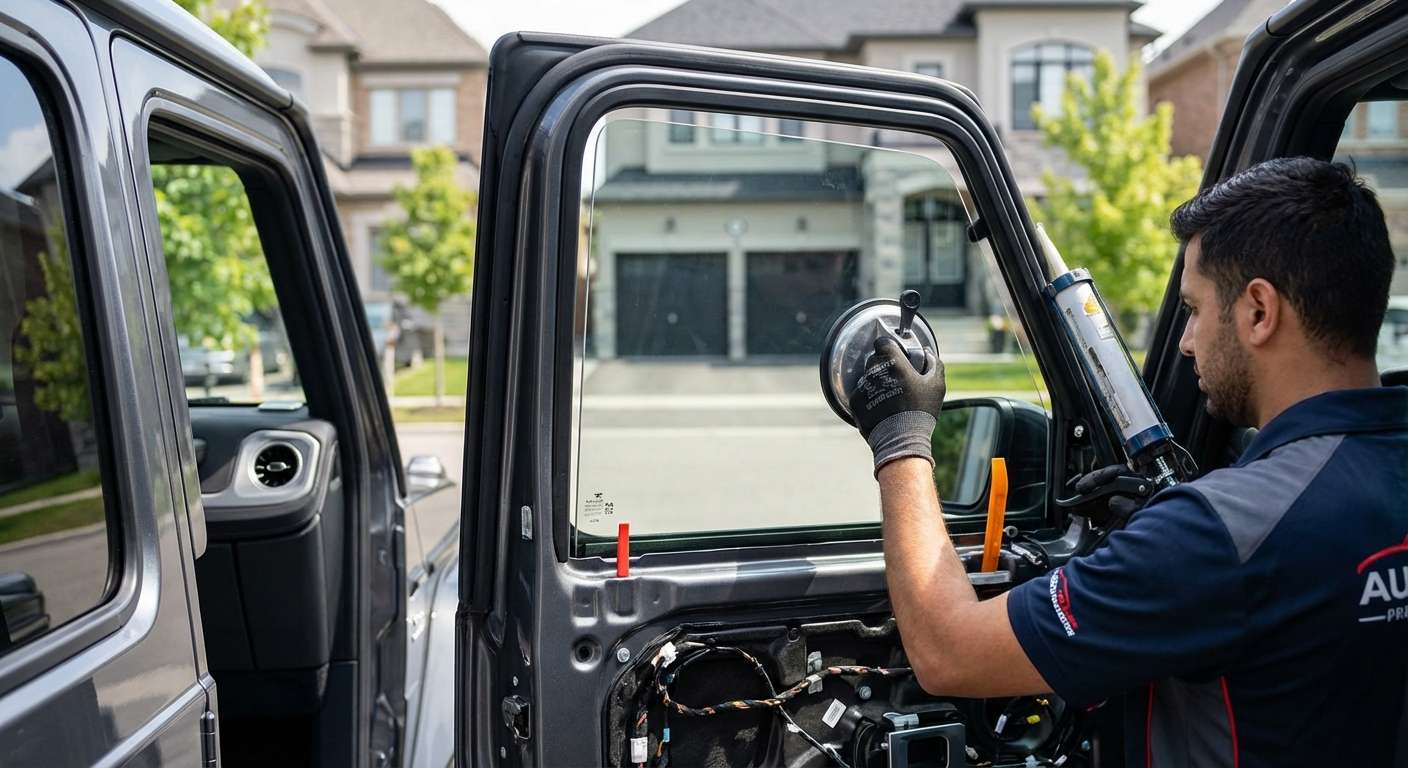
Replacing broken or scored glass requires resetting the bottom clamping brackets within the door cavity and confirming that the inner and outer beltline moulding weatherstrips exert equal horizontal pressure on both sides of the glass sheet. If the glass sits even a few millimetres off-camber, the slab glass creates an air gap at the roofline edge, amplifying wind buffeting across the exterior mirror housing.
Post-Replacement Inspection Checklist for G-Class Owners
Once the side glass is replaced and the door trim is reassembled, verify the operation of the window against the specific tolerances of the W463A door assembly:
- Inspect the travel speed of the pane from fully dropped to fully seated; the regulator motor should run at a steady pitch without slowing down near the top frame.
- Check the vertical run channel felt for smooth seating, ensuring the edge of the glass does not roll or pinch the rubber lip inwards as it ascends.
- Verify the horizontal seal along the exterior beltline moulding to make sure no gaps remain between the rubber wipe and the face of the glass.
- Ensure the glass tint matches factory specifications, confirming green solar-control transparency for the front doors or deep factory privacy tint for the rear passenger windows.
- On rear doors, check the clearance against the vertical division bar to ensure the pane glides past the stationary quarter glass without shuddering or scuffing the felt.
- Conduct a brief highway-speed test to verify that the top edge of the pane seals tightly against the upper rubber channel without generating a whistling draft or high-speed air hiss.


