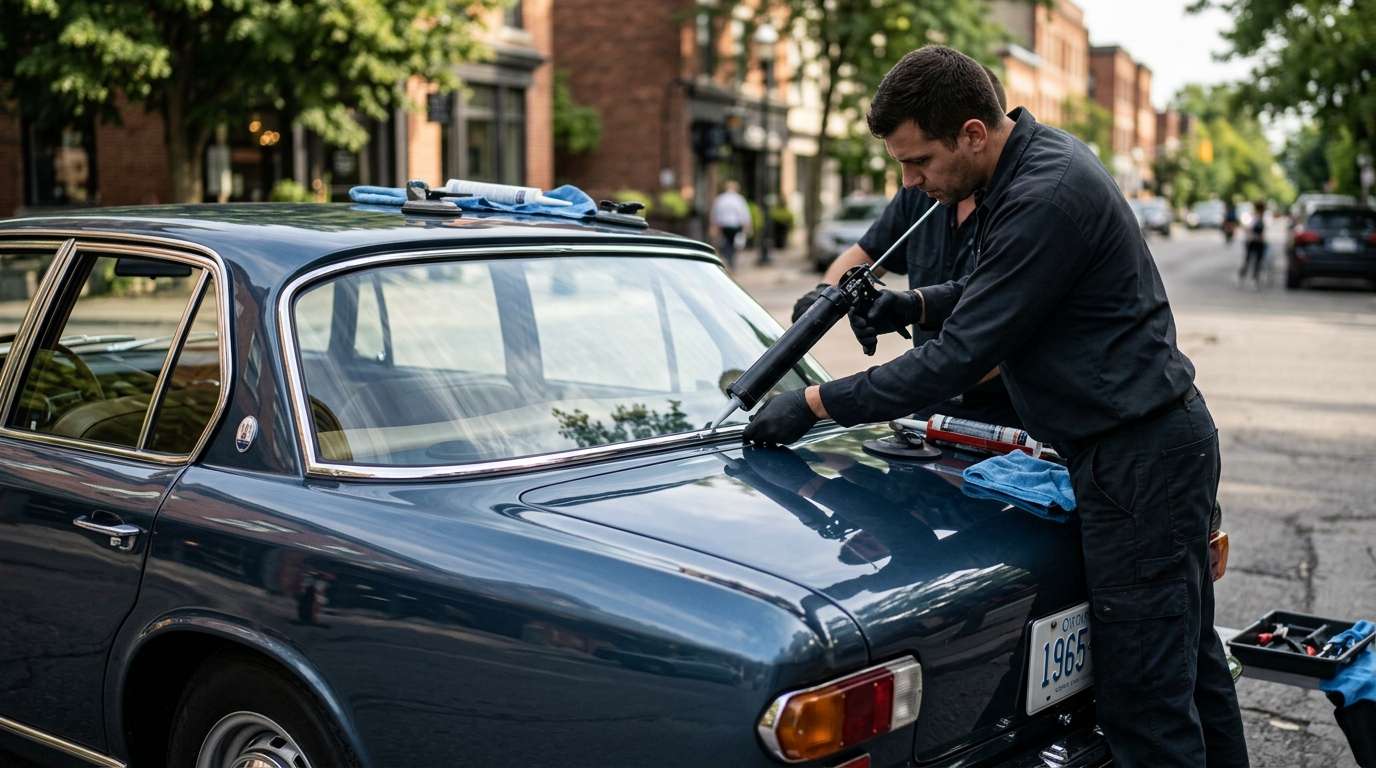
Curved Frua Glass and Hidden Lower Lip Corrosion
The rear glass on Pietro Frua's steel unibody for the Tipo AM107 sits inside a continuous rubber channel surrounded by delicate brightwork, creating a moisture trap that attacks the sheet metal long before the tempered glass itself fails. When water slips past the hardened perimeter seal, it drains straight into the lower corners of the parcel shelf and the upper trunk cowl panel. That standing moisture rusts the pinchweld from underneath, swelling the metal against the bottom edge of the glass until the vintage safety panel cracks from localized stress.
Because the car uses an unbonded, gasket-fit lunotto rather than direct adhesive glazing, stress fractures often start when the body flexes over uneven pavement while the brittle weatherstrip fails to cushion the curved corners. When you notice hairline fractures blooming near the base of the C-pillar or moisture pooling under the rear deck upholstery, I usually arrive at your garage roughly sixty minutes after you schedule a service visit so we can evaluate whether the underlying metal flange can safely hold a fresh panel.
Variants of the Tipo AM107 Lunotto
Vignale built these bodies to accommodate two distinct back glass specifications across the production run. While standard cars left the workshop with clear, single-layer curved tempered safety glass, upscale orders received optional upgrades that dictate which replacement glass profile is required.
| Glass Variant | Identification Details | Key Structural Distinction |
|---|---|---|
| Standard Clear | Unshaded transparency, plain perimeter | Pure single-pane tempered panel without embedded elements |
| Atermico (Tinted) | Distinct soft green heat-absorbing hue | Factory heat-control tint to protect leather rear parcels |
| Lunotto Termico | Horizontal conductive defroster lines | Integrated electric heating elements with lower lead terminals |
Finding an original panel is nearly impossible today because no modern NAGS code covers this Italian glass, meaning replacement requires custom classic reproductions. On cars ordered with the lunotto termico heated rear window, the tiny electric filaments embedded across the glass often snap internally or delaminate after decades of heat cycles, leaving the heating circuit completely dead even if the physical glass remains unbroken.
Brightwork Channel Complications at the C-Pillar
The mechanical interface holding this rear window in place consists of a heavy perimeter rubber channel locked into position by a decorative bead moulding. This bead is fabricated from polished stainless steel or chrome-plated brass, and it serves an essential functional role: driving the bead into the rubber forces the outer lips outward against the C-pillars and the package tray lip, locking the glass against the car.
Decades of sun exposure shrink the original rubber profile, causing the polished metal moulding to pop loose at the curved lower quarters. When this moulding pulls away, the gasket relaxes, and road vibrations transfer straight from the unibody shell into the thin edges of the tempered panel. Replacing the glass requires precise mating with an accurate reproduction profile rubber so the chrome bead seats evenly without pinching the tempered edges.


