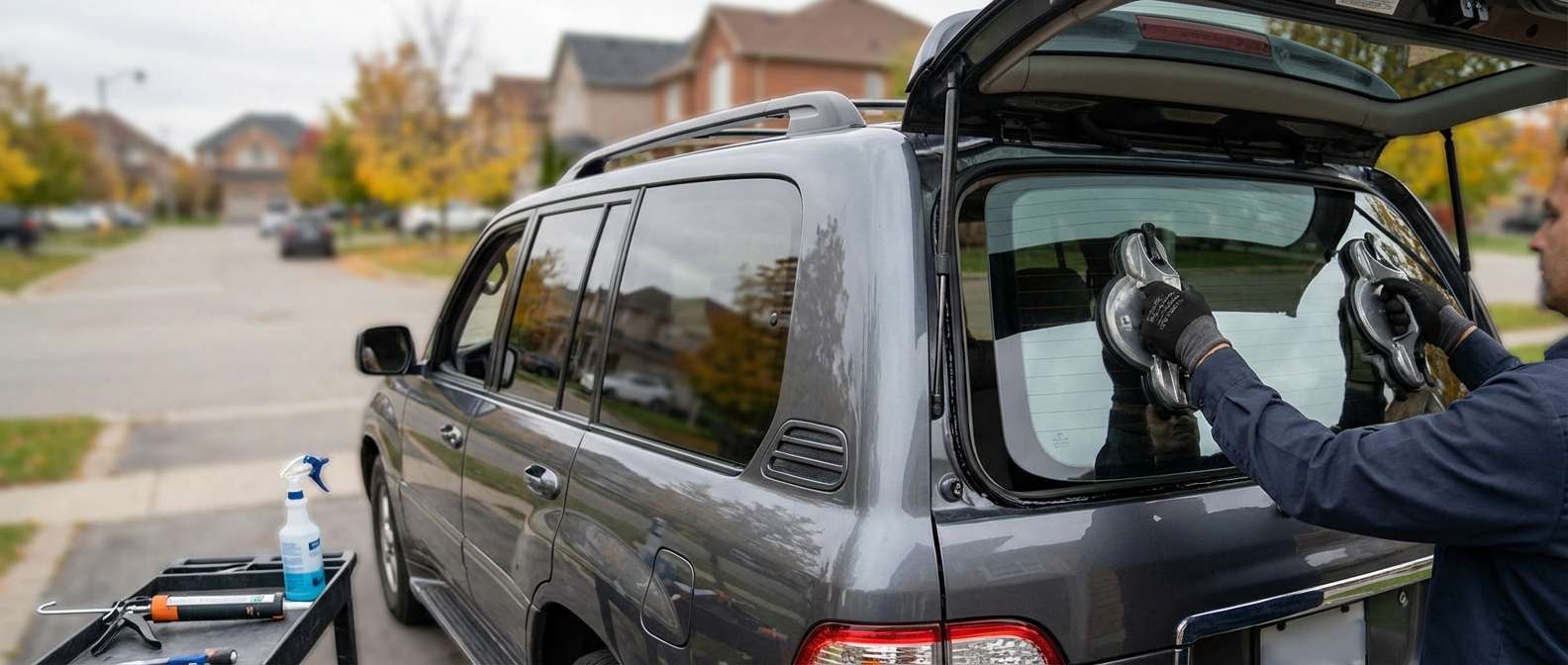
Clamshell Tailgate Back Glass Variations and Dimensions
The upward-swinging upper hatch on the Lexus LX 470 houses a stationary, urethane-bonded rear window rather than a power drop-down pane. Because this body shares its structural rear architecture with the J100 Toyota Land Cruiser, the outer glass dimensions remain identical throughout the entire run. However, Lexus revised the internal grid layouts and connector placements over the years, resulting in three distinct factory part releases across the decade of production.
Every replacement pane uses 4.0 mm thick tempered safety glass treated with a dark green and bronze UV-cut privacy tint. Integrated into the pane is a full horizontal defroster grid, alongside an embedded radio diversity antenna on the upper portion of the glass. Unlike newer luxury SUVs, there are no rain sensors, wash nozzles, or forward-facing camera brackets bonded directly to this panel.
| Model Years | OEM Part Number | Features and Interchanges |
|---|---|---|
| 1998–2000 | 68131-60442 (supersedes 68131-60440, 68131-60441) | Bronze/green solar tint, heating elements, antenna lead |
| 2001–2003 | 68131-60452 (supersedes 68131-60450, 68131-60451) | Revised terminal locations, shared footprint with J100 |
| 2004–2007 | 68131-60590 | Updated defroster resistance values, unified frit band |
Spoiler Clearances and Surrounding Tailgate Hardware
Replacing the back glass on this liftgate requires dismantling specific trim components unique to the LX platform. The aerodynamic factory rear roof spoiler overhangs the top edge of the window and houses the high-mount center stop lamp (CHMSL). Because the spoiler physically conceals the top rubber moulding and pinchweld perimeter, I must unbolt the spoiler assembly entirely from the upper hatch shell before the glass border can be accessed.
I supply and install quality aftermarket replacement glass sourced from trusted manufacturers like Pilkington, PGW, FYG, and XYG, which accurately mirror the curved contours of the LX 470 rear hatch. This precision fit is critical around the lower edge, where the pane meets the tailgate's interior trim panel and the lower wiper motor assembly.
A broad ceramic black frit band lines the interior perimeter to shade the urethane adhesive from degradation caused by sun exposure. Mechanical alignment stopper blocks set into the bottom channel ensure the replacement glass sits at the correct depth relative to the exterior body lines, preserving the tight uniform gap between the upper hatch and the lower fold-down tailgate.
Troubleshooting Hatch Leaks and Grid Disruptions
Owners dealing with rear tailgate issues often suspect a shattered or failed window seal when the fault lies elsewhere in the liftgate hardware:
- Water pooling on the cargo floor: Damp carpeting or headliner stains usually point to a degraded perimeter weatherstrip along the upper tailgate frame or aged seal beads under the roof spoiler studs, rather than a failure of the cured glass urethane.
- Inoperative defroster lines: If individual heating lines fail, common culprits are deep horizontal gouges caused by oversized cargo or careless metallic razor scraping during old tint removal.
- Total loss of wiper or defroster power: When neither the defroster nor the wiper motor responds, the copper wiring inside the flexible rubber hinge harness boot between the vehicle roof and the upper hatch has likely fractured from decades of hatch cycles.


