Acoustic Lamisafe Glazing and Sunshade Variations on the LS 500
Replacing broken side glass on this flagship sedan involves navigating distinct engineering choices Lexus made to keep the cabin dead silent. Unlike conventional luxury cars that reserve laminated glass exclusively for the windshield, the front doors on this model run thick dual-pane acoustic Lamisafe glass with integrated sound-damping interlayers and solar-absorbing infrared cut technology. Because this generation moved to a distinctive six-light greenhouse profile, each rear door pairs a movable drop glass directly against a fixed quarter glass partition separated by a slim division bar.
Ordering the correct replacement pane requires identifying your exact factory package options. The front left window relies on baseline part number 68102-50240, while vehicles equipped with the factory cold-weather package step up to 68102-50250 (mirrored on the passenger side by 68101-50250 and 68101-50260). These cold-spec variants accommodate modified run channel seals designed to shed slush and prevent the glass from freezing solid inside the frame. In the rear, the movable glass differs depending on whether your car has the Luxury Package or Executive Package with power-operated rear door sunshades; cars without the electric blinds use part 68104-50300 on the left and 68103-50300 on the right, whereas sunshade-equipped doors take 68104-50320 or 68103-50320 to clear the interior shade guides and roller mechanisms.
Framed Sash Construction and Mechanical Hardware Servicing
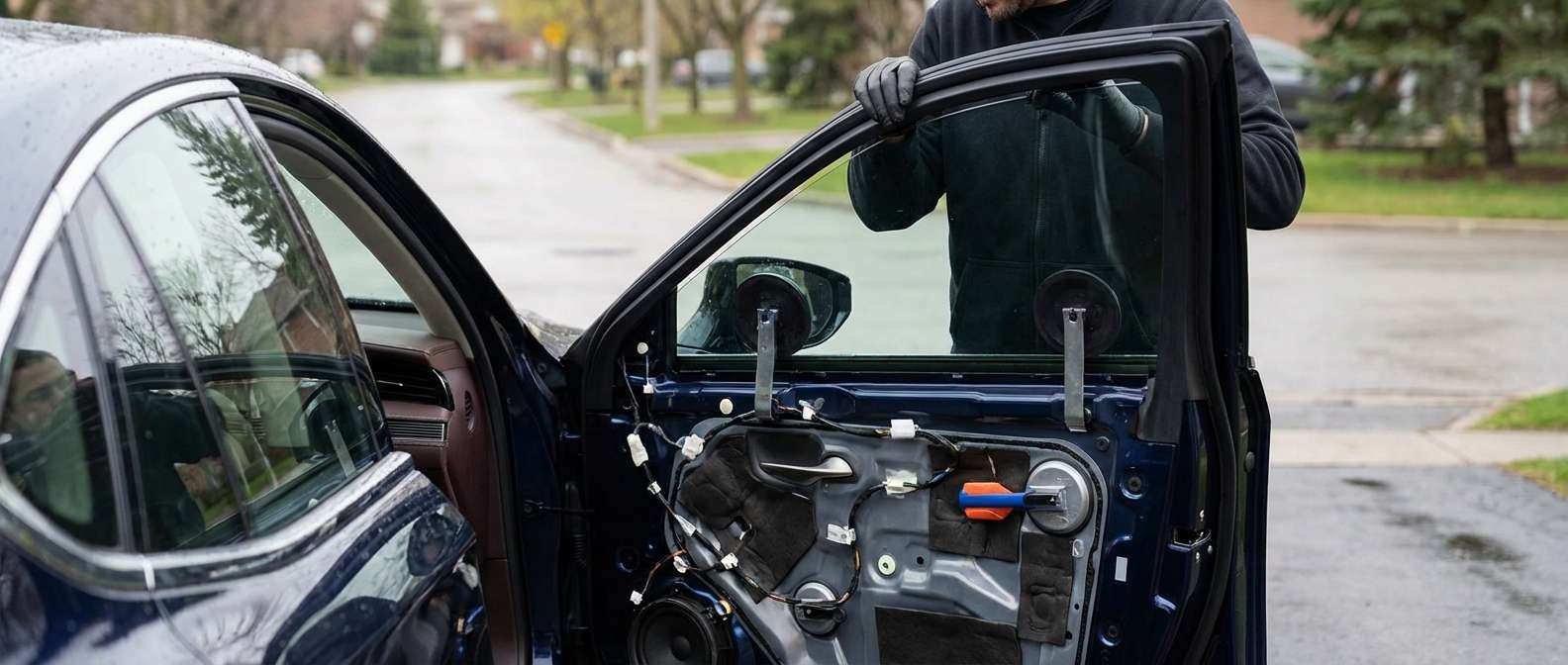
Lexus avoided the frameless windows typical of smaller sport sedans, instead engineering a deep, fully framed sash channel surround. When a side window shatters, the laminated pane will often stay bonded together like a spiderweb rather than dropping entirely into the door cavity, though broken tempered glass from the adjacent rear vent window will drop straight to the bottom of the shell. To secure the new pane, the composite inner door card and vapor barrier must come off so I can bolt the bottom-edge mounting retainers into the dual-rail cable window regulator. When you schedule a replacement, I can usually be at your location roughly an hour after booking to inspect the door frame and clear any fractured debris trapped in the lower cavity.
Preserving the exterior trim is just as critical during this repair. The lower belt moulding—finished in polished chrome on baseline and Luxury trims, or gloss black on the F Sport—sits flush against the outer wipe seal and cannot tolerate distortion without introducing high-speed cabin wind leaks. If the sash channel weatherstripping picks up grit during a glass failure, it causes immediate rolling friction that can wear down the regulator motor over time.
Resolving Anti-Pinch Resistance and Regulator Normalization
Once new door glass is bolted to the dual-rail assembly, the car will almost never operate correctly without an electronic reset. The power window computer continuously monitors motor resistance to safeguard against trapped fingers. Because the dual-pane acoustic glass fits tightly within the weatherstrip to kill highway draft noise, minor friction during the first few cycles will fool the computer into thinking an obstruction is present, triggering the auto-reverse feature and sending the window back down.
I complete the factory normalization sequence directly from the local door switch, driving the glass fully upward and holding the switch in the manual lift position for several seconds to relearn the mechanical end stops and baseline resistance curves. Skipping this step leaves the auto-up function disabled and can cause erratic anti-pinch reversals whenever the glass approaches the upper door frame.


