Identifying Moonroof Glass Issues and Part Variations on Your Truck
When you examine the factory sliding roof panel on your truck, you will notice that every North American model came equipped with identical 4.0 mm tempered glass carrying a factory gray solar tint. Unlike fixed windshields or rear liftgate panels that vary based on internal sensors or heated elements, this internal tilt-and-slide electric moonroof assembly does not integrate rain sensors, light sensors, ADAS brackets, or defroster grids. The entire unit relies on a single continuous design across the production run, corresponding to OEM part number 63201-60081, which superseded the earlier 63201-60080 revision. You can confirm your fitment by looking closely at how the panel mounts to the internal drive mechanism beneath the headliner rather than checking for windshield-style electronic options.
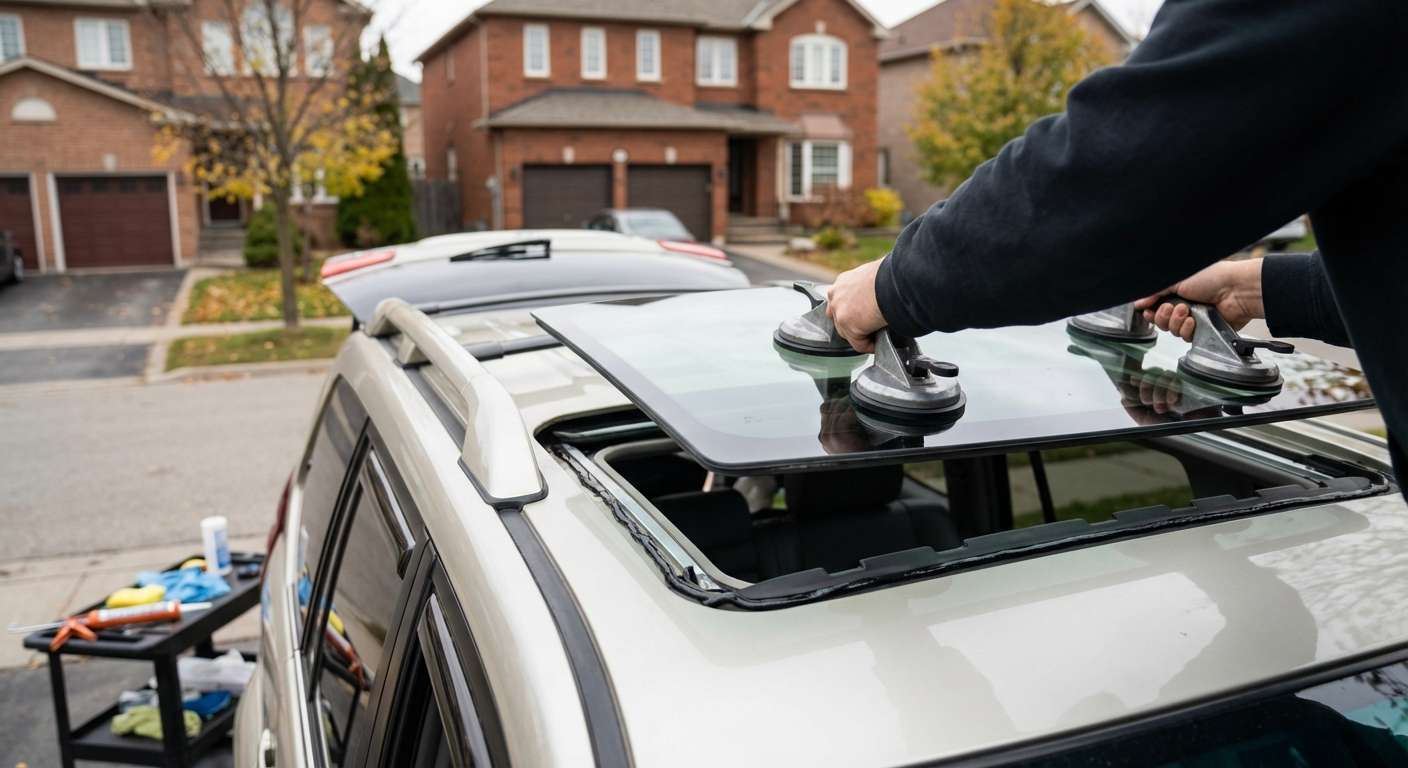
Because this glass sub-assembly is shared mechanically with the overseas 120-series Toyota Land Cruiser Prado, the physical glass dimensions remain completely uniform whether your truck was manufactured in early 2003 or late 2009. The differences owners observe in the cabin usually stem from physical hardware wear rather than glass revisions. When I travel directly to your driveway or office parking spot anywhere across Toronto and the surrounding GTA to replace a damaged roof panel, I inspect the outer edge to determine whether you are dealing with broken tempered safety glass or an aged, warped seal that has allowed moisture into the interior metal frame.
Rusting Sub-Frames and the Perimeter Weatherstrip Failure
A frequent problem specific to this roof design centers on the outer perimeter rubber gasket, which is permanently bonded to an encapsulated steel carrier frame underneath the glass edge. Over years of sun exposure and temperature swings, this molded rubber edge shrinks and cracks. When water seeps past the cracked outer barrier, it becomes trapped against the hidden steel structure, causing severe rust and scale to blossom underneath the seal. As this rust expands, it lifts the rubber edge away from the roofline, creating a noticeable wind howl at highway speeds and allowing heavy rain to overwhelm the internal water troughs below.
Lexus never offered the outer rubber gasket as a standalone replacement part. If your rubber molding is split, lifting, or bubbling from underlying rust blisters, resolving the leak requires changing out the entire glass sub-assembly. Once corrosion establishes itself inside that bonded perimeter ring, no amount of silicone or topical sealant will hold the seal tight against the exterior roof skin.
Mounting Hardware, Track Wear, and Alignment Screws
Accessing the structural mounting points of the panel does not require dropping the vehicle headliner. If you slide the manual interior sunshade fully backward and tilt the moonroof upward into its vent position, you will see a pair of plastic snap-on garnish trim covers running along the left and right interior edges. Unclipping these cosmetic trim covers reveals four Torx adjustment screws—two on each side—fastening the glass directly into the sliding track guide brackets. These slotted brackets dictate both the fore-aft position of the panel and its flushness against the exterior roof opening.
Over time, the drive track hardware beneath the glass can collect road debris or lose its factory lubrication, resulting in loud clicking, popping, or binding when the motor attempts to retract the panel. Technical service bulletins documented these guide bracket noises on this platform, where loose hardware or worn slide blocks place uneven tension on the glass frame. When a panel is replaced, proper adjustment of those four mounting screw slots ensures the outer rubber gasket sits perfectly flush with the metal roof skin, preventing wind turbulence and directing normal runoff safely into the A-pillar and rear drain hoses instead of pooling over the headliner console.


