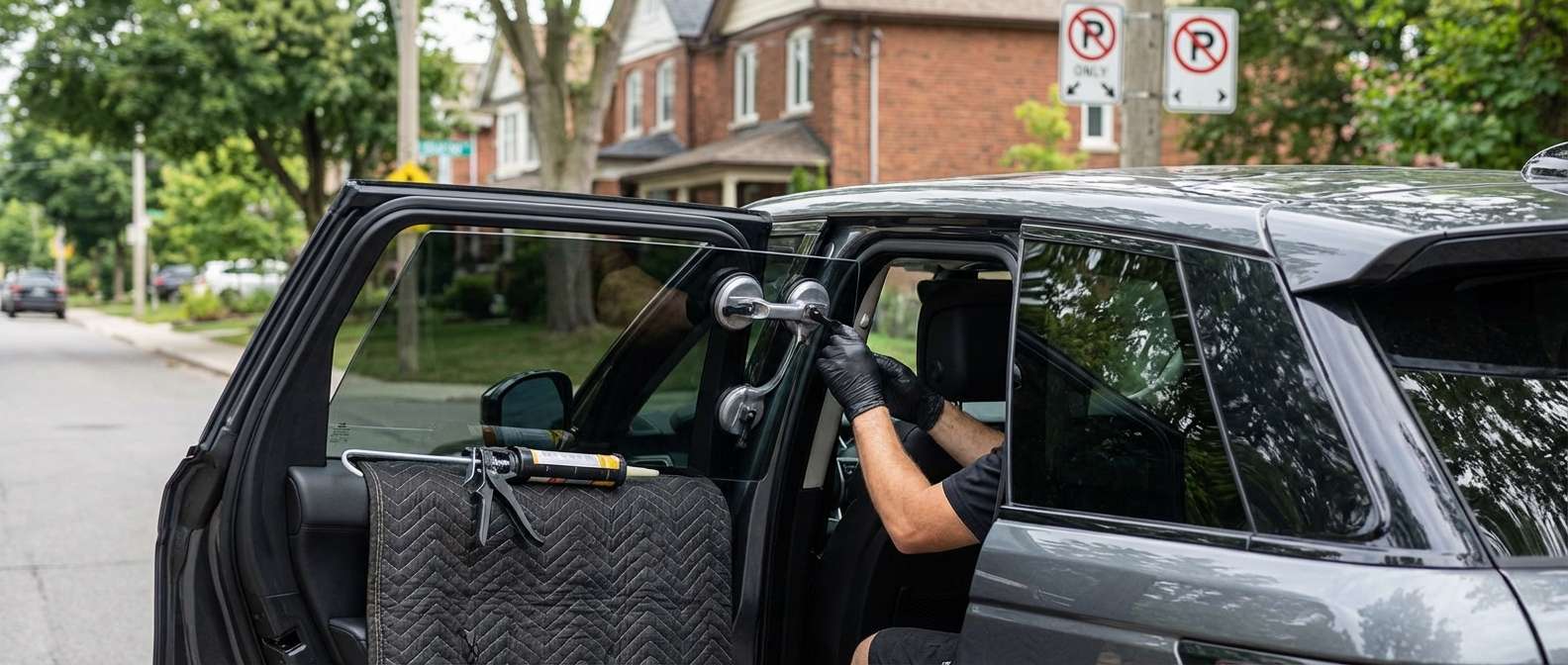
Clarifying Vent and Quarter Panes on the Range Rover Sport
If you are searching for a broken door vent window on this SUV, you will quickly notice that the doors do not actually have one. Unlike the full-size Range Rover L405, which splits its rear door glass with a fixed divider bar, the L494 platform uses an uninterrupted single-pane drop glass (NAGS FD26184 for the left rear, FD26185 for the right) seated in a continuous perimeter rubber run channel (LR084157). What glass catalogs and collision shops categorize as "vent glass" on this vehicle is almost always the bonded rear quarter window fixed into the aluminum unibody behind the C-pillar, bordering the cargo compartment.
Thieves frequently smash this cargo-area glass to bypass the perimeter alarm sensors and access the rear loadspace without triggering door latches. Because it lacks defrost grids, wiper sweeps, or forward-facing camera hardware, replacing it centers entirely on matching the factory tint level and preserving the delicate surrounding trim panels.
Factory Glass Options and Exterior Trim Complications
When replacing this rear side glass, matching the exact optical profile of the remaining side panes is critical. Land Rover supplied these cargo windows in two primary formats: a base green-tinted solar glass and the much more common dark-tinted factory privacy glass carrying an AS3 stamp. Depending on whether your truck is an HSE, Autobiography, or high-performance SVR, acoustic laminated glass layers may have been specified to deaden road noise through the rear cabin.
I replace these broken quarter panels exclusively with aftermarket glass sourced from trusted manufacturers like Pilkington, PGW, FYG, and XYG, ensuring the acoustic deadening and privacy tint values align seamlessly with the factory front and rear door drop glass. While dealer distribution uses reference codes like LR043496, LR056881, or LR165468 depending on production dates, the aftermarket units follow identical perimeter geometry to sit flat against the body aperture.
The real challenge on the L494 body sides involves the surrounding trim. The D-pillars and rear roof transitions are flanked by high-gloss black or Shadow Atlas appliques that scratch if touched with coarse shop towels. Furthermore, Land Rover issued Service Bulletin LTB00662NAS to address waist rail finishers that pop loose or sit proud of the bodyline; the plastic retention clips beneath these gloss finishers become brittle and snap easily if handled carelessly during glass service.
Post-Replacement Inspection Checklist
After a new rear cargo quarter window is fitted, take a few minutes to inspect the work area before driving the vehicle back into daily service:
- Waist Finisher Alignment: Sight down the lower beltline trim from the rear door to the quarter glass. The lower waist moulding must sit flush along the horizontal seam without bowing outward or sitting proud of the door rail.
- Gloss Black Appliques: Check the piano-black pillar finishers flanking the window for micro-marring or loose corners caused by broken sub-clips.
- Glass Run Channel Seating: If the rear passenger door glass was serviced alongside the quarter pane, confirm the continuous run channel rubber is fully seated in the door frame without bunching at the top corners.
- Tint and Acoustic Match: View the new pane from a few paces back under natural daylight to confirm the dark privacy tint percentage mirrors the adjacent rear passenger door glass.
- Interior Cargo Dryness: If you suspect water ingress, remember that leaks pooling in the rear quarter wells of this platform are often caused by clogged panoramic sunroof drain lines descending the C and D-pillars rather than a leak through the window urethane bond.


