Fixed Versus Sliding Panoramic Glass on the L494
When dealing with broken roof glass on this model, identifying whether the vehicle carries the fixed panoramic glass or the sliding panoramic roof setup determines the exact glass needed. The sliding configuration uses a two-piece glass arrangement where the forward panel tilts and retracts over the rear fixed portion, whereas the fixed panoramic roof is a single, continuous expanse of dark glass overhead. For the sliding version, the front movable panel corresponds to Land Rover part number LR145002, an updated revision that supersedes earlier catalog entries like LR043926 and LR121822. Both panoramic styles rely on heavily tinted, UV-attenuating glass designed to cut solar heat gain across the cabin, paired directly with an internal motorized fabric roller blind that sits tight against the underside of the assembly.
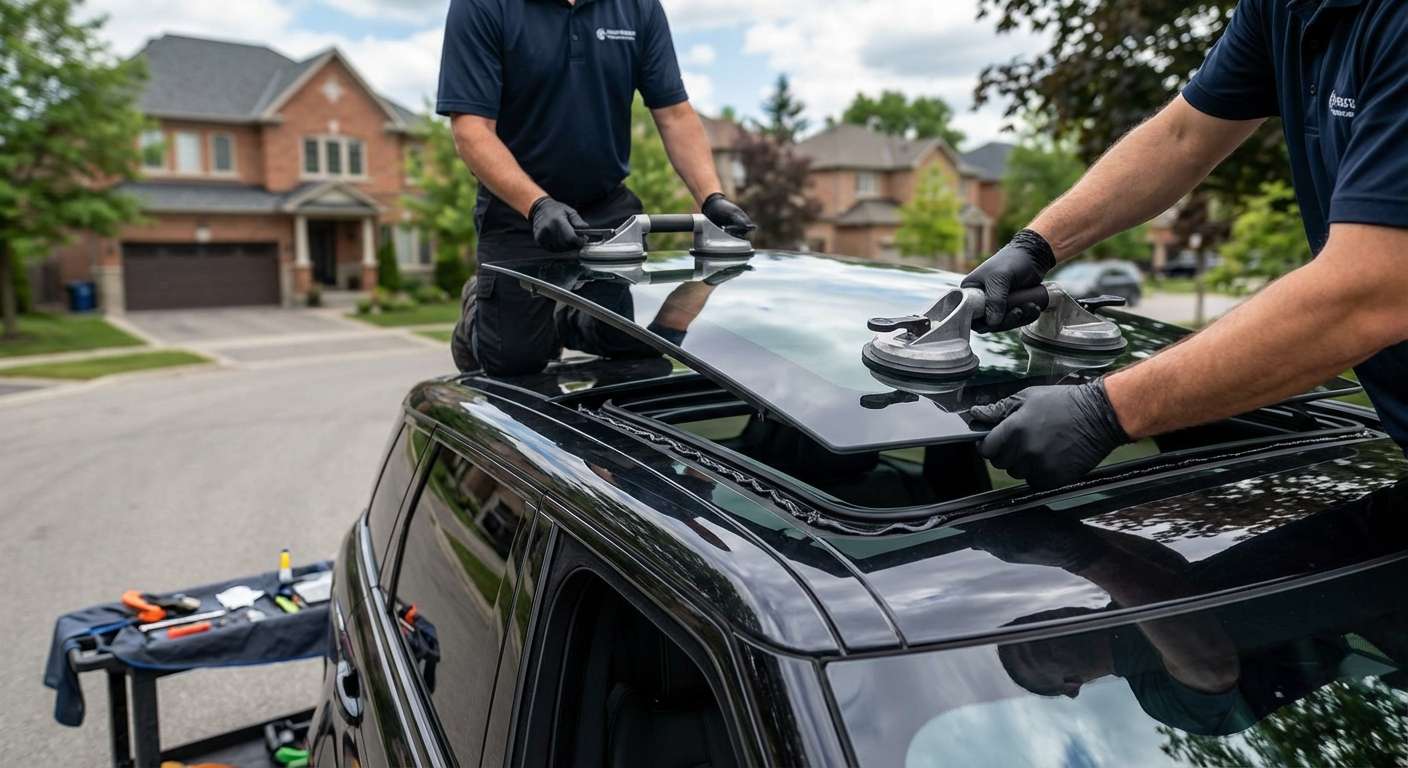
The movable front panel is manufactured with an encapsulated perimeter rubber extrusion moulded directly along its outer edge. This seal sits flush against the painted roof side finisher mouldings when closed, taking the direct brunt of wind pressure across the aluminum roof skin. If the sunroof panel suffers an impact, shatters, or develops severe seal shrinkage that causes whistling at speed, replacing the panel requires unbolting the glass carrier brackets from the track assembly without disturbing the stationary rear glass pane.
Water Intrusion, Drain Channels, and Exterior Roof Side Finishers
Because the panoramic glass area is massive, water management relies on a perimeter water cassette equipped with four corner drain spouts that lead directly into drain hoses routed down the A-pillars and C-pillars. On these vehicles, leaks inside the cabin often trace back to the front A-pillar tubes pulling free or clogging at their exit grommets, which causes pooling around the front passenger footwell fuse box rather than an actual failure of the glass seal itself. When addressing shattered glass from road debris or overhead impacts, I inspect these drainage collection troughs immediately to make sure loose tempered glass fragments have not bridged the drainage ports or cut into the aluminum cassette framework.
Once you confirm an appointment, I can generally be on-site with the replacement glass within about an hour of the booking call to keep open cabin exposure to rain at an absolute minimum. Working alongside the all-aluminum monocoque body also means paying close attention to the exterior painted roof finisher strips flanking the panoramic glass. Range Rover Sport models from this era have documented issues with loose or detached side finisher trim pieces lifting away at highway speeds, so making sure these trim clips and bonding points remain undisturbed during roof panel removal is vital to keeping the roofline watertight and quiet.
Drive Mechanism Sync and Wind Deflector Clearances
The forward edge of the sliding roof cutout houses an automatic pop-up mesh wind deflector that rises on spring arms the moment the front panel begins its backward slide. When fitting a replacement panel, aligning the glass mounting torx screws to achieve perfectly parallel panel gaps prevents the leading edge of the glass from snagging the wind deflector as it pulls shut. If the glass height is set even two millimeters too low against the front roof header, wind buffeting increases dramatically, while setting it too high forces the rubber seal to bind against the bodywork.
Whenever a damaged glass panel forces the sunroof motor to stop abruptly or if power is cut during the job, the motor control module loses its travel limits. Restoring smooth operation requires running the tilt-switch initialization sequence so the pinch-protection module learns the mechanical resistance of the new glass and its fresh perimeter encapsulation. Without cycling this reset, the motorized sunblind and the glass will refuse to run on one-touch automatic mode, stopping short of a full seal.


