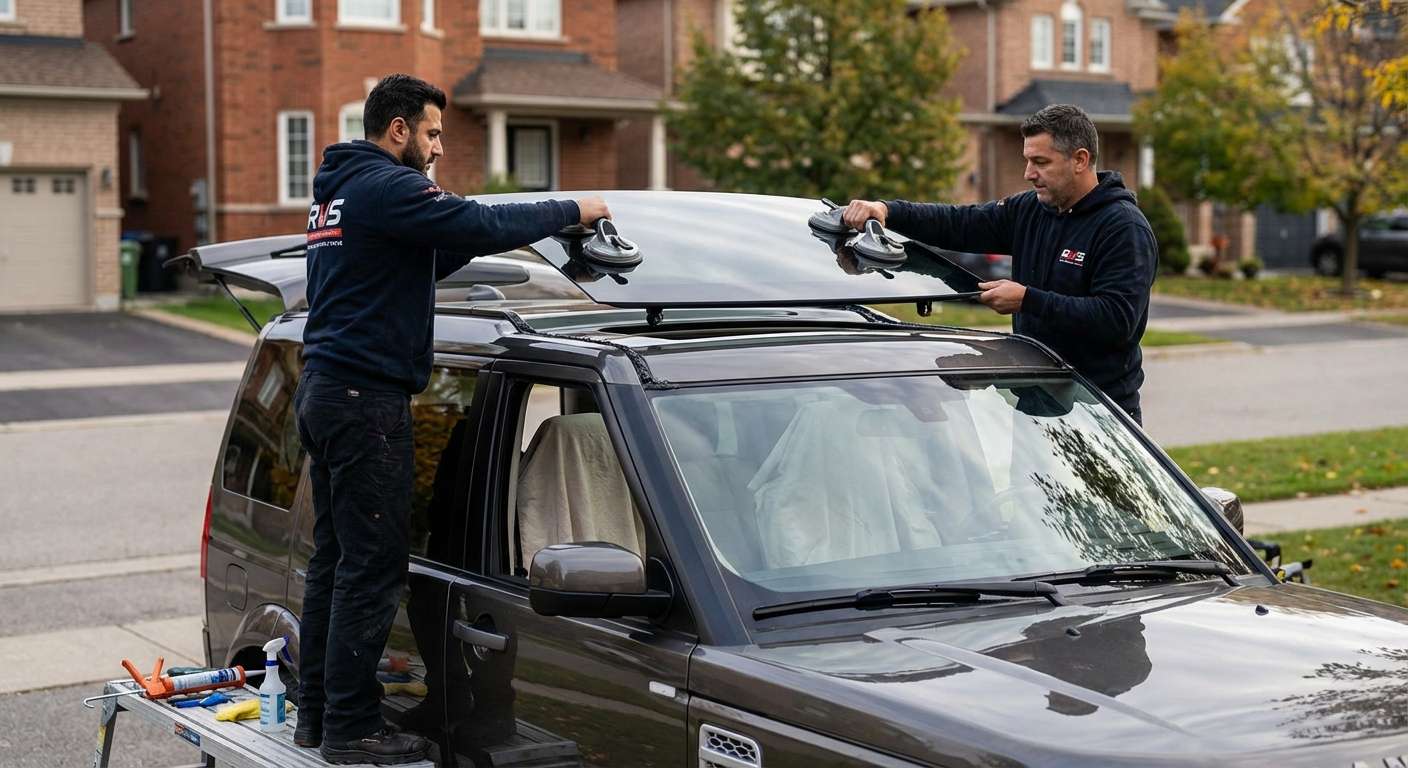
Stepped Roof Architecture and Land Rover LR4 Glass Panels
Replacing the roof glass on this vehicle requires working with a multi-panel arrangement tailored to the distinctive raised rear roofline. The front assembly utilizes an electric tilt-and-slide tempered glass panel driven by a cable drive and motor mechanism tucked into the front overhead console. Behind it, the elevated rear passenger zone features fixed alpine panoramic roof sections bonded into the steel body. If the front movable glass panel breaks or its outer rubber seal splits, Land Rover services it under part number LR044767, which supersedes the older references EFT500010, EFT500011, and EFT500170. This front panel features a vulcanized encapsulation rim seal formed directly onto the heat-absorbing, factory-tinted safety glass during production. Because that perimeter rubber cannot be peeled off and renewed independently, resolving wind whistles, highway buffeting, or glass damage demands swapping the entire panel assembly.
The fixed rear panoramic panels present a separate set of requirements based on how the vehicle was optioned from the factory. Rear panels do not open, resting directly in deep body recesses with dedicated manual roll-up sunblinds built into the interior headliner cassette below. Two distinct rear panels exist to accommodate factory telematics: part number LR056228 incorporates the clearance and mounting provisions for the satellite radio antenna module, superseding older numbers LR044459, EFT500161, EFT500160, and EFT500061. Vehicles configured without the satellite radio receiver use fixed rear panel LR056227 instead. For these replacements, I rely exclusively on aftermarket glass manufacturers like Pilkington, PGW, FYG, and XYG to ensure the factory solar control tint and perimeter contours precisely match the roof aperture.
Water Ingress Points, Drain Routing, and Electrical Protection
Water collecting in the footwells of this vehicle is frequently misdiagnosed as windshield seal failure, loose A-pillar exterior trim clips, or a warped lower cowl panel, but the sunroof cassette drainage network is often the actual source. Four flexible drain tubes direct runoff away from the sunroof cassette channels, routing down the A-pillars toward the front wheel arches and through the C-pillars at the rear. The forward tubes exit through rubber duckbill check valves in the cowl and wheel well cavities. Over time, these duckbill ends collect silt, stick closed, or disconnect entirely, preventing rainwater from escaping the overhead channels during heavy downpours.
When runoff backs up inside the sunroof frame, water spills over the internal drip trays and runs straight down the inside of the front pillar cavities behind the dashboard. On the passenger side, this overflow pours directly into the Central Junction Box and Body Control Module, corroding the floor-level wiring looms and producing erratic electrical faults across multiple vehicle modules. Ensuring the drain paths are clear and the duckbill outlets open freely prevents renewed leaks from ruining replacement glass installations and keeps moisture away from sensitive electrical junction blocks.


