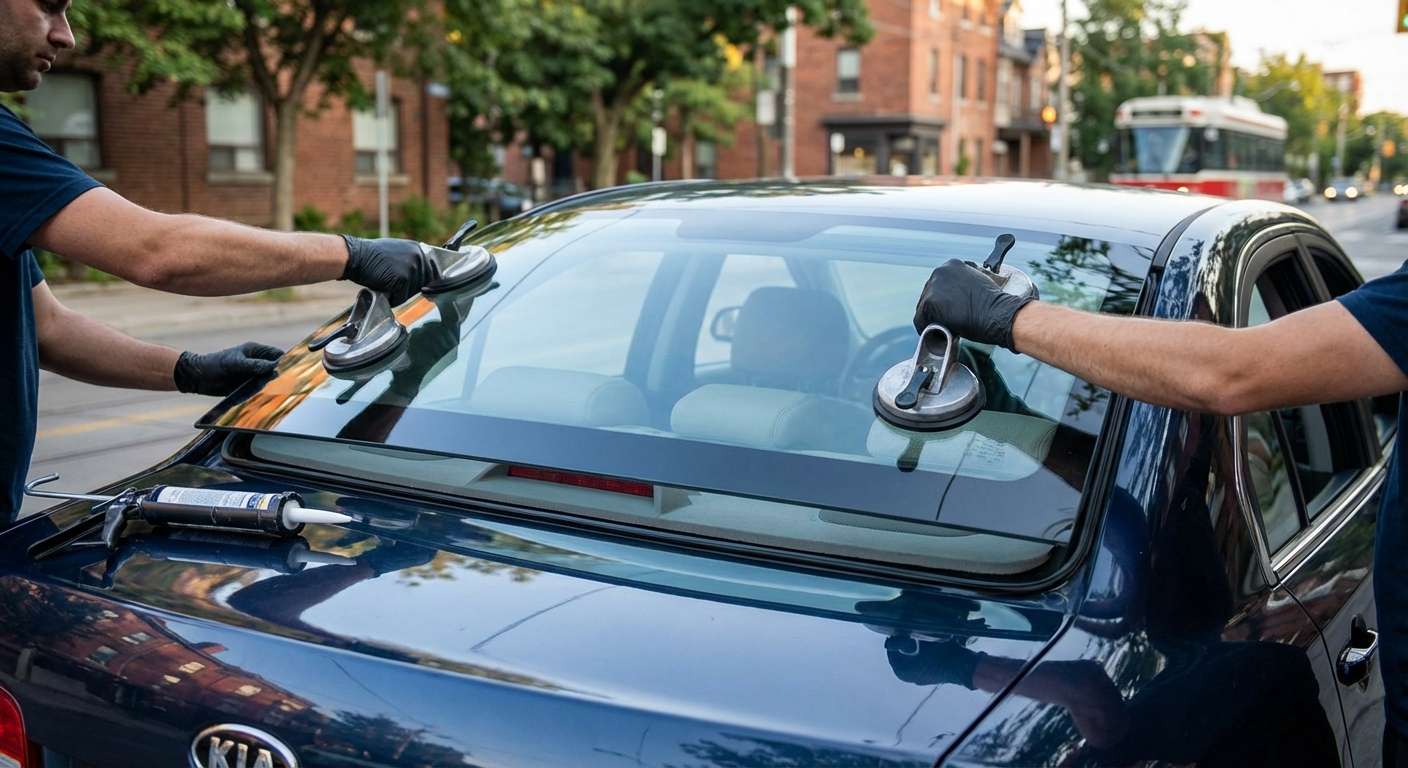
Rear Defroster Grids and In-Glass Antenna Variations
Sorting out the correct rear window for this Optima comes down to electrical connections embedded in the glass. Across the LX, EX, and SX trims, every car left the factory with horizontal heating elements, but higher trims paired the defroster with an integrated AM/FM antenna printed directly across the top segment of the glass. Drivers often think the top four or five lines are burned out when ice builds up, but those upper conductors carry radio signals down to an antenna amplifier module, part 96280-2G000, clipped behind the C-pillar trim rather than drawing current for heat.
Because the antenna harness ties directly into the top frit band, swapping in the incorrect aftermarket panel leaves the cabin without clear radio reception. Early production runs split between base tinted glass with heating elements under factory reference 87110-2G000, antenna-integrated tinted glass under 87110-2G010, and dedicated solar-control glass under 87110-2G070. Later runs consolidated into superseded part numbers like 87110-2G200, which handles the antenna grid and defroster simultaneously. When replacing this panel, I back the replacement glass with a one-year defect warranty alongside a lifetime guarantee covering my workmanship against water leaks and air noise around the opening.
Navigating the 2006.5 Production Split and Body Hardware
A major mid-year redesign in 2006 created two incompatible body styles for the same model year nameplate. Early 2006 sedans belong to the older MS platform, whereas the 2006.5 through 2010 models transitioned to the MG platform. The rear glass from the earlier MS body does not match the dimensions or aperture contours of the MG unibody; the newer MG back window uses NAGS benchmark FB22741, engineered specifically for the restyled C-pillar sweep and altered deck lid line.
Along the outer edge, the glass relies on a perimeter reveal molding, OEM part 87130-2G000, which seats flush against the unibody roof and quarter panel pinchwelds. At the interior bottom edge, the glass borders the rear package shelf directly in front of the center high-mount stop lamp assembly. There are no reverse camera mounts on the glass, as rear-view optics were not integrated into this back window, nor are there exterior rear wipers or wash nozzles penetrating the panel. The installation centers entirely on achieving a flush perimeter seat just above the forward lip of the trunk lid while keeping the defroster solder tabs isolated from the bare steel bodywork.


