Acoustic Laminated Versus Tempered Door Glass by EV6 Trim
Ordering the correct replacement glass for an electric crossover requires looking closely at the trim level, because the front side windows are not identical across the lineup. On the EV6 Light, Kia used conventional, single-pane side glass. If you step up to the Wind, GT-Line, or the high-output GT, the front doors carry dual-pane sound-insulating acoustic glass engineered to drown out high-frequency tire roar and wind turbulence around the A-pillars.
The dealer numbers reflect this split directly: non-acoustic front left glass is cataloged under 82410-CV010, while the acoustic version is 82410-CV030. The front right follows the same pattern with 82420-CV010 for the base window and 82420-CV030 for the acoustic glass. While the outer dimensions and mounting tabs match between them, putting a standard pane into a GT-Line leaves an immediate, noticeable cabin buzz at highway speeds. The rear side doors avoid this split altogether: every trim leaves the factory with single-pane tempered safety glass rather than laminated glass, treated with a dark 20% to 22% light transmission factory privacy tint.
Framed Door Construction and Internal Hardware
Unlike many modern battery-electric vehicles that rely on frameless side glass that indexes down each time you pull the exterior handle, this crossover uses fully framed doors with deep upper run channels. The glass runs up into a fixed upper frame, providing a firm mechanical perimeter that helps the vehicle maintain a tight cabin pressure seal.
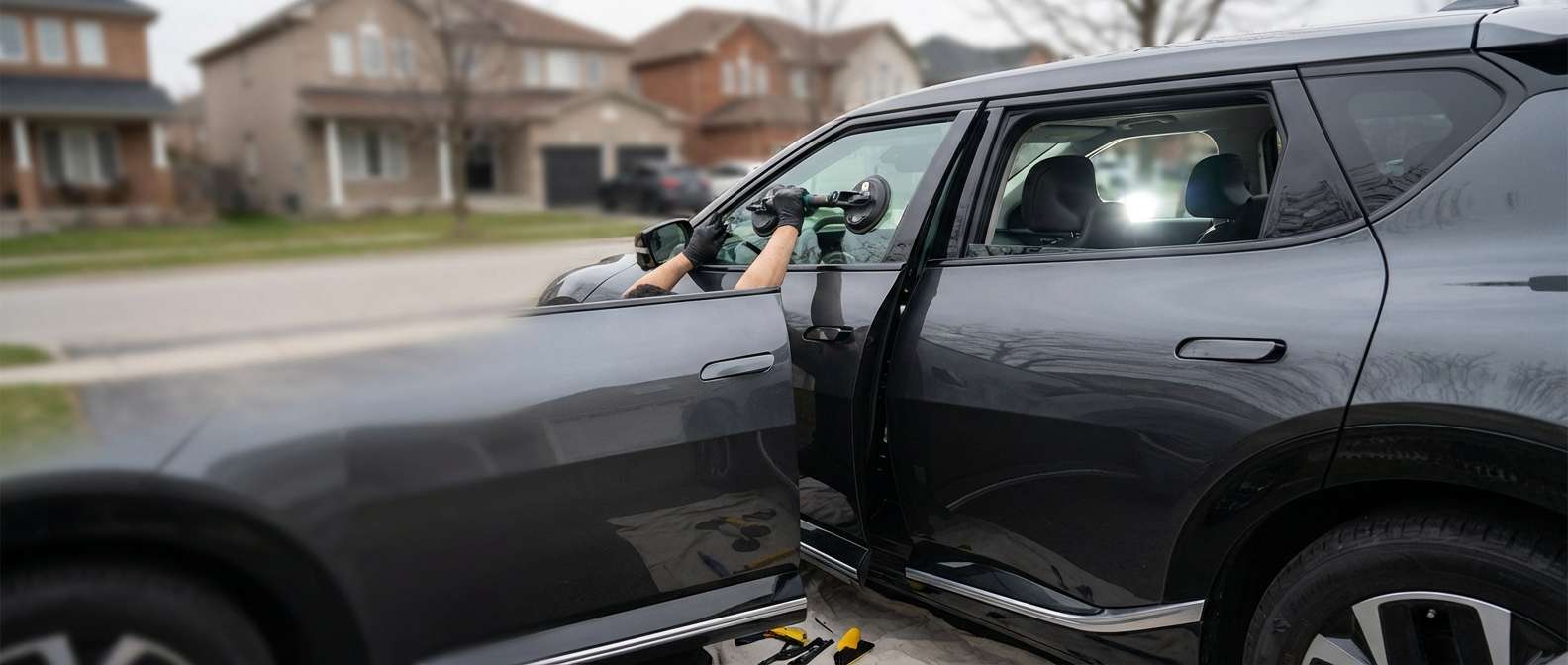
To replace a shattered pane, I travel directly to your driveway or office parking spot anywhere across Toronto and the GTA with all the tools needed to strip the door down on-site. Servicing the glass means completely lifting off the interior door trim panel, disconnecting the door harness, and removing the moisture vapor barrier to reach the window regulator. The glass is held onto the dual-cable scissor regulator carrier bracket using dedicated mechanical clamp bolts inside the door cavity. The front glass also sits within extremely tight outer belt mouldings and weatherstrip wipe seals that require careful release so the fresh pane slides cleanly into the vertical guide tracks without binding.
Glass Specifications by Position
| Window Position | Glass Construction | Factory Tint / VLT | Standard OEM Reference |
|---|---|---|---|
| Front Driver (Light) | Single-pane tempered | ~70% Solar Green | 82410-CV010 |
| Front Driver (Wind / GT-Line / GT) | Acoustic dual-pane laminate | ~70% Solar Green | 82410-CV030 |
| Front Passenger (Light) | Single-pane tempered | ~70% Solar Green | 82420-CV010 |
| Front Passenger (Wind / GT-Line / GT) | Acoustic dual-pane laminate | ~70% Solar Green | 82420-CV030 |
| Rear Doors (All Trims) | Single-pane tempered | ~20%–22% Privacy Tint | Tempered Safety Glass |
Why won't an emergency spring-loaded punch break my front door glass?
Spring-loaded window punches are designed for tempered glass, which shatters under sudden, concentrated point pressure. If your vehicle is a Wind, GT-Line, or GT trim, the front door windows contain a polyvinyl butyral (PVB) acoustic interlayer between two sheets of glass. The punch will crack the surface, but the plastic interlayer holds the window together just like a windshield. In an emergency, escape tools will only shatter the rear side windows, which remain standard tempered glass.
Do the front door windows have integrated electronics or heaters?
No. The front side windows do not contain embedded defroster lines, radio antennas, or optical sensors. All driver-assist forward cameras, humidity sensors, and rain sensors are mounted directly to the front windshield glass, while the rear defroster grid and primary antennas sit in the rear hatch glass. The front door glass is purely mechanical, acting as an acoustic and weather barrier.


