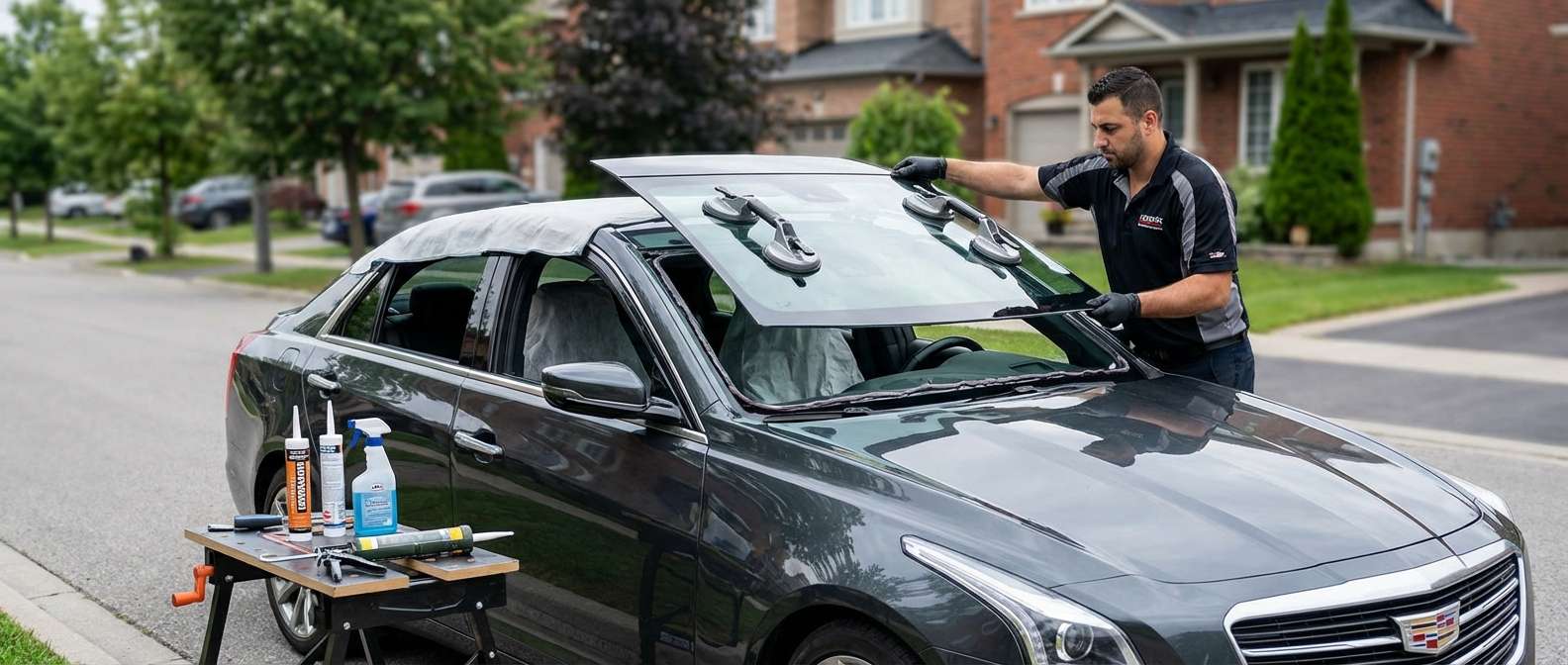
Panoramic Roof Damage and Component Failures on the CTS
Cadillac fitted the CTS with the dual-panel UltraView panoramic setup under regular production option RPO C3U, which splits the overhead glass into an operable front tilt-and-slide section and a stationary rear panel. Because both panes are tempered safety glass with a deep factory solar tint rather than laminated glass, any severe road-debris impact or structural torsion instantly shatters the entire panel into granular fragments rather than developing a repairable rock chip. There are no embedded radio antennas, heating elements, or rain-sensor brackets inside either glass pane, so issues typically stem from track misalignment, fractured weatherstrips, or severe cabin impact.
Mechanical stress is another frequent reason these glass panels bind and crack. The front panel relies on Torx fasteners secured straight into side guide brackets, which travel along mechanical tracks right above the deployable fabric air deflector (part 22926556). When the guide channels accumulate road grit or the lower sunshade fabric (part 22926558) snaps its plastic guide clips, the drive cables bind. If the motor forces the moving pane against skewed track brackets, the tempered panel experiences corner point-loading that can blow out the glass. When I replace these panels, I back the replacement glass with a one-year defect warranty and guarantee my own workmanship for as long as you own the car.
CTS Dual-Pane Glass and Perimeter Hardware
The third-generation CTS sedan does not share its roof glass structure with the ATS or the larger CT6. The UltraView cassette (assembly 84114678) sits tucked directly beneath the steel roof skin, leaving extremely tight tolerances between the glass perimeter seals and the sheet metal opening.
| Component Description | OEM Reference | Panel Type & Function |
|---|---|---|
| Front Sunroof Glass | 23311798 | Tempered solar tint; power tilt and slide |
| Rear Sunroof Glass | 23450082 | Tempered solar tint; stationary fixed panel |
| Front Perimeter Seal | 23142058 | Encapsulation edge seal against roof opening |
| Rear Perimeter Seal | 22885814 | Static body seal surrounding fixed pane |
| Front Pop-Up Deflector | 22926556 | Spring-loaded fabric wind blocker |
Replacing the rear stationary pane (which supersedes early GM part 22885807) requires isolating the perimeter encapsulation to preserve the body line gap. If the edge seal is reused after a break or installed unevenly, highway air pressure lifts the leading edge of the rear glass, inducing cabin buffeting.
Water Leaks, Frame Rattles, and Hardware Alignment
Water intrusion on this panoramic roof usually points to internal tray flooding rather than adhesive failure. The CTS sunroof cassette uses four water runoff ports positioned at each corner of the aluminum frame. Flexible rubber drain tubes exit through the A-pillars down to the firewall and through the C-pillars behind the rear quarter trim. When pine needles or fragmented glass from a previous blowout slip past the outer rubber encapsulation, the corner reservoirs overflow straight into the molded headliner, sending water into the footwells and soaking the main cabin wiring harnesses beneath the carpets.
Creaking and metallic tapping right above the front seats is another known CTS complaint, covered under GM Technical Service Bulletin 19-NA-096. The factory side frame fasteners anchoring the cassette frame to the roof crossmembers can back out or lose tension over time. If a new glass pane is torqued into an improperly seated or flexing cassette, the twisting body chassis transfers torsional load directly into the glass edges during driveway transitions or uneven cornering. Resolving this requires dropping the headliner edges, checking the drain hose connections to their spouts, and re-torquing the structural side fasteners before aligning the new glass panel to factory height flushness.


