Door-Integrated Quarter Glass and the Hofmeister Kink
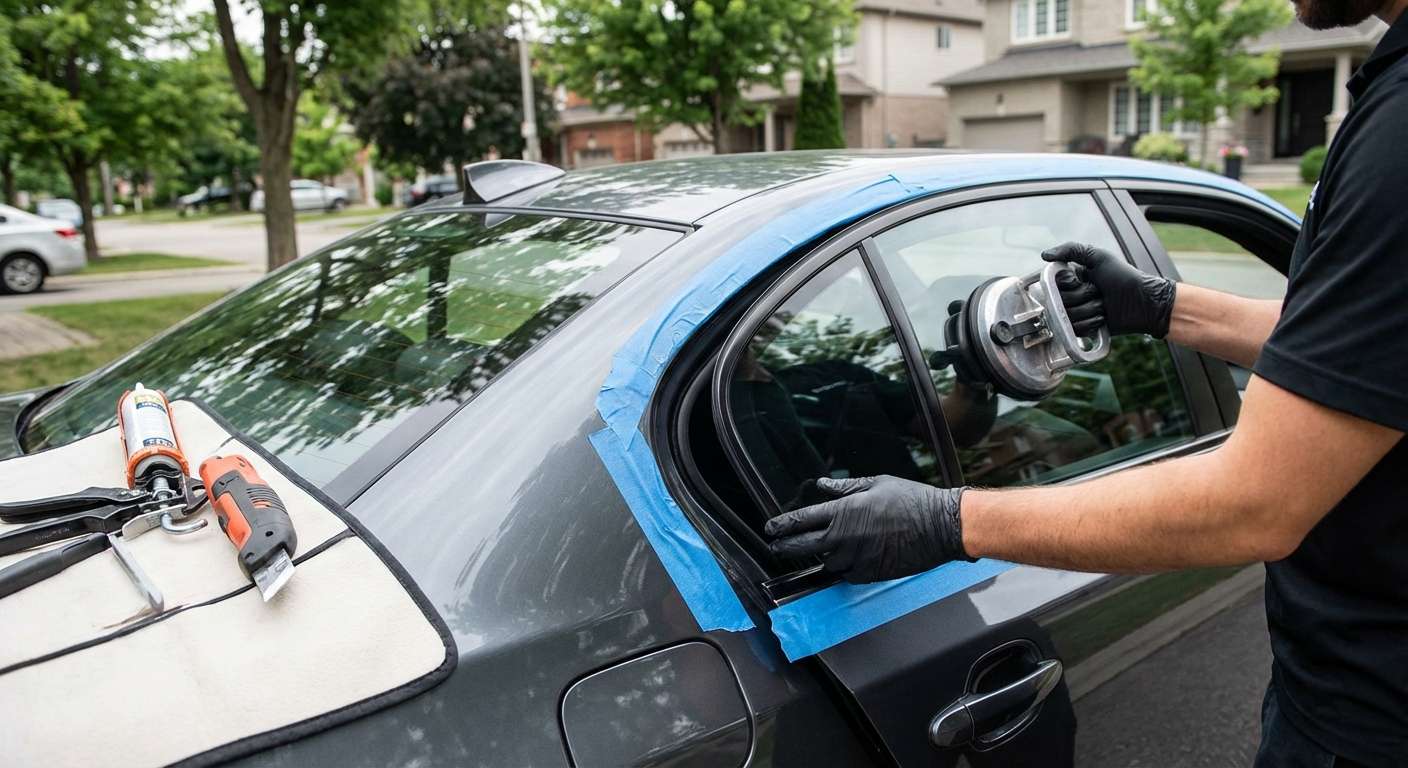
Unlike wagons or SUVs where the rear triangular window is bonded to the stationary body structure, this quarter glass rides entirely inside the movable rear passenger door frame. It outlines the iconic BMW Hofmeister kink, separated from the drop window by a slender, vertical division bar guide channel. Because it swings open with the door itself, the window does not use radio antennas or defroster wiring, keeping the glass surface simple while making door-frame clearances critical.
Before ordering or installing the replacement, I inspect the existing trim and glass configuration to make sure the replacement matches the cabin setup. Some sedans carry factory manual roller sunblinds integrated straight into the interior division bar trim, which changes how the interior door card interfaces with the window channel. I also verify the exterior perimeter molding: standard cars use bright chrome exterior finishers, while sport-package models feature High-Gloss Shadowline trim surrounding the window opening.
| Glass Position | NAGS Reference | Eurocode | Standard Tint |
|---|---|---|---|
| Left Rear Vent (Driver) | FV20015 | 2445LGSS4RV | AS2 Green Solar |
| Right Rear Vent (Passenger) | FV20016 | — | AS2 Green Solar |
Inspecting the Perimeter Rubber and Glass Matching
On this specific vehicle, age-related weathering frequently destroys the rubber perimeter seal surrounding the glass, leaving it dry-rotted, cracked, or crumbling along the top edge. When this seal disintegrates, wind whistles aggressively at highway speeds and rain seeps into the door shell. When I pull the replacement out of the crate, I check the outer dimensions against the vertical division bar to ensure the glass sits completely true inside the channel without binding against the movable drop window.
I supply aftermarket glass exclusively, selecting quality units from manufacturers like Pilkington, PGW, FYG, and XYG to guarantee the green solar tint and glass curvature match the original side glass profile. Before fitting the piece into the door, I check the bare perimeter of the replacement for uniform edge finishing. A wavy edge or an irregular bevel will pinch inside the guide channel, creating localized stress points that can bind the vertical division bar and prevent the main roll-up window from gliding smoothly.
Water Intrusion Risks and Division Bar Alignment
Once the glass is seated, the critical post-assembly check centers on the vertical division bar and the inner door cavity. If the division channel sits even a millimeter out of square, the main door window will drag, squeal, or trip the anti-pinch safety mechanism when rolling up. I run the adjacent drop glass through multiple full cycles to confirm that the vertical runner remains completely parallel to the quarter glass edge and that the rubber guide remains seated in its track.
- Vapor barrier butyl integrity: Accessing this glass requires opening the interior door panel; I check that the closed-cell foam sound barrier behind the door card is fully resealed with fresh butyl along the entire bottom edge, as any gap directs runoff straight past the door card into the rear footwell carpets.
- Beltline weatherstrip seating: The horizontal exterior waist seal must sit dead flat against both the quarter glass frame and the roll-up window, preventing debris from falling into the lower door bottom.
- High-speed seal compression: Closing the rear door must compress the rubber frame evenly against the exterior B/C-pillar door frame with zero gaps at the acute angle of the Hofmeister kink.


