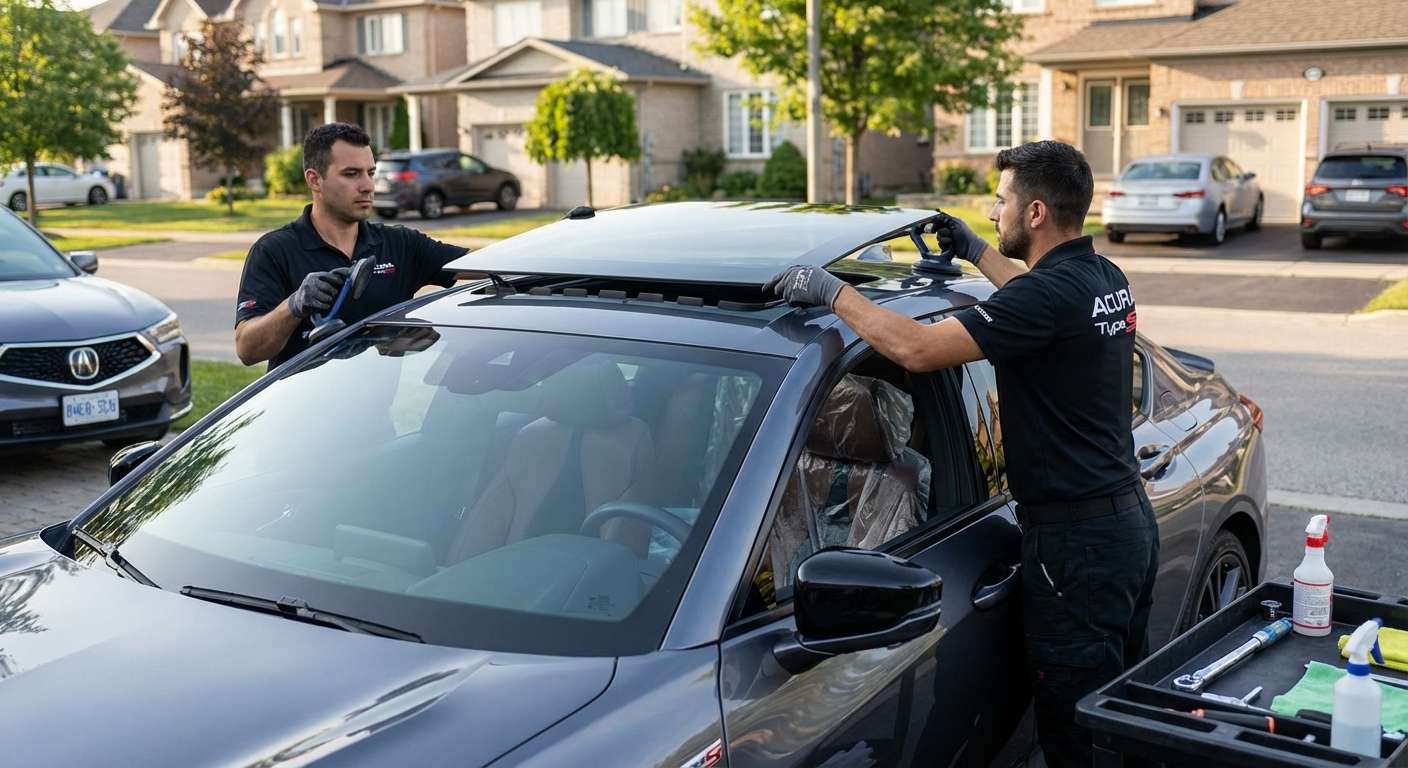
Single-Pane Moonroof Glass Across Every TLX Trim
When Acura redesigned the TLX, they chose not to adopt the troublesome panoramic glass layouts found on the RDX and MDX crossovers. Instead, every version of this sedan—from the Base, Technology, and A-Spec up through the Advance and performance Type S—uses a compact, single-pane tilt-and-slide tempered glass moonroof panel. Under OEM dealer cataloging, this entire glass and seal unit is listed under part number 70200-TGV-A01.
The panel is constructed from solar-control, UV-absorbing green-tinted safety glass. Because it operates strictly as an overhead aperture, you will not find defroster wires, radio antennas, or rain-sensing hardware bonded to the glass surface. What is permanent, however, is the heavy perimeter rubber weatherstrip moulding vulcanized directly around the outer glass edge. If road debris chips the perimeter or a stress fracture spreads across the surface, the bonded seal cannot be serviced individually; the entire glass panel assembly must be swapped out.
Mechanical Fastening and Sunroof Cassette Alignment
Unlike fixed quarter glass or windshields, securing this moonroof does not involve liquid urethane or long cure windows. The glass rests directly inside the sliding cassette assembly above the interior headliner, carried by twin mechanical drive arms. To access the hardware, I slide back the fabric-covered sunshade and gently release the interior plastic side garnishes that shield the side brackets.
Each side is anchored by two Torx-drive shoulder bolts that pass through slotted guide brackets on the sliding mechanism. These slotted mounting holes provide the mechanical range needed to set the glass height against the high-strength steel roof skin. Setting this height correctly is critical: the leading edge of the glass needs to sit roughly flush to half a millimeter below the exterior steel to deflect high-speed air, while the trailing edge sits slightly above the roofline to keep wind noise down and avoid water damming over the drain channels. I cover my installation work with an enduring lifetime guarantee, alongside a full one-year defect warranty on the replacement glass itself.
Any electrical disconnect during the glass swap also resets the drive motor's memory. Once everything is bolted down, I run the factory re-initialization sequence so the auto-reverse pinch-protection logic learns the mechanical resistance of the new panel and the one-touch tilt and slide functions operate smoothly without false stops.
Addressing Wind Noise, Rail Clicks, and Overhead Rattles
A frequent frustration among drivers of this TLX involves an irritating ticking, tapping, or rattling noise emanating from the ceiling directly above the front seats when driving over washboard pavement or entering angled driveways. This noise is almost never a shattered seal or loose roof skin weld. Instead, it typically stems from tight tolerance stack-ups between the front pop-up wind deflector arms, the plastic slide shoes, and the guide rails inside the sunroof frame cassette.
When swapping a shattered or cracked panel, I inspect the mechanical tension of the deflector hinge springs and the internal guide tracks. The sunroof relies on four dedicated water drain tubes routed through the front A-pillars and rear C-pillars. If the cassette shifts or the glass is misaligned in the roof opening, excess runoff bypasses the perimeter seal too quickly, overpowering the internal gutter trays and dumping water into the headliner near the side curtain airbag modules.
Post-Replacement Inspection Checklist for TLX Owners
- Panel Flushness: Check that the glass sits uniformly parallel to the steel roof stamping, with the front edge sitting level or imperceptibly below the roofline and the rear edge slightly proud.
- Perimeter Moulding Seal: Ensure the bonded outer rubber seal sits tight against the roof opening without bunching, buckling, or pinching at the rounded corners.
- Wind Deflector Action: Verify the front mesh deflector pops up cleanly as the glass slides rearward and folds flat without catching when closing.
- Pinch-Protection Logic: Test that the one-touch close switch drives the glass shut completely without bouncing back open halfway through the stroke.
- Sunshade Glide: Slide the interior sunshade manually from front to back to confirm it moves freely along its runners without snagging the new side garnishes.


