Identifying the Single-Pane Moonroof on the RDX
Pinpointing the exact glass panel fitted to this SUV comes down to whether your roof has one piece of glass or two. Every 2013 to 2018 model—whether it rolled off the line as a front-wheel-drive Base, an all-wheel-drive model with the Technology Package, or the Advance Package—uses an identical single-pane, power tilt-and-slide tempered glass assembly. Many owners assume their vehicle might carry the panoramic glass seen across newer crossovers, but Honda never installed a panoramic roof on this build cycle; that oversized dual-pane setup did not debut until the complete overhaul in 2019. If your vehicle has a single dark-tinted panel over the front seats paired with a manually operated fabric sunshade sliding on an internal track below, you have standard factory glass matching Acura part number 70200-TX4-A02 (which superseded the original 70200-TX4-A01).
Hardware Details and Structural Surroundings
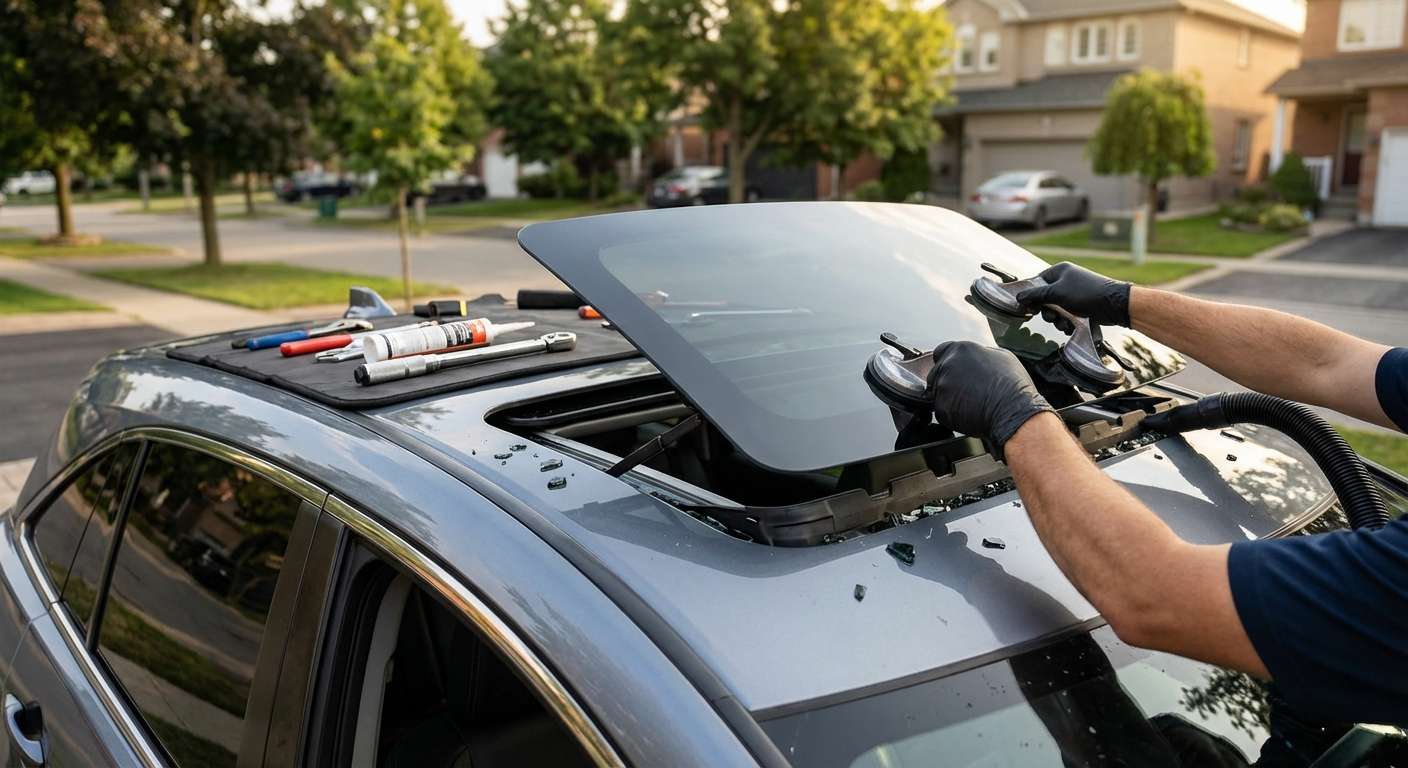
Unlike bonded fixed glass, this panel acts as an active mechanical lid attached to side linkage arms rather than being glued to sheet metal. I frequently inspect the perimeter encapsulation, as the dark solar-absorbing tempered glass comes from the factory with a molded rubber seal bonded permanently around its outer border. There are no embedded radio antennas, heating elements, or rain-sensing electronics anywhere in the glass matrix, simplifying replacement when the panel shatters.
When working on these roofs, I access the glass by unclipping the molded plastic link covers flanking the inner sides—such as the right-side finisher (part 70630-TX4-A01)—to reach the Torx attachment screws. If shattered tempered glass leaves your vehicle exposed to rain or wind, I can typically be at your location within about an hour of your call to secure the cabin and install new glass. The side brackets utilize slotted mounting points that allow precise leveling against the exterior roof skin, which prevents air whistle over the leading edge where the pop-up mesh wind deflector sits.
Differentiating Glass Damage from Track and Drain Issues
A damaged glass pane requires direct panel replacement, but water pooling in the footwells or damp headliner corners points to a completely different part of the assembly. The metal cassette beneath the glass incorporates four independent drain tubes routed through the pillars; the front left hose (OEM 70055-TX4-A00), for example, directs water through the A-pillar toward the ground. Debris easily chokes these passages, causing overflow that looks like a failed weatherstrip. Additionally, while the subsequent 2019+ models faced widespread frame-popping issues covered under technical service bulletins TSB 21-003 and 23-004, the earlier single-pane track driven by the front-mounted 70450-TX4-A01 motor is mechanically stable and rarely suffers cassette failure unless neglected.
Can I swap just the glass if the motor stops working?
Yes. The glass panel detaches completely from the drive mechanism via side bracket fasteners. If your motor fails or strips a gear, the glass can be removed independently without replacing the entire underlying track or dropping the interior headliner.
Does replacing the moonroof glass require changing the perimeter seal?
The outer rubber weatherstrip is an integral part of the replacement glass panel assembly. It comes pre-attached to the perimeter of the tempered glass, so a new panel automatically provides a fresh, supple seal against exterior wind noise.
Why is water entering the cabin if the glass is not cracked?
Water bypasses the rubber seal by design on tilt-and-slide assemblies; the perimeter rubber merely acts as a deflector, not an airtight barrier. Water flows into an underlying drip tray and exits through four corner drain tubes, which often back up into the headliner if pine needles or road dirt clog the pillar exits.


