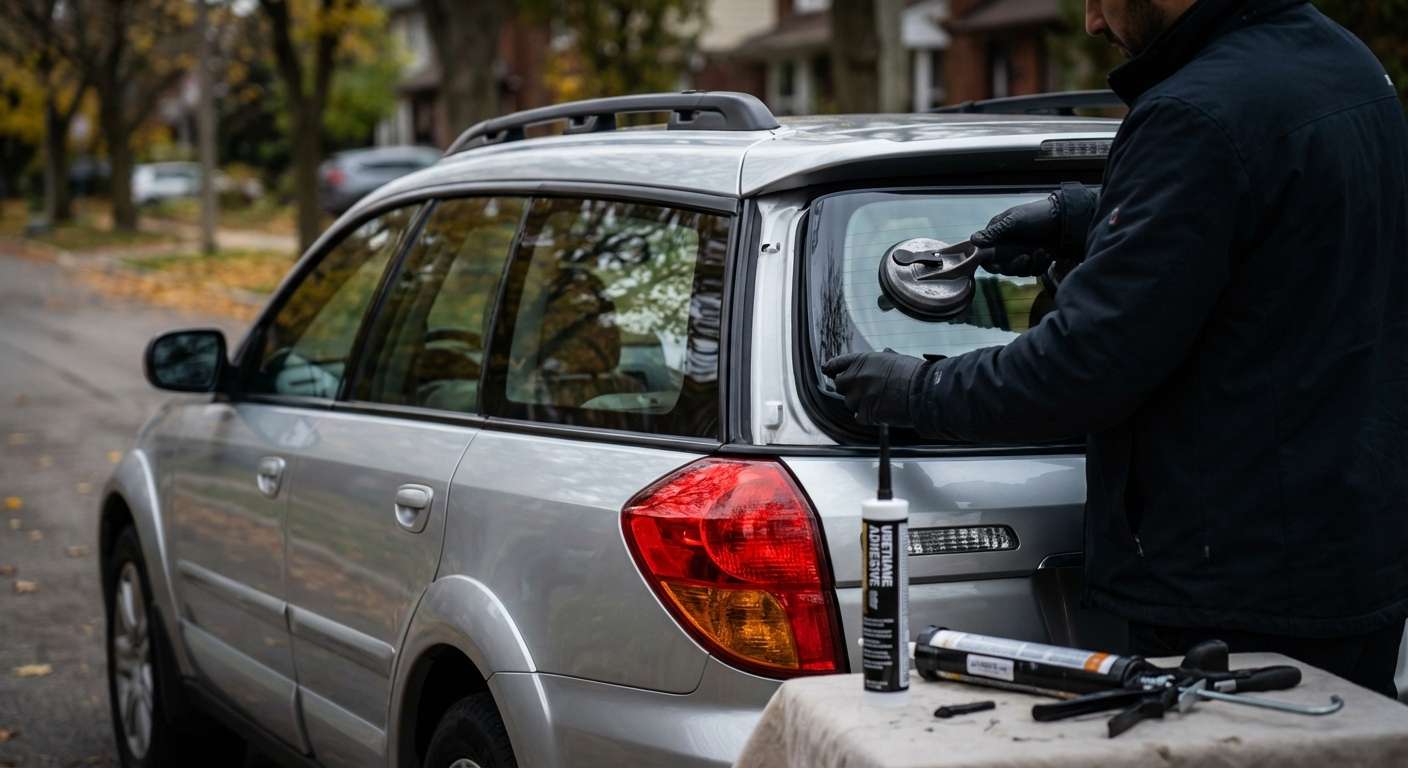
Identifying the Tint and Variant on Your Cargo Quarter Glass
Matching the stationary cargo quarter glass on this wagon comes down to inspecting your rear glass transparency and your factory equipment package. While base 2.5i wagons frequently left the factory with a lighter green solar glass, higher-end trims like the 2.5i Limited, 2.5 XT turbo, and the six-cylinder 3.0 R came standard with darker rear privacy tint. Because these windows match the dark glass on the rear liftgate, putting a standard green solar panel onto an Outback equipped with factory deep tint will leave the side profile completely mismatched.
You can identify which panel your wagon needs by checking the manufacturer bug etched into the bottom corner of the glass or cross-referencing your factory trim level. The original quarter window incorporates an encapsulated outer black moulding and an internal ceramic frit band, so the replacement must match the original moulding profile along the body pinchweld precisely.
| Glass Position | OEM Reference Number | Factory Glass Characteristic |
|---|---|---|
| Left Cargo Quarter | 65210AG09A / 65210AG09B | Deep Privacy Tint or Green Solar |
| Right Cargo Quarter | 65210AG08A / 65210AG08B | Deep Privacy Tint or Green Solar |
| Perimeter Dam | 65245AG00A | Foam Depth Regulator Seal |
| Retention Fasteners | 65254AE00A | Corner Alignment Pins (4 per car) |
Interior Trim Anchors and the Radio Antenna Confusion
When looking at the cargo quarter window on the fourth-generation BP body, owners often suspect the glass holds an integrated radio antenna when reception cuts out. In North American market wagons, the primary radio antenna elements are embedded in the rear hatch glass rather than these side cargo windows. If your AM/FM reception suddenly drops, the issue is almost always broken wiring harnesses flexed inside the rubber accordion boot connecting the body to the top of the liftgate, not an electrical fault in the side glass.
The glass itself remains entirely passive: it has no defrost wires, no wiper de-icers, and no built-in wiring plugs to disconnect. However, replacing it requires stripping the cargo bay interior down to bare metal. The D-pillar garnish, upper and lower C-pillar quarter trim panels, and cargo floor side rails all wrap over the inner pinchweld flange. I back every aftermarket replacement with a full year of product coverage against defects and guarantee my installation workmanship for as long as you own the vehicle, ensuring all panels click back firmly into their factory retention clips.
Avoiding Water Pooling Under the Cargo Floor
The cargo side area on this wagon is particularly sensitive to improper glass seating. Subaru designed the original installation around four dedicated retention fasteners (clip part 65254AE00A) and perimeter dam rubber (part 65245AG00A). These nylon locators set the exact depth and prevent the glass from sliding down toward the rear quarter panel while setting.
- Dam Rubber Integrity: Without the perimeter foam dam, the bond profile can collapse against the exterior sheet metal, allowing rain running off the roof rail channels to seep into the spare tire well.
- Encapsulated Moulding Fit: The outer rubber edge is molded straight onto the glass frame; aftermarket replacements must have this moulding intact to bridge the gap against the painted D-pillar cleanly.
- Fastener Positioning: Damaged body clips leave the glass sitting unevenly, which creates wind noise at highway speeds alongside the rear cargo window ledge.


