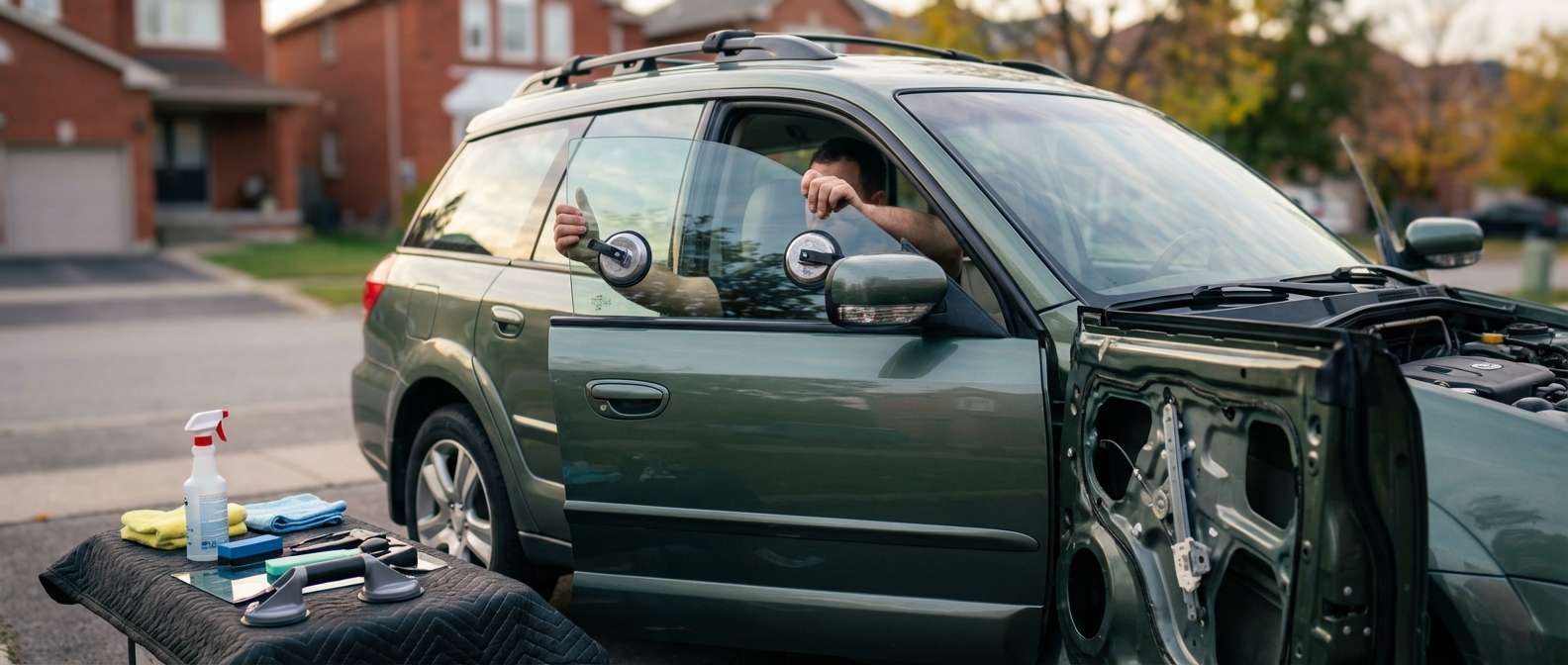
Frameless Door Glass Architecture on the BP Outback
Replacing side glass on this vehicle requires an entirely different approach than on modern crossovers because the doors carry no upper metal frames. The tempered door glass rises unsupported from the lower door shell to press straight into the roofline weatherstripping and A-pillar weatherseals. Because there is no rigid steel channel to capture the edge of the window as it reaches full height, stability relies completely on mechanical adjustment hardware buried inside the inner door cavity.
Every time a door shuts, the top edge of the pane absorbs the force against the body weatherstripping. For the driver side, NAGS catalog number FD22293 corresponds to the factory light green solar-tinted glass, while FD22292 covers the front passenger side. The front door glass bolts into retaining clamps secured to the power window regulator, stabilized fore and aft by felt-lined guide pads. Unlike later vehicles where side glass merely drops into fixed tracks, these BP units depend on exact tip-in pitch, lateral tilt, and upper travel-stop settings. Misaligning these adjustments by even two millimeters produces immediate whistling at highway speeds or allows pressurized water to breach the cabin perimeter.
Addressing Wind Leaks and the Triangular Mirror Gusset
The primary vulnerability in this setup sits at the forward base of the front door glass. Subaru designed a triangular rubber mirror gusset at the base of the A-pillar where the side mirror mounts to the door skin. Over years of use, this gusset rubber spreads apart, hardens, or tears. When the glass raises, it fails to form an airtight seal against the leading edge of the gusset, creating the distinct rushing wind noise familiar to long-time drivers of this era.
Whenever I hang a replacement front pane, setting the pitch of the glass against that triangular gusset is critical. If the window pitches too far inward, it strains the regulator motor and drags against the inner felt weatherstrip; if it tilts too far outward, air flows straight past the mirror base. I back the glass itself with a one-year defect warranty, alongside a lifetime guarantee covering my workmanship on the installation and mechanical alignments. Getting the upper mechanical stops positioned correctly also prevents the glass from over-extending, which otherwise wedges the upper edge too hard against the roof rubber and accelerates wear on the regulator cables.
Rear Wagon Glass Variants and Internal Stabilizers
Moving to the rear doors, Outback wagons generally require factory-style dark privacy tint (FD22295 for the rear left, FD22294 for the rear right) to match the quarter glass and tailgate, contrasting with the lighter solar green found on front positions. The rear glass operates without quarter vent glass dividers in the movable section, maintaining the clean frameless look that Subaru retired after 2009 before shifting to full-frame doors for the 2010 redesign.
Within the door shell, two adjustable felt-lined stabilizer pads pinch the glass low down to prevent fore-and-aft wobble during travel. A recurring issue on these doors is glass chatter or rattling when rolling over washboard gravel roads with the windows lowered halfway. This happens when the felt lining wears away or the stabilizer lock bolts back out. Replacing the pane requires resetting these guides so they maintain firm, sliding contact without binding the motor as the glass transitions past the waistline mouldings.
Why is there wind noise around my side mirror after a window replacement?
The leading edge of the front glass must nest tightly inside the rubber triangular mirror gusset. If the glass tilt-in angle was not adjusted at the lower regulator bracket, or if the mirror gusset rubber has warped with age, an air gap opens between the glass and the seal at road speeds.
Can pushing on the window to close the door damage the glass?
Yes. Pushing directly against the exposed upper edge of frameless glass uses the pane as a long lever against the internal regulator clamps. Over time, this shifts the glass pitch outward, loosens the internal stabilizer pads, and causes rattles or severe air leaks along the roofline.
What causes the glass to raise slowly or bind before reaching the roof seal?
Slow travel usually stems from dry, gummed-up run channels, worn regulator slide shoes, or stabilizer pads adjusted with excessive clamping pressure against the lower half of the glass. Proper alignment ensures the pane glides freely until the mechanical stops halt upward travel against the body seals.


