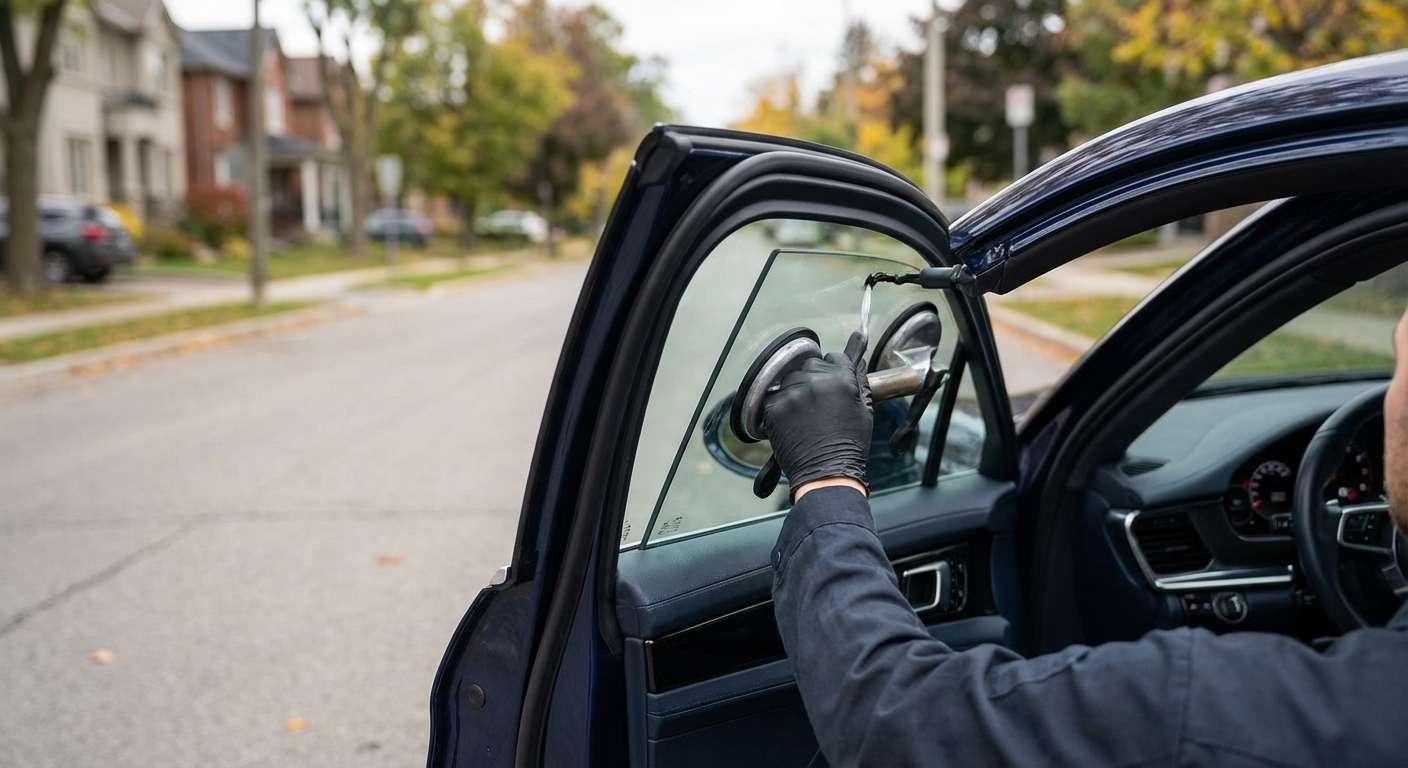
Frameless Door Glass Stresses and Breakage Points
The frameless side windows on the 976-series Panamera endure mechanical force every time an occupant touches a door handle. Because the glass must drop a fraction of an inch to clear the roof rail weatherstripping before the latch disengages, any failure in the indexing system can bind the top edge of the pane directly against the upper channel. In freezing winter conditions, moisture frequently glazes the outer waist seal to the glass face; pulling the handle while the glass is frozen tight shocks the internal regulator carrier clips and can shatter the pane instantly.
Break-ins targeting the front compartment represent the other major source of side glass damage. While standard single-pane tempered panels break into pebble fragments upon impact, cars optioned with acoustic laminated side glass behave differently: the inner polyvinyl butyral layer holds the fractured glass together, preventing cabin intrusion but leaving the pane completely spiderwebbed and unable to retract past the beltline mouldings without binding against the window guides.
Glazing Variations Across 976 Trims
Matching the replacement glass on the third-generation Panamera demands careful identification of the vehicle's acoustic package, wheelbase length, and exterior trim style. The standard sports saloon and the extended Executive model utilize different rear door glass dimensions due to the stretched rear passenger compartment. Furthermore, the glass edge aligns tightly against specific waistline trim finishes ranging from standard gloss black to the Turbo E-Hybrid variant's exclusive Turbonite trim.
| Glass Configuration | Construction | Primary Vehicle Application |
|---|---|---|
| Standard Side Glass | Single-pane tempered | Panamera, Panamera 4 base configurations |
| Thermally & Noise-Insulated | Dual-pane laminated with acoustic interlayer | Optional Panamera 4S, Turbo E-Hybrid packages |
| Rear Compartment Privacy | Tempered or laminated with dark factory tint | B-pillar rearward (standard and Executive wheelbases) |
The front door glass panels contain no integrated antennas, defrost grids, or forward-facing sensors, keeping the replacement panel focused entirely on acoustic barrier integrity and physical fitment. When sourcing aftermarket glass for these installations, I cover the glass itself against material defects for a full year and back my manual adjustment and assembly workmanship for as long as you own the car.
Regulator Alignment, Clamping, and Preload Normalization
Unlike doors with fixed upper frames that force the window into position, this car depends entirely on an internal cable-driven dual-rail window regulator mounted behind the door module carrier plate. The bottom edge of the glass does not use bonded locating pins; it sits within mechanical clamping brackets that secure with precision-torqued fasteners. Securing the glass at the incorrect angle will induce continuous wind buffeting, high-speed whistling, or water leakage past the A-pillar flocked seal.
- Longitudinal and Tilt Pitch: The dual rails must be balanced so the glass edge runs completely parallel to the B-pillar guide channel during travel.
- Inward Seal Preload: Mechanical adjustment screws at the base of the door shell dictate how hard the top glass edge presses inward against the vehicle's body weatherstrip when fully raised.
- Index Travel Normalization: Once the mechanical clamping is set, the window motor must undergo an electronic end-stop relearn to re-establish the pinch protection boundaries and short-drop indexing distance required whenever the exterior handle switch triggers.


