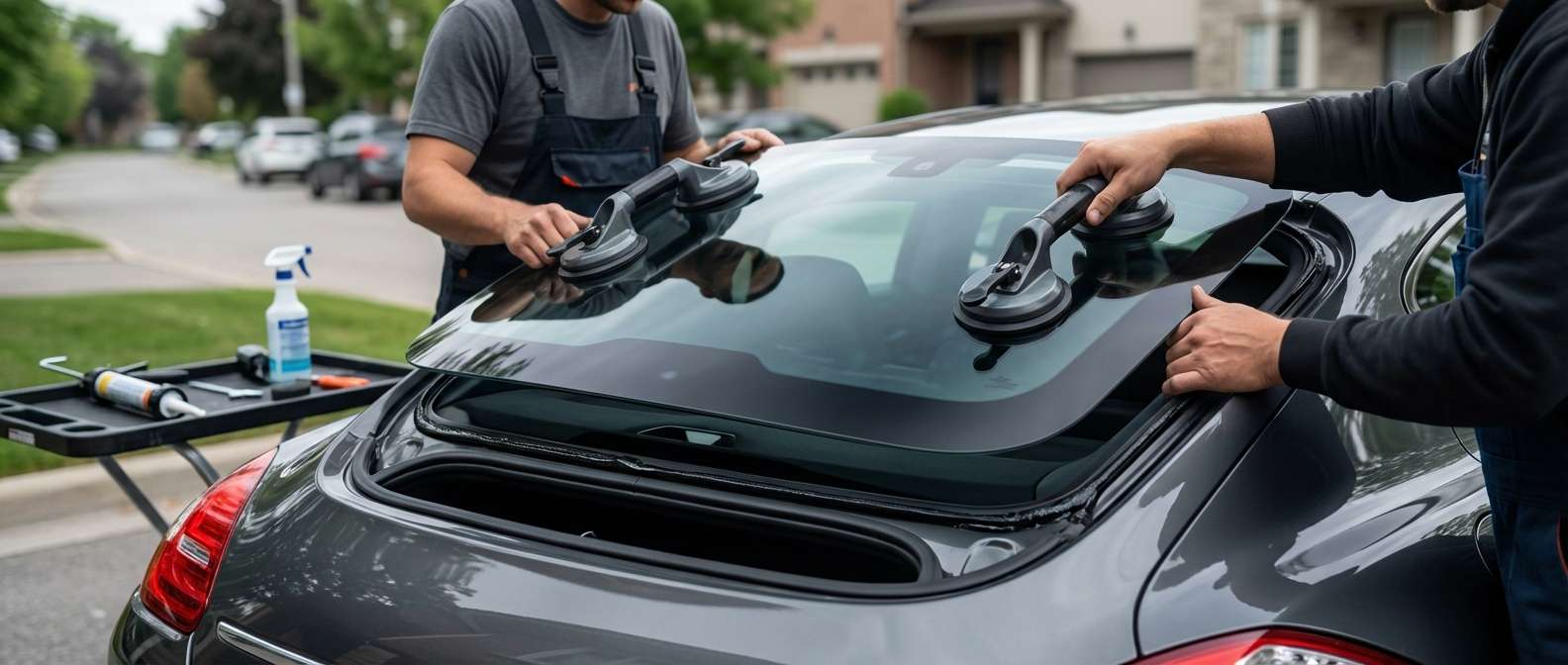
Liftgate Glass Variances Across the 970 Platform
Ordering the correct replacement back glass for this liftgate requires verifying two distinct factory equipment choices: the presence of an aperture for the optional rear wiper mechanism and the factory tint level. Porsche built the 970 liftgate shell out of a lightweight aluminum and steel composite, bonding the rear window directly into the frame above the active deployable rear spoiler. Because the wiper motor spindle must pass directly through the lower section of the glass plane via a sealed rubber grommet, a pane manufactured without this pre-drilled hole cannot accept the wiper assembly, and vice versa.
Beyond the mechanical wiper hole, the glass comes in either standard green solar control glass or the darker privacy glass associated with factory Option 840. The Eurocode reference for this back glass is 6728BGSHABK6H, and Porsche original equipment catalog listings fall under base group 970-545-111-xx (with production revisions including 970-545-111-46, 970-545-111-52, and 970-545-111-65-NVB). In the aftermarket cataloging system, these rear panes utilize the FB hardware prefix.
| Glass Configuration | Wiper Hole Provision | Glass Tint Level | Key Factory Codes |
|---|---|---|---|
| Standard Solar Hatch | None (Smooth glass) | Green Solar Control | Standard Base / 4S / Turbo |
| Rear Wiper Solar Hatch | Drilled lower aperture | Green Solar Control | Rear Wiper Option |
| Privacy Hatch Glass | None (Smooth glass) | Dark Privacy Tint | Porsche Option 840 |
| Privacy Wiper Hatch | Drilled lower aperture | Dark Privacy Tint | Option 840 + Rear Wiper |
Embedded Antenna Grids and Rear Hatch Electronics
The heating grid lines running across the viewing area do not merely handle winter defrosting. Integrated directly within the screen are fine-wire antenna elements responsible for AM/FM diversity reception as well as the receiver for the vehicle's remote keyless entry. When metallic aftermarket tint films are scraped off or applied carelessly by previous owners, these micro-traces sever easily, leading to a sudden loss of radio clarity or key fob range long before the glass ever cracks.
When you schedule a replacement with me, I typically show up at your vehicle about an hour after the booking is finalized to get the job handled immediately. Once on-site, I take care to unplug the antenna amplifier modules and defroster terminal leads cleanly from the inner hatch frame. The center high-mounted stop lamp (CHMSL) sits mounted right at the upper perimeter inside the hatch frame, while interior plastic and carpeted trim panels conceal the delicate harness connectors. If an owner has also ordered Option 863 (the power rear sunblind), the guide cassettes clip right into this surround framing, demanding exact pane alignment so the mechanical shade tracks smoothly without binding against the ceramic frit perimeter.
Tailgate Hardware, Spoiler Clearances, and Common Leak Sources
The bottom edge of the rear glass sits directly above the cavity housing the Panamera's multi-piece extendable rear spoiler. Road grit and washing debris routinely settle into the drainage valley between the lower frit border and the motorized wing mechanism. If water begins to pool inside the rear luggage area, the culprit is often not a failure of the structural urethane itself, but rather a rotted rubber spindle seal on wiper-equipped models or cracked upper hinge grommets where the liftgate wiring harness articulates every time the hatch opens.
When swapping this rear window, I verify that the rubber wiper grommet seats with an airtight seal around the glass cutout before the wiper arm torque is re-applied. Proper seating ensures that pressurized wash water cannot bypass the spindle and migrate into the liftgate latch electronics or the amplifier modules tucked behind the lower interior trim.


