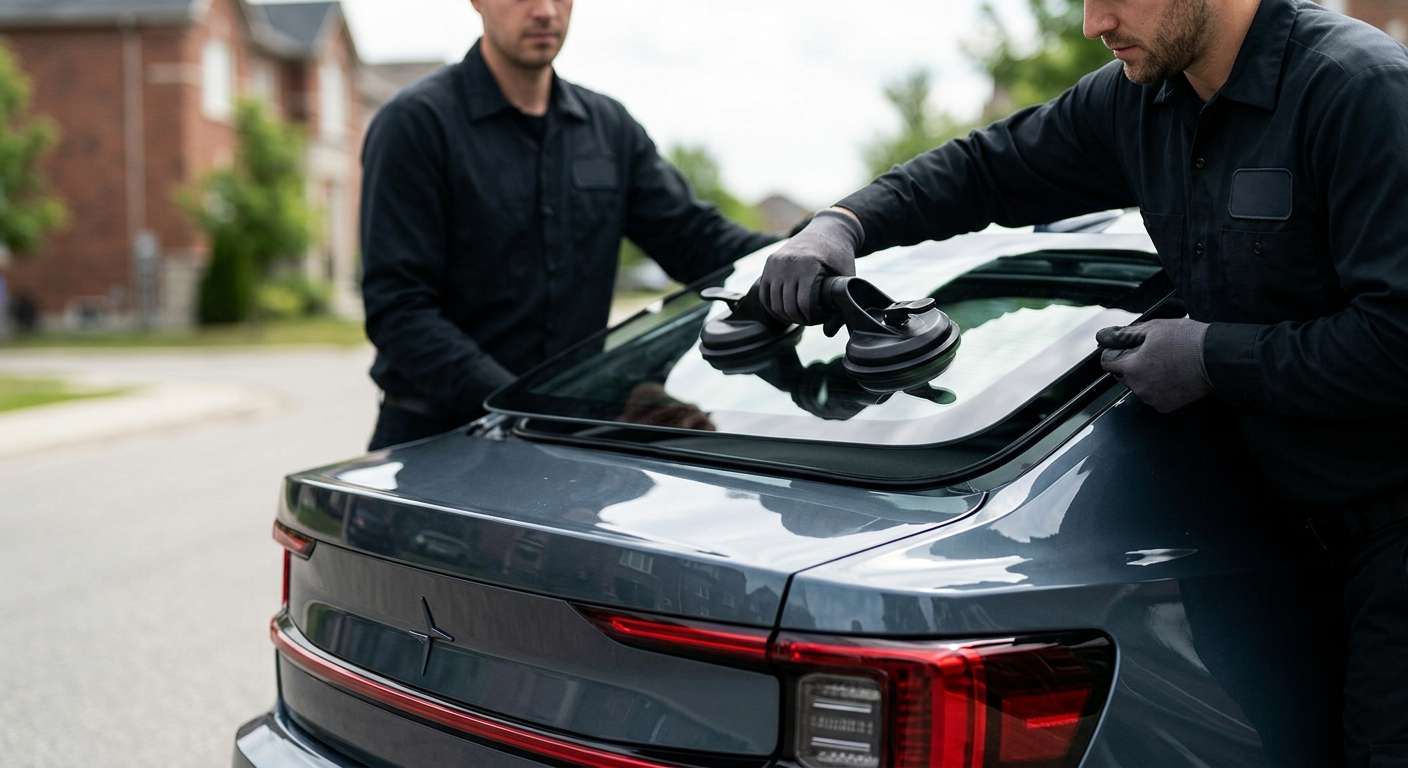
Liftback Back Glass Construction and Variants
The rear hatch design on this fastback uses a stationary, bonded tempered panel recessed directly into the lifting tailgate frame rather than a conventional saloon boot lid. Because there is no mechanical wiper assembly bored through the pane, the glass presents an unbroken surface bordered by an aerodynamic integrated lip spoiler at the base and interior plastic cladding along the liftgate structural frame. Identifying the correct replacement panel comes down to your factory tint configuration, which varies depending on whether your car was configured with standard solar green glass or optioned with the dark privacy glass common on the Plus Pack and dual-motor specifications.
| Glass Spec | Factory Finish | Package Distribution |
|---|---|---|
| Standard Solar | Light Green Tint | Standard range / single-motor base models |
| Privacy Tint | Dark Smoke | Plus Pack, Performance Pack, and dual-motor trims |
I frequently pull up roughly sixty minutes after a client confirms a booking, ready to clean shattered tempered pebbles out of the deep tailgate drop and replace the damaged pane on the spot. Both glass options feature the identical embedded grid layout, providing consistent terminal connection points for the defroster system regardless of the glass shade chosen at the factory.
Defroster Circuitry and Upper Tailgate Electrics
Because the fastback profile lacks a rear wiper motor and washer arm, road debris and winter slush build up rapidly on the shallow glass slope, making the defroster line health critical for outward visibility. In this vehicle, the rear defroster grid is interconnected directly through the central climate logic to the frameless exterior side mirrors, meaning activating the rear glass heater immediately directs current to clear the mirror surfaces as well.
When swapping a shattered rear pane, the modular interior plastic trim of the tailgate must be separated carefully around the upper hinge covers. A known vulnerability involves the wiring harness passing through the upper tailgate grommets near the hinges; pinched wiring in this junction can disrupt power to the defroster terminals and power liftgate struts before the new panel is even powered. Inspecting these harness feeds ensures full continuity across the embedded elements across the entire glass surface.
Rearward Vision Hardware Around the Pane
Replacing the glass on this car avoids complications with driver-assist modules because the sensor cluster is kept separate from the pane itself. Unlike the subsequent Polestar 4 design that bypassed rear glass entirely in favour of a permanent roof-mounted camera feed, this liftback pairs physical glass with distinct structural components:
- Center High-Mounted Stop Lamp: The third brake light sits enclosed within the upper interior tailgate spoiler molding, shining through the top edge without being glued directly onto the glass face.
- Backup Optics: The rearview camera and optional 360-degree surround-view lens are secured lower on the hatch panel near the license plate recess, remaining completely undisturbed when the rear glass is swapped.
- Aerodynamic Lip: The exterior lower edge meets painted sheet metal directly adjacent to the hatch's built-in ducktail edge, demanding precise vertical placement to align with the perimeter reveal molding.


