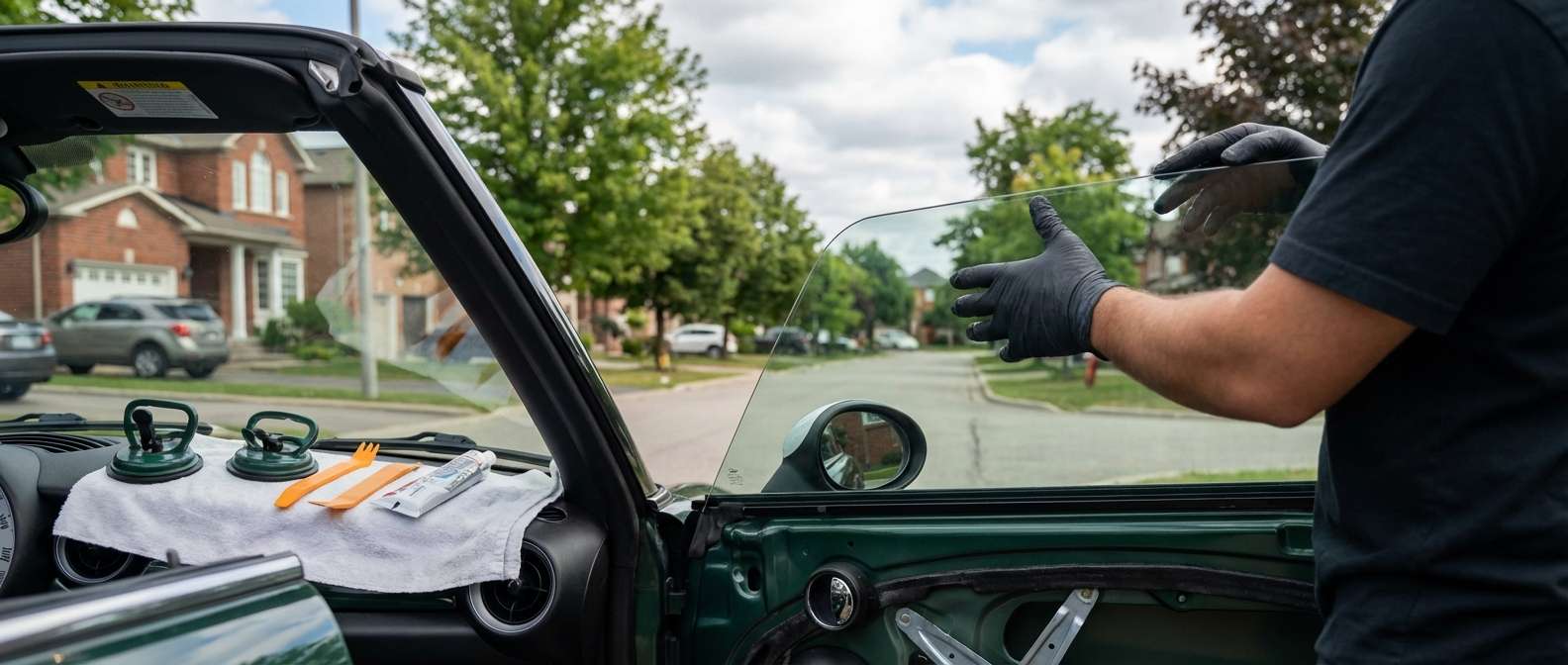
Frameless Glass Alignment and the Short-Drop Seal
When the door glass breaks on your open-top MINI, the biggest concern is how the replacement window will seal against the fabric roof. Because the door is completely frameless, the glass has no metal sash running along the sides or top. Instead, it relies on a motorized indexing feature that drops the pane roughly a quarter to a half-inch the instant you touch the exterior handle. When you shut the door, the motor drives the glass back up inside the soft top roof rail weatherstrip and the forward A-pillar seal. If a replacement pane is off by even two millimeters, that upper edge catches on the convertible top folding frame or leaves a gap where rain pours directly onto the seat.
The trailing vertical edge presents its own challenge. Unlike a standard hardtop, the rear edge of this front glass presses against a vertical rubber gasket attached directly to the retractable rear quarter window. Inside the door cavity, the pane sits in two pinch-clamp brackets attached to the cable-operated regulator. I set the mechanical tilt, camber, and height using the internal torx adjusters and gear cogs so that the glass preloads firmly against the upper fabric seals without binding the motor.
Part Details and Convertible Door Architecture
Although the folding roof structure is unique to the convertible, the front side glass itself is physically interchangeable with the three-door R56 hatchback. The pane is completely bare tempered green-tint solar safety glass; all optical sensors and rain systems sit high on the windshield rather than in the side doors.
| Glass Position | BMW / MINI Part Number | Glass Characteristics |
|---|---|---|
| Front Left (Driver Side) | 51337147395 | Tempered, Green Tint, Twin Clamp Notches |
| Front Right (Passenger Side) | 51337147396 | Tempered, Green Tint, Twin Clamp Notches |
For every replacement, I source high-grade aftermarket glass manufactured by Pilkington, FYG, PGW, or XYG, ensuring the curvature and perimeter edge grind match the tight clearances of the factory chrome beltline mouldings. Once the replacement pane is seated in the regulator clamps, the vehicle's footwell module often loses track of the upper travel boundary. I re-initialize the window motor stops directly from the center toggle switch so the short-drop feature registers the exact top edge of the convertible seal again.
Troubleshooting Regulator Snags and Weatherstrip Leaks
Sometimes the glass shatters because an internal mechanical failure forced it out of true. The cable-driven regulator inside this door uses plastic guide pulleys that become brittle over time. When a pulley snaps, the steel cable binds, tipping the glass forward into the A-pillar track or dropping it straight to the bottom of the door shell.
- Top-Edge Snagging: If the door refuses to close flush or the glass hits the fabric rail, the indexing short-drop has failed, usually requiring an electronic limit reset or attention to a sluggish window motor.
- Water Seepage at the Mirror Corner: Shrinkage in the forward A-pillar rubber joint allows water to bypass the glass if the forward clamp height inside the door has drifted downward.
- Intermittent Movement: Carbon buildup on the internal motor brushes can cause the glass to stop responding mid-travel, often mistaken for an electrical failure until the inner panel is tapped near the motor casing.
- Beltline Scraping: Dried-out interior felt wipes or grit trapped against the exterior rubber belt moulding will scratch the replacement glass surface if not cleared during reassembly.


