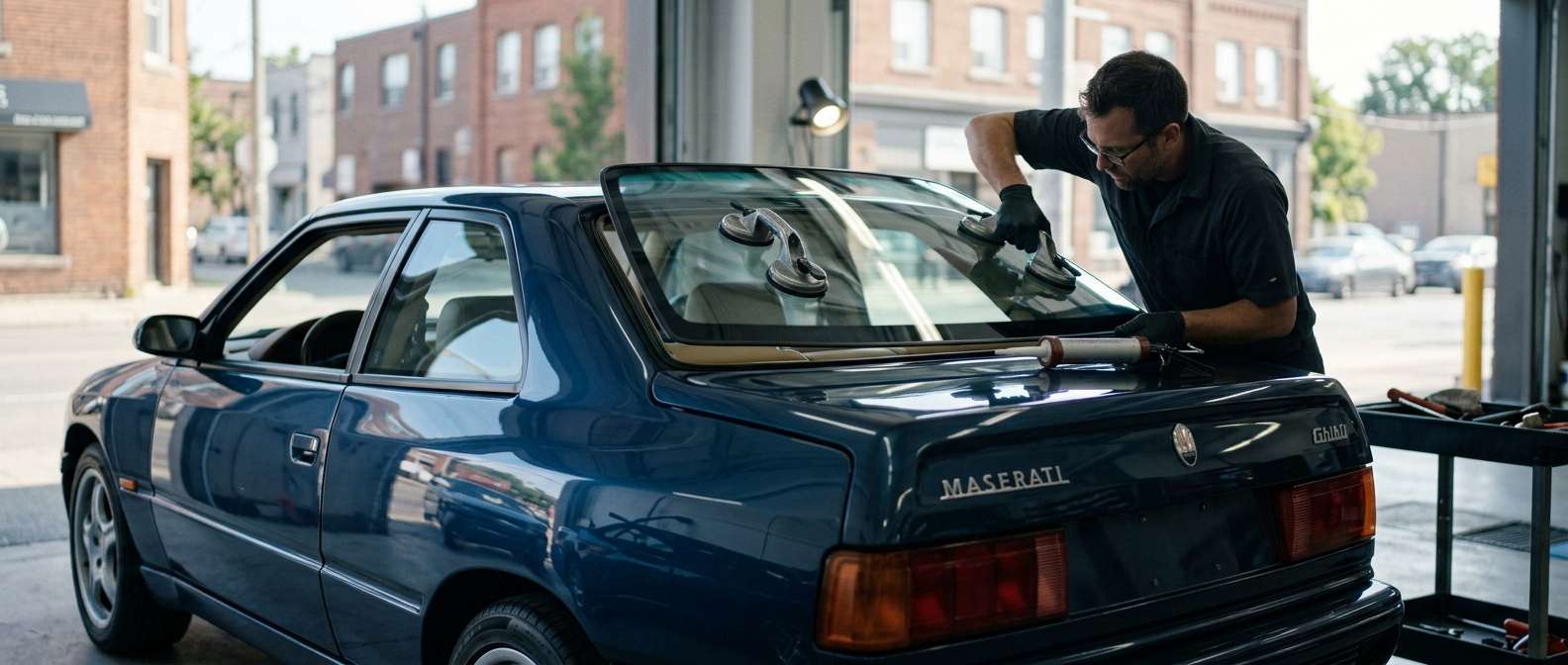
Identifying the Rear Window Variations on the AM336 Coupe
Determining the exact rear window setup on your car comes down to inspecting the lower inner edge by the parcel shelf and examining the color tone baked into the original glass. Marcello Gandini’s wedge profile for the AM336 coupe uses a steeply raked rear screen borrowed from the Shamal architecture, sitting flush against an exceptionally high rear boot lid line. While every model in this run utilizes a fixed, bonded glass pane with a printed 12-volt defroster grid, the internal configuration changed during the production cycle.
Earlier production models run an uninterrupted defroster grid across the glass face without an integrated third brake light. Later examples, introduced as European safety mandates evolved, house a high-mounted third brake light module mounted directly to the rear package tray, sitting flat against the bottom center of the screen. Look closely at the bottom edge of your glass: if you have the later setup, the defogger lines stop short to create an unheated visual window for the lamp housing. You should also check the electrical tabs on the C-pillar sides. The spade terminals that feed the demister are soldered directly to the glass substrate and can snap off if disturbed during interior work.
Tint variation is the other factor to verify. Biturbo-family vehicles used either a distinct light green or a warm bronze heat-absorbing tint. You can confirm your glass tint by holding a sheet of white paper halfway behind the rear window and viewing it in natural daylight to match the tone against your door glass.
Glazing Hardware and Perimeter Components
The stationary rear glass serves as a structural element direct-glazed to the body aperture pinch weld. Unlike the doors, which use frameless moving glass, the back window is framed by a dedicated exterior rubber moulding assembly that seals the gap along the roofline, C-pillars, and Gandini's raised rear decklid. Over decades of heat exposure, this outer perimeter finisher shrinks, hardens, and pulls away from the corners, often letting trapped moisture sit undetected in the lower channel.
Because these cars were never officially imported into North America through franchise channels, standard catalog lookups do not list a standard NAGS benchmark code for this model. Sourcing original dealer inventory under factory part number 313120115 is practically impossible today due to depleted European warehouse stocks. When I replace this back glass, I supply quality aftermarket glass produced by established manufacturers like Pilkington, PGW, FYG, or XYG, ensuring the curvature matches the Shamal-derived roof stamped channel and the defroster terminals align with the factory rear wiring harness.
Post-Replacement Inspection Checklist
After your new back glass is set in place, take a few minutes to inspect the specific structural interfaces and electrical connections on your coupe:
- Inspect the outer perimeter rubber moulding to confirm it sits completely flush against the painted C-pillars and upper roof edge without waviness, gaps, or lifted corners.
- Check the lower reveal gap where the glass meets the high rear boot lid line to ensure uniform clearance across the entire width of the trunk shut line.
- Examine the interior upholstered parcel shelf and inner C-pillar trim panels to ensure they sit flush against the glass borders without pinching the fabric.
- Test the electric rear demister using the dashboard switch to verify that current flows across the printed grid lines without cold bands or dead heating traces.
- Verify that the high-mounted center stop lamp, if present on your vehicle, sits aligned inside its lower window recess without pressing hard against the inner glass surface.


