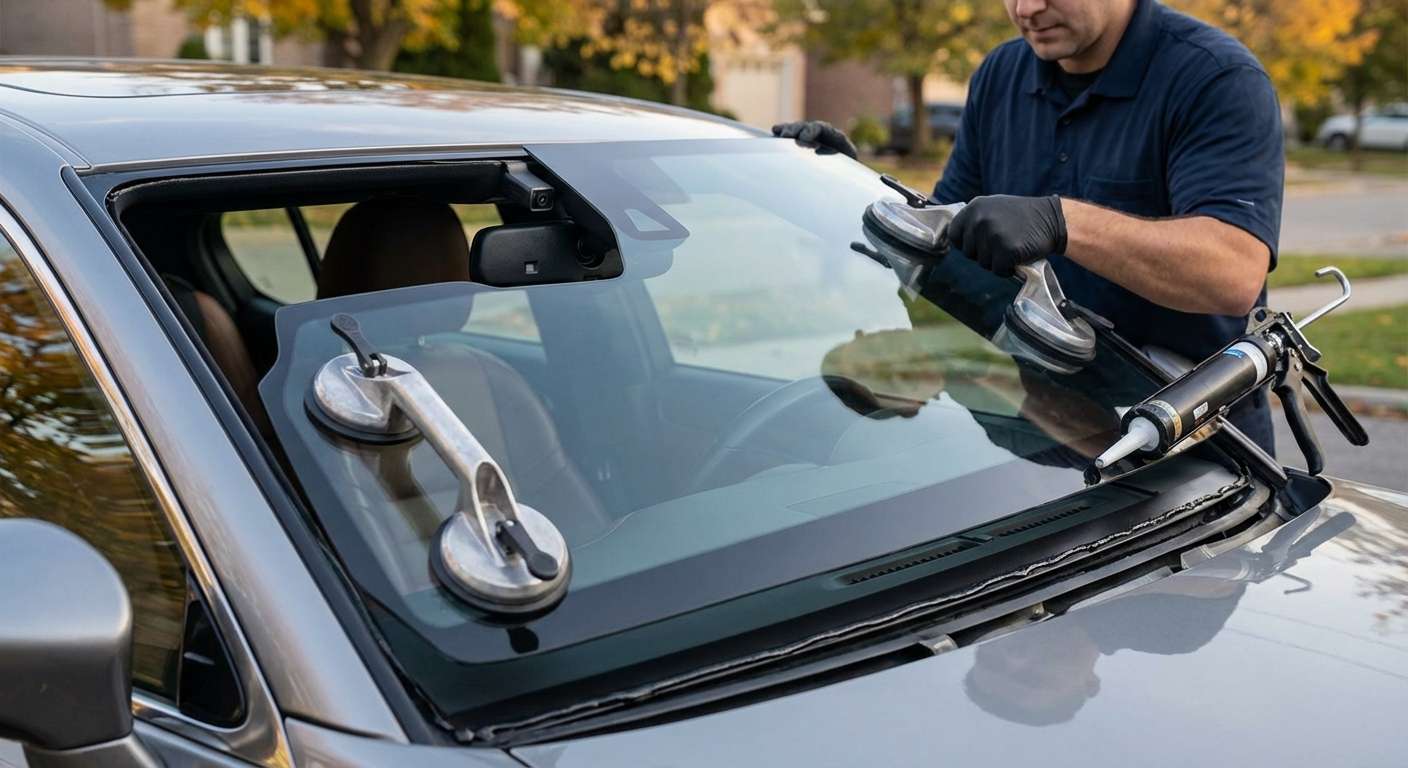
Common Forum Complaints Around 4th-Gen GS Glass Quality
GS 350 and GS 450h owners frequently post about bad visual distortion, highway buffeting, and erratic wipers right after a replacement. The factory glass on this car is heavy acoustic laminate designed to suppress cabin resonance, and skipping acoustic-rated glass immediately ruins the hushed ride quality these sedans are known for. On GS models optioned with the Head-Up Display, an improperly manufactured inner polyvinyl butyral layer leads to ghosted, double-projected speedometer readouts. I also see many drivers complaining that their automatic wipers wipe dry glass or refuse to trigger in heavy mist; this almost always traces back to an installer reusing a clouded silicone gel pad instead of applying a fresh optical pad beneath the rearview mirror humidity and rain sensor assembly.
Hardware, Reveal Mouldings, and A-Pillar Clips
The exterior trim on the GS requires specific handling to prevent post-installation rattles. The glass is flanked by left and right A-pillar drip mouldings that channel water over the roofline, held down by approximately five plastic clips per side. These factory clips become brittle from heat and UV exposure, routinely snapping when pried upward. Reusing cracked clips leaves the drip moulding sitting proud of the pillar, creating an unbearable whistle at 100 km/h. At the bottom, the two-piece plastic cowl panel interlocks tightly beneath the hood edge, requiring full extraction of the wiper arms to avoid fracturing the delicate plastic locating tabs. To protect the soft dashboard upholstery, I also take extra care along the bottom edge where the leather is positioned unusually close to the inner glass line.
Navigating Lexus GS Part Options and Features
Pinpointing the correct glass for the GS means matching specific cold-weather packages and mirror-base sensors, since options shifted heavily between the 2013 launch and the 2016 facelift:
- 56101-30973 (superseding 56101-30921): Found on early 2013–2016 GS 350 sedans equipped with rain-sensing wipers.
- 56101-3A934: Common on 2016–2020 models featuring the heated wiper park element and rain sensor, built without the HUD wedge.
- 56101-3A936: Applied to 2015–2018 vehicles, including GS 450h hybrid models with specific cabin sensor configurations.
- Cold Weather Package grid: Includes embedded resistance wires in the lower glass blackout area to thaw parked wiper blades.
When sourcing glass for these cars, I supply exclusively aftermarket windshields from established glassmakers like Pilkington, FYG, PGW, and XYG, matching the correct acoustic profile and de-icer connections to your car's build sheet.
Why is my head-up display blurry after getting a new windshield?
HUD-equipped GS models require glass with an angled wedge-profile interlayer. Standard flat windshields reflect the projected image off both the inner and outer glass surfaces at slightly different angles, producing a distracting double image or blur.
Can the rain sensor gel pad on my GS 350 be reused?
No, the silicone optical pad between the glass and the sensor body deforms upon removal. Reusing it introduces microscopic air bubbles that scatter the infrared light beam, causing erratic or non-functional wiper cycles.
Why is there wind noise near my A-pillar after a glass swap?
The side reveal mouldings depend on a row of fragile plastic body clips. If an installer breaks these clips during removal and glues the trim down rather than replacing the hardware, the moulding lifts at highway speeds and catches the air.


