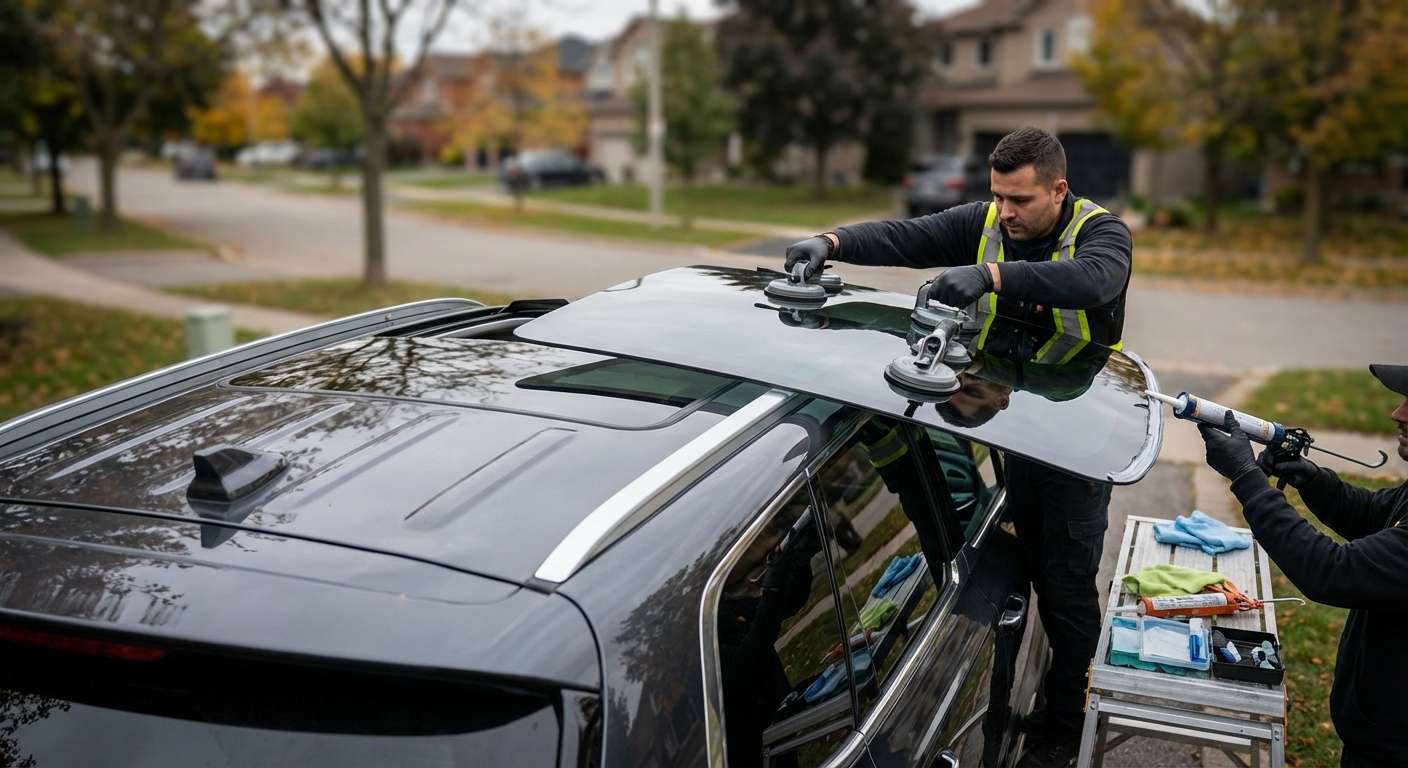
Telluride Sunroof Configurations and Spontaneous Panel Failure
The Kia Telluride uses two distinct roof layouts depending on whether you drive a mid-tier S or EX, or an upper-tier SX, SX Prestige, X-Line, or X-Pro. On the S and EX trims, Kia equips a single front power tilt-and-slide unit. The higher trims add a secondary, stationary glass section over the second row, creating a dual-sunroof setup. While the front movable section operates identically across all trims, the rear panel on the dual layout is a completely separate fixed piece of glass recessed into the unibody roof stamping between the vehicle's structural roof bows.
Both panels are manufactured from dark-tinted tempered safety glass without integrated antennas, rain sensors, or defroster grids. Because the front movable panel takes direct wind resistance and body flex, it has been the subject of numerous NHTSA owner filings regarding spontaneous glass breakage at highway speeds without prior rock chips. When tempered glass experiences a localized fracture, internal stresses cause the entire panel to crumble instantly into thousands of small pebble-sized fragments. The perimeter of this movable panel features a factory-molded rubber weatherstrip seal, while the rear fixed glass sits flush against its own dedicated roof opening.
Hardware, Cassette Assemblies, and Track Mechanisms
The movable front sunroof panel connects to twin guide rails using four Torx-head mounting screws, with two fasteners concealed behind flexible rubber side bellows on each side of the frame. Kia catalogs the OEM front glass panel under part number 81630-S8000, which services both the single-sunroof EX/S variants and the front opening of the dual-sunroof models. The corresponding fixed rear glass panel for dual-roof trims is part number 81640-S8100. When glass breaks or the drive cables bind permanently, dealerships often push to swap the complete internal cassette assembly (part number 81600-S9000WK for models with black headliner cloth), but swapping the broken glass panel itself onto functional tracks avoids dropping the entire interior ceiling structure.
Whenever I replace damaged overhead panels on these vehicles, I supply aftermarket glass sourced from recognized manufacturers like Pilkington, PGW, FYG, or XYG to match the original dark factory tint and contour without the dealer assembly markup.
On 2020 through 2022 Tellurides, binding tracks are frequently tied to Technical Service Bulletin BOD319. This bulletin addresses broken hinge arms and linkage components on the spring-loaded mesh wind deflector that rises along the leading edge of the front roof aperture. When the deflector arm snaps, the lowering track jams against the loose plastic parts, causing the anti-pinch safety sensor to kick in and reverse the glass, or locking the panel partially open.
Water Drainage Paths and Mechanical Hazards
A Telluride sunroof relies on continuous water management rather than a completely watertight external seal. Water that seeps past the outer encapsulated seal drains into metal perimeter troughs built into the cassette frame. From there, four dedicated exit hoses channel runoff downward: two running through the A-pillars to discharge near the front wheel wells, and two running through the C-pillars to the rear quarter areas. When tempered glass shatters overhead, shards inevitably enter these narrow plastic drainage spouts. If those fragments are not cleared before the new panel is secured, water backs up into the cabin, soaking the headliner fabric, pooling around the front passenger footwell, and tracking down the A-pillar interior plastics.
Post-Replacement Inspection Checklist for Owners
After your replacement glass panel is secured to the Telluride's track assembly, run through these functional checks before putting the vehicle back into regular highway service:
- Inspect the rubber accordion bellows on both sides of the front track to confirm they are seated properly and not bunched or dragging along the guide rails.
- Test the front manual sliding sunshade to ensure it glides back and forth smoothly without catching on the upper mounting brackets.
- Operate the power roller shade on dual-sunroof trims to verify the motorized fabric extends and retracts fully over the rear 81640-S8100 fixed glass opening without binding or wrinkling.
- Cycle the front tilt and slide functions completely to confirm the panel closes flush with the outer roof sheet metal and does not trigger the anti-pinch auto-reverse function.
- Check that the spring-loaded front mesh wind deflector pops up freely when the roof slides open and folds down flat without catching on the glass frame as it shuts.
- Look closely at the molded perimeter rubber seal around the front panel to confirm even spacing and full contact against the vehicle roof cutout on all four sides.


