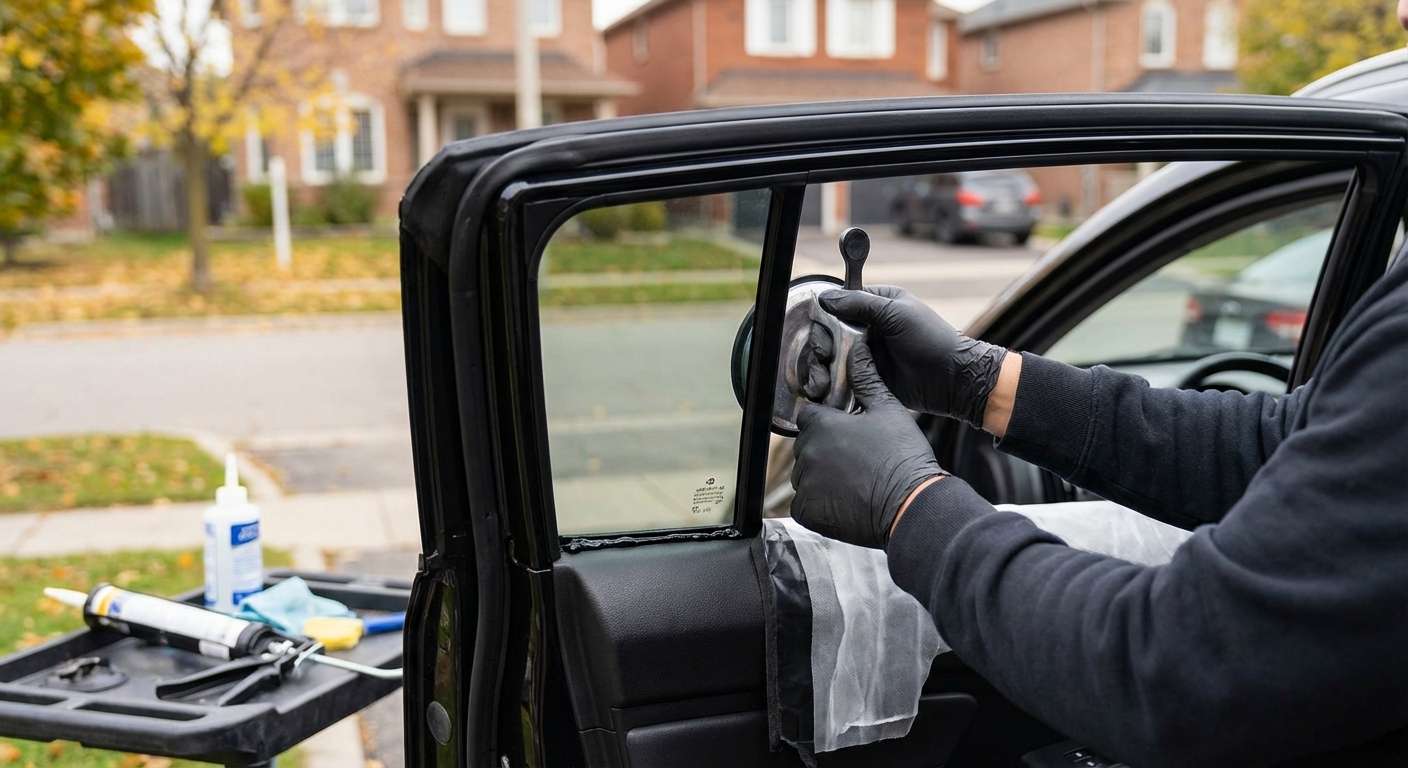
Rear Door Vent Glass and Factory Tint Differences
Replacing the stationary rear door vent window on this crossover requires matching the specific glass transparency delivered from the factory. Unlike vehicles equipped with defroster traces, embedded radio antennas, or rain electronics in the side glass, these rear quarter panes are bare single-pane tempered panels. The primary variation between trims comes down to glass pigment. Base models typically feature standard solar green glass, while the EX and turbocharged SX trims were built with dark factory privacy glass behind the B-pillar.
| Door Position | Solar Green Tint (Base Trims) | Privacy Glass (EX, SX) | Vertical Division Bar |
|---|---|---|---|
| Driver Side (LH) | 83417-3W000 | 83417-3W010 | 83510-3W000 |
| Passenger Side (RH) | 83427-3W000 | 83427-3W010 | 83520-3W000 |
I install aftermarket replacement glass designed to mirror these factory optical depths precisely so the replacement panel blends with the rear roll-down door window and the rear quarter glass. Because break-ins targeting these small rear side windows leave the cabin exposed to weather, I aim to arrive at your location within roughly an hour of your call to clean out the shattered tempered fragments and secure the door frame.
Division Bar Hardware and Perimeter Gaskets
This stationary glass does not bond to the door shell with urethane adhesive. Instead, Kia engineered the stamped steel door frame to hold the glass mechanically using a deep rubber sash channel and an upright steel division post. The vertical division bar (part 83510-3W000 on the left side, 83520-3W000 on the right) acts as a structural boundary inside the door frame: its forward guide channel directs the moving drop glass while its rear track secures the stationary vent pane.
When wind noise or cabin drafts develop around this corner of the vehicle, the issue almost always stems from the surrounding rubber weatherstripping rather than the glass itself. The upper sash run channel (LH 83531-3W000; RH 83541-3W000) wraps tightly around the perimeter of the vent window. If this rubber hardens, shrinks, or pinches during service, it breaks the cabin pressure seal at highway speeds. Servicing this unit involves accessing the internal mounting hardware behind the interior door card to release the lower division channel bracket, shifting the vertical guide bar forward so the replacement glass seats fully into the upper rubber tracks.
Independent Operation from the Rear Window Regulator
The stationary vent pane operates completely isolated from the mechanical lifter assembly inside the door. Kia isolated the electric regulator and its lift motor to the primary movable glass pane, meaning mechanical regulator failure has no physical impact on the vent glass structure. The fixed pane remains seated in the upper rubber sash regardless of the adjacent window's position.
Because the division bar isolates the two pieces of glass, maintaining the integrity of the center felt run is essential. Any deformation introduced to the vertical division track while the vent pane is being swapped will cause the primary drop glass to bind, drag, or rattle inside its guide channel. Ensuring the replacement aftermarket pane seats squarely within the rear corner pocket prevents uneven pressure against the division bar, allowing the motorized window beside it to travel smoothly from top to bottom.


