Rear Door Vent Architecture and the Aero Blade Factor
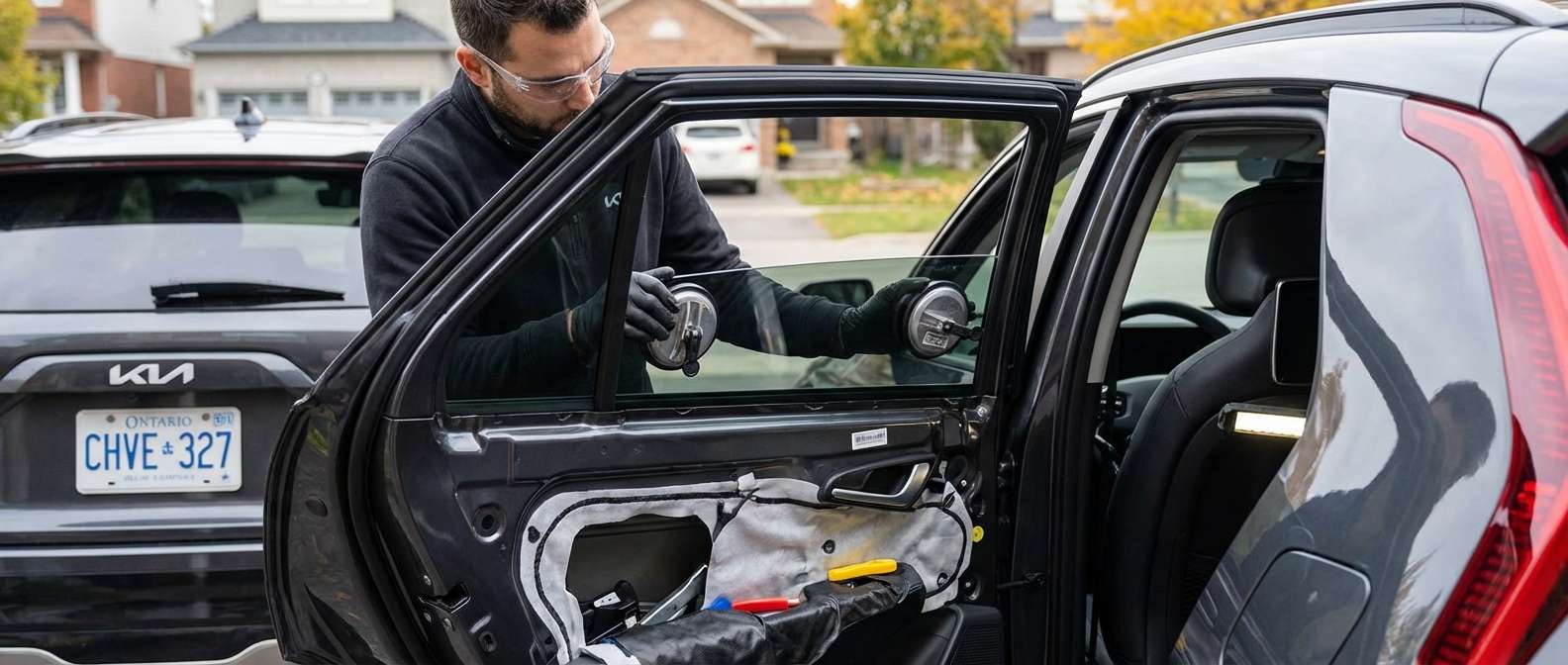
Replacing the stationary rear door vent window on this redesign involves navigating a unique layout where door construction and body styling sit exceptionally close together. The glass sits at the trailing edge of the rear passenger doors rather than fixed directly into the rear quarter panel. Because of this door-mounted position, it sits just fractions of an inch forward of the distinctive aerodynamic "Aero Blade" C-pillar panel that defines the SG2 body shape. That placement means servicing the vent glass stays self-contained entirely within the rear door frame itself, eliminating any need to disturb the complex airflow channels or exterior garnish clips anchored to the exterior quarter structure.
Unlike older utility vehicles that relied on direct polyurethane bonding along the rear body, this unit is mechanically trapped. It sits within a dedicated rubber run channel seal, framed along its forward edge by the vertical rear door division bar. That division bar serves a dual purpose: it forms the forward boundary for this stationary glass while acting as the guide track for the main movable rear door glass. Accessing and reseating the replacement glass demands releasing the inner and outer beltline weatherstrips, unbolting the bottom anchoring fastener of that vertical division guide, and carefully manipulating the upper rear delta garnish applique on the outer door frame.
Glass Composition and Trim Compatibility
Every variant across the lineup—whether the base Niro LX, mid-range EX, or the fully optioned SX Touring—uses the same rear door vent glass geometry. The stationary piece is pressed from single-pane tempered safety glass, bordered by a wide black ceramic frit band that masks the inner structural door flange and weatherstrip seating. Factory dark solar privacy tint is standard across all models, matching the light transmittance value of the adjacent roll-down glass directly from the factory.
Because the panel carries no embedded defroster lines, radio antennas, or wiring connectors, the mechanical fit is identical between powertrain layouts. Below is a breakdown of the structural glass specifications for this specific door position:
| Component Attribute | Vehicle Specification |
|---|---|
| Glass Type | Single-pane tempered safety glass with ceramic perimeter frit |
| Factory Appearance | Dark solar privacy tint (matches rear roll-down glass) |
| Mounting System | Encapsulated rubber run channel with division bar retainer |
| Kia Part Group Reference | 83415 / 83425 (Left side) and 83416 / 83426 (Right side) |
| Adjacent Trim Components | Door division bar channel guide, outer rear delta garnish applique |
| Internal Connections | None (no heating grids, antennas, or sensor wiring) |
When I rebuild the door glass assembly, I back the replacement glass itself against manufacturing defects for one year, while my labor and weatherstrip fitment carry lifetime workmanship backing. Ensuring that the division bar re-aligns precisely is critical: if that vertical run is re-fastened even two millimeters out of square, the main window regulator will bind as the roll-down glass travels along the forward side of the divider.
Common Damage Scenarios on the Second-Generation Door
Because the rear door vent window is relatively small, it is frequently shattered during smash-and-grab thefts by individuals attempting to bypass interior lock latches without triggering proximity alarms. When the tempered glass fractures, it breaks into small pebble-like fragments that drop down through the inner door cavity, settling along the bottom drain holes next to the audio speakers and door impact beams. A complete replacement requires pulling the inner door panel to fish out every shard before the new panel is seated inside the rubber channel guide.
Does the C-pillar Aero Blade panel need to come off to change the vent glass?
No. Even though the vent glass visually aligns with the color-contrasting Aero Blade on models equipped with the two-tone exterior package, the glass is completely enclosed inside the door shell. It swings open with the door, entirely clear of the body-mounted pillar trim.
Is the vent glass glued to the metal frame with urethane?
No, this model does not use a direct urethane glue bond for the rear door vent glass. It is held securely inside a pre-formed rubber run channel weatherstrip and clamped along the front edge by the metal division channel guide bar.
Does replacing this glass affect the rear window defogger?
No. The rear door vent glass does not carry defroster grid wiring. The rear defrost circuit on this vehicle is confined strictly to the rear tailgate liftgate glass, meaning this door repair involves no electrical connections.


