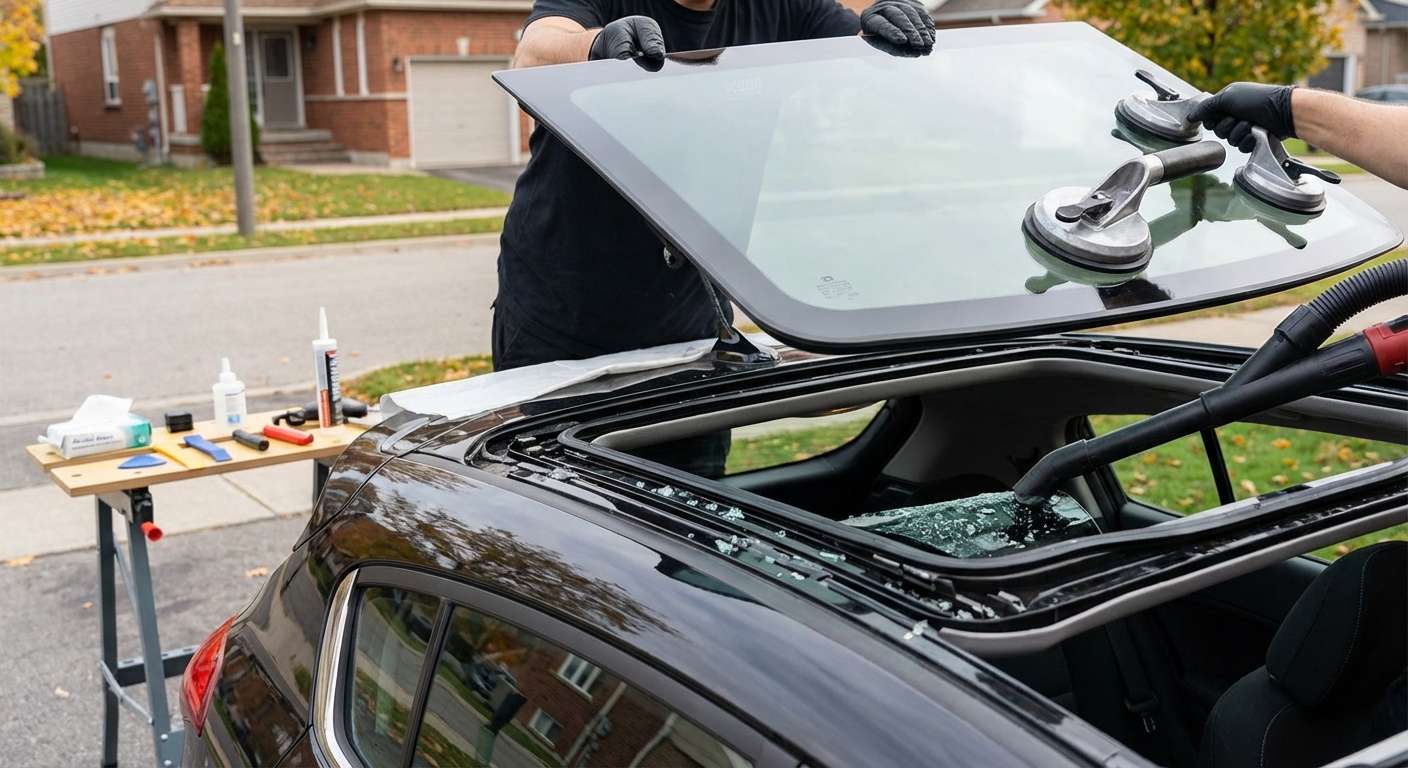
Sudden Glass Breakage on Forte and Forte5 Roofs
When the dark tempered glass panel above your head violently pops without an obvious impact, you are dealing with a known vulnerability rather than bad luck. The single-pane tilt-and-slide moonroof found on EX and SX trims is engineered from factory-tinted safety glass under constant tension. On highway corridors, minor torsional twisting in the roof sheet metal pairs with high-speed air pressure drops, causing microscopic stone chips along the edge to propagate instantly into thousands of small, granular cubes.
Because this vehicle utilizes a standard drop-in sunroof cassette rather than a panoramic setup, the glass panel operates independently of the painted roof skin. It does not carry structural body urethane, radio antennas, or embedded defrost circuits, which keeps the mechanical footprint simple. However, the debris from a blown panel falls straight onto the sliding fabric sunshade or scatters into the cabin tracks, requiring immediate containment before the mechanical sliders bind.
Distinguishing Sedan and Hatchback Moonroof Panels
While the four-door sedan and five-door Forte5 share front-end architecture, their rooflines differ enough at the stamping to dictate distinct sunroof glass assemblies. Installing a replacement requires confirming whether your car uses the sedan assembly or the specific hatchback panel, as their perimeter weatherstrip profiles and mounting bracket spacing do not cross over.
| Vehicle Variant | Trim Levels | Dealer Reference | Panel Type |
|---|---|---|---|
| Forte Sedan (4-Door) | EX, SX | 81610-1R000 / 81610-A7000 | Single-pane tilt/slide |
| Forte Sedan (Late split) | EX, SX | 81610-A7100 | Single-pane tilt/slide |
| Forte5 Hatchback (5-Door) | EX, SX | 81610-A7500 | Single-pane tilt/slide |
When sourcing the replacement glass, I fit high-grade aftermarket panels produced by global manufacturers like Pilkington, PGW, FYG, and XYG rather than dealership-boxed units, ensuring the exact curve and factory dark solar tint match the original look. The replacement assembly arrives with the vulcanized synthetic rubber edge moulding already molded directly onto the tempered glass border, which seals the panel against the exterior steel roof opening.
Track Clearing and Water Ingress After Panel Failure
Replacing the glass itself does not mandate dropping the full interior headliner, provided the drive cables and motor remain operational. The panel fastens directly to the tilt-lift guides using mechanical side fasteners shielded by snap-on plastic accordion bellows. If the glass has fragmented, the primary concern shifts to what fell into the guide channels.
- Drainage Troughs: The water management tray below the glass feeds into flexible drain tubes hidden inside the A-pillars and rear pillars. Granular glass pebbles easily slide into these drain holes, creating clogs that later dump rainwater into the front footwells or headliner corners.
- Track Obstructions: Small glass shards lodged inside the drive worm tracks will jam the sliding arms, causing the electric motor to stall or slip out of alignment when attempting to close the sunshade.
- Motor Reset: After fitting a new panel, the sunroof motor often loses its travel limits due to the sudden shift in load or manual handling; running the overhead console switch through its reset sequence relearns the sealed flush position against the roofline to eliminate wind whistle.


