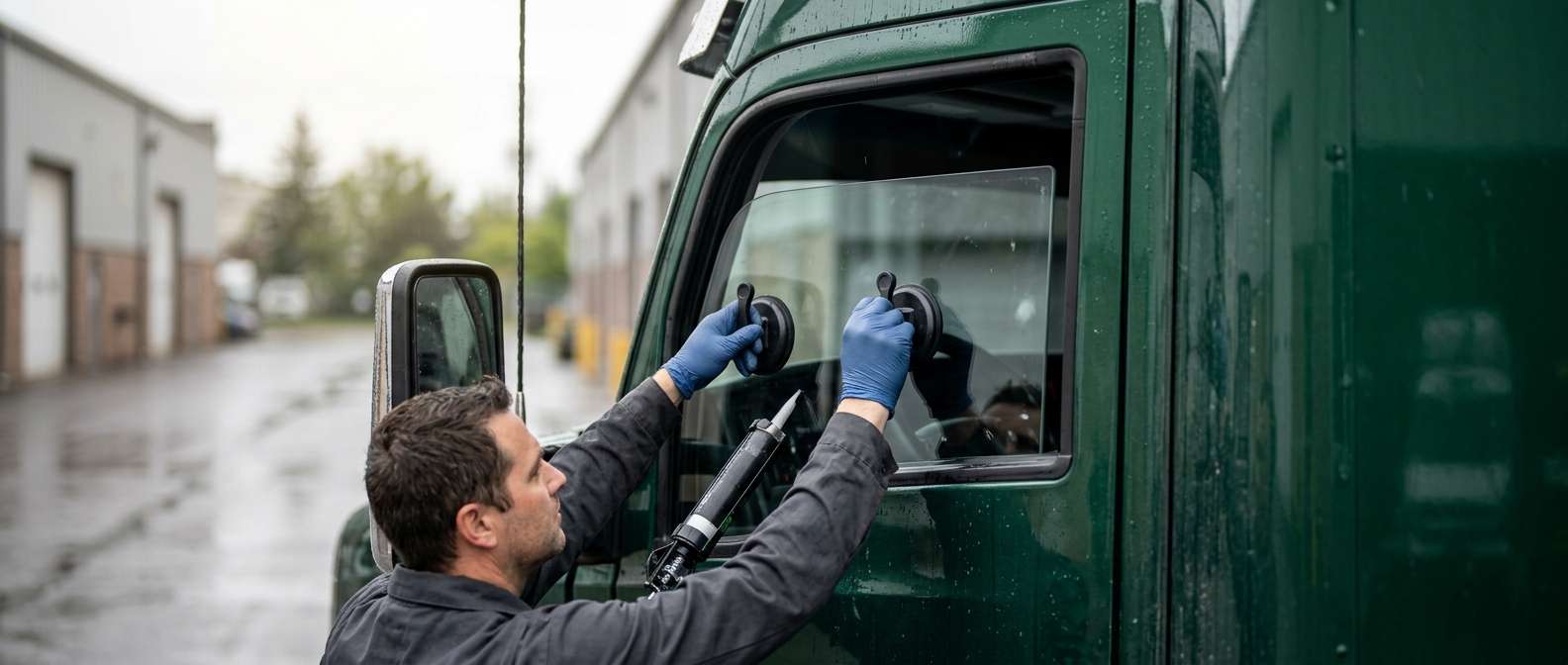
Cab Door Architecture and Part Numbers for the W990
When you shatter a side window on your long-hood Kenworth, you do not have to contend with the split glass or separate front vent wings found on traditional W900L setups. PACCAR engineered this truck around their 2.1-meter cab stamped door frame, utilizing a single, uninterrupted roll-up tempered glass panel. Because the cab shell is shared directly with the aerodynamic T680 and vocational T880 models, the glass geometry is identical across these platforms.
Every replacement panel I handle uses standard green-tint solar-controlled tempered glass without factory privacy treatments. To identify the exact glass piece needed for your door assembly, refer to these industry and dealer reference numbers:
| Side | NAGS Number | PACCAR Dealer Reference |
|---|---|---|
| Driver Side (LH) | DD12191 / DD12191GTN | R44-1110 |
| Passenger Side (RH) | DD12190 / DD12190GTN | R44-1110R |
The glass does not house embedded sensors, defroster lines, or exterior mirror bolts. Because the truck's massive side mirrors mount directly to the cab cowl and door frame structure, your glass panel remains clean, held at the base by mounting brackets that secure straight to the electric window regulator carriage.
Commercial Wear, Regulator Cables, and Binding Tracks
Breakage is not the only reason this side glass requires work. Long-haul highway vibration and dirt intrusion cause specific problems inside the 2.1-meter PACCAR door shell. The full-length felt run channels frequently collect grime and fine road dust, pinching the glass as it travels. When the glass binds or chatters, drivers often suspect a dying electric motor, but the culprit is often a misaligned track or a failing window switch bezel on the interior door panel.
If the glass stops moving entirely or drops into the bottom of the door cavity, the cable-driven regulator has likely snapped its spool or frayed within the internal guides. When a cab window shatters on your rig at a depot or yard, I usually get on-site about sixty minutes after you confirm the call so your haul is not held up. Getting deep into the steel door shell means pulling the molded interior trim panel, the speaker, the inner pull handle assembly, and the heavy plastic vapor barrier to clear every loose shard before sliding the new tempered panel onto the carriage.
Post-Replacement Driver Inspection Checklist
After your new side window panel is seated and secured, complete these specific checks inside and outside the cab before returning to the highway:
- Verify that the glass slides smoothly through the perimeter weatherstrip felt channels without binding, chattering, or slowing near the top frame.
- Inspect the bottom glass brackets to ensure the panel sits level and makes uniform contact along the top cab seal when closed.
- Operate the window switch on the door panel bezel to confirm smooth electric motor response in both directions.
- Check that the interior door pull, speaker surround, and lower perimeter trim pins are firmly seated without rattling.
- Ensure the door shell drain holes along the bottom edge remain completely clear of glass granules so rainwater drains freely away from the regulator motor.


