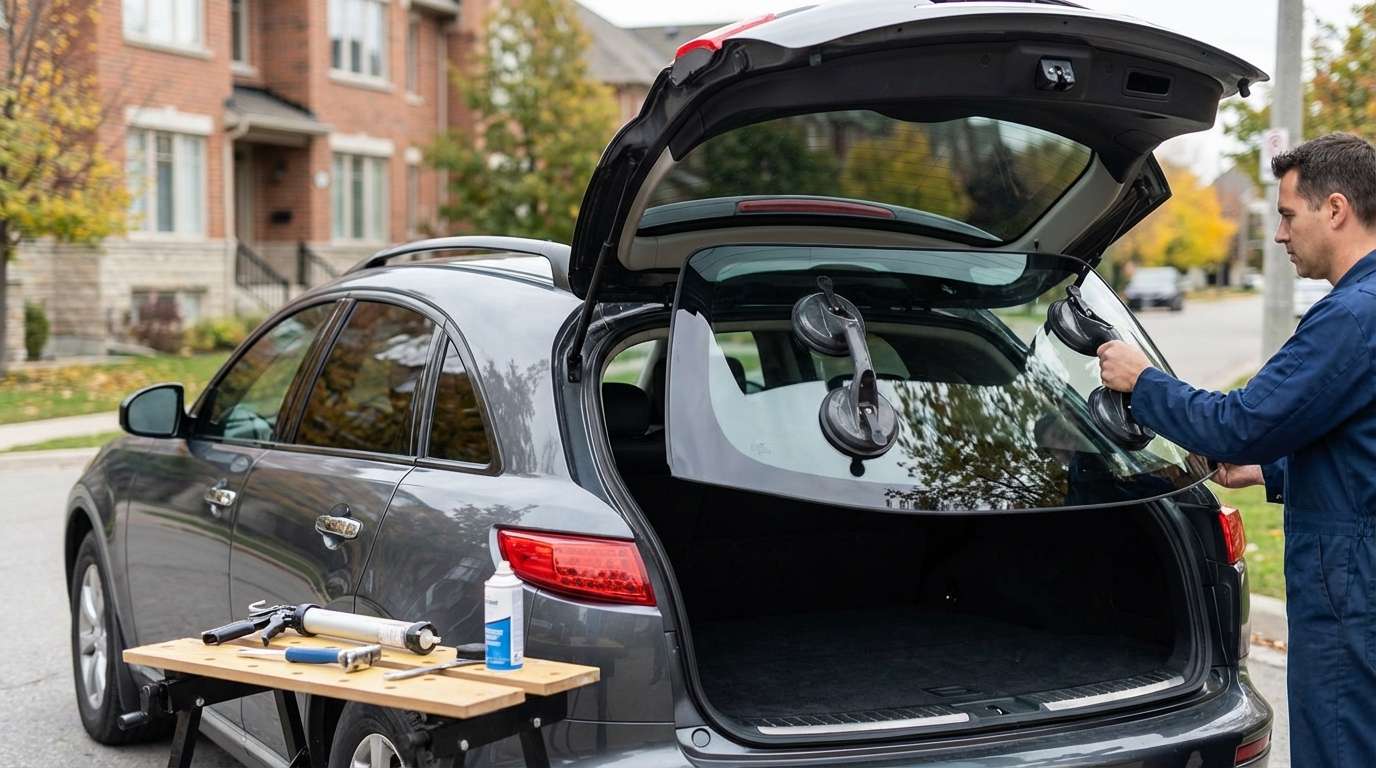
Direct-Glazed Rear Glass Features on the S50 Tailgate
Replacing the back window on an FX involves dealing with a solid, tempered glass panel bonded directly to the steel liftgate structure. Unlike some traditional SUVs from the same era that feature an independently opening rear hatch window, the glass on this tailgate is completely stationary. It sits recessed directly below the prominent roof spoiler that houses the high-mounted center stop lamp, meaning the glass edge is shielded from above but requires careful clearance around the surrounding factory perimeter molding (OEM part reference 90313).
Every original and replacement panel comes standard with factory dark privacy solar tint, matching the rear quarter windows. Baked directly onto the inner surface of the glass are two distinct electrical grids: the lower and central field operates the heated defroster, while the uppermost lines form an integrated diversity AM/FM radio antenna. Because the radio reception relies on these printed traces, any severe scratching or shattering severs the audio signal alongside the heating elements.
| Glass Characteristic | Infiniti FX35 / FX45 Specification |
|---|---|
| OEM Dealer Reference | 90300-CG025 |
| Glass Type | Tempered direct-glazed with privacy tint |
| Through-Glass Holes | Single pre-drilled wiper spindle aperture |
| Integrated Electronics | Heating defroster grid & diversity radio antenna |
| External Attachments | Wiper shaft seal grommet and spindle sleeve |
Wiper Assembly Passthrough and Interior Trim Removal
A key mechanical detail of this rear window is the factory hole cut into the bottom center of the glass. The rear wiper motor itself is secured to the inner steel frame of the tailgate, but its drive spindle must pass entirely through the glass panel to reach the exterior wiper arm. When the glass breaks or needs renewal, this wiper arm, spindle sleeve, and rubber seal grommet must be completely disassembled. If that rubber grommet is torn or seated incorrectly during reassembly, rainwater will bypass the glass edge entirely and leak into the tailgate shell, often mistakenly blamed on the window's urethane seal.
To reach the wiring harness connections for the defroster tabs and antenna terminals, I have to strip down the interior tailgate casing. This involves unclipping the upper window garnish, popping the left and right upper pillar trims, and removing the primary lower tailgate finisher panel. When your rear glass is shattered and needs immediate attention, I can usually be at your driveway roughly an hour after you book the job. Once on site, I also take care to brace the hatch; the factory gas lift struts on these S50 models are notorious for losing pressure over time, making an unlatched hatch prone to sudden falling while interior wiring is being unplugged.
External Rear Equipment Clearances
Owners often ask whether replacing the back glass affects driver assistance features. The rear back glass on this vehicle contains no camera brackets, rain sensors, or acoustic dampening interlayers. On models equipped with the factory rear-view camera, the lens module is mounted down in the exterior liftgate finisher near the license plate handle, entirely separate from the window pane. Replacing the rear panel restores structural integrity and rearward visibility without disturbing any electronic parking aids or exterior tailgate latch hardware.


