Preserving the Glass Seal on the S51 Curved Roofline
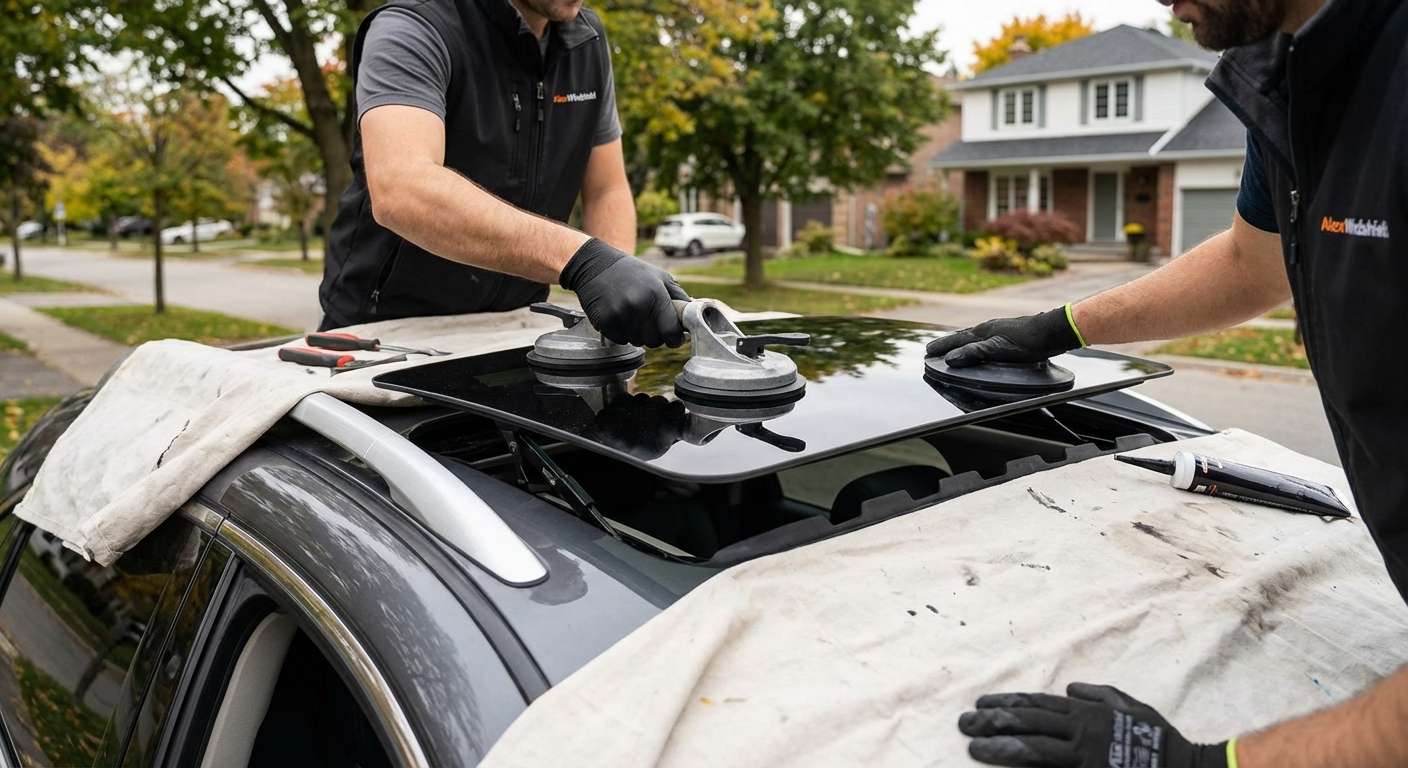
Replacing broken or leaking sunroof glass on these crossovers requires working around an aggressive, rounded roof silhouette that Infiniti modeled on a sprinting cheetah. The factory sunroof panel, cataloged by dealers under part number 91210-1CA4A (superseding the older 91210-1CA0A), is a single-pane, solar-control privacy-tinted tempered glass lid. What makes this piece unique is the heavy encapsulated rubber weatherstrip bonded directly to its perimeter at the factory. When gravel or road debris shatters this dark tinted panel, you cannot simply replace a bead of rubber; the entire glass lid assembly with its integrated edge seal must be exchanged to seat correctly against the stamped steel aperture.
Unlike windshields that house rain sensors, antenna wires, or forward-facing camera brackets, this roof glass is entirely free of electronics. Its complexity lies in its precise flush mounting alongside the manual sliding sunshade and overhead console rocker switches. When an unexpected rock strike shatters your roof on the way to work, I typically arrive at your location about an hour after booking to secure the interior and fit a replacement panel before moisture can enter the vehicle.
Interior Drainage and the Threat to the Body Control Module
A failed sunroof seal or misaligned glass does far more damage inside this cabin than creating an annoying wind hiss at highway speeds. Beneath the glass sits an aluminum cassette with four perimeter drain corners that channel water down vinyl tubes inside the A-pillars and C-pillars. If the weatherstrip degrades or the glass does not clamp down with uniform tension, excess rain overpowers these channels. On this platform, backed-up drainage invariably leaks behind the dashboard kick panels, directly threatening the vehicle's Body Control Module (BCM) and causing complex electrical faults.
The mechanical assembly relies on twin drive cables and side guide rails to execute the tilt-and-slide motion, incorporating a factory anti-pinch auto-reverse feature. When road grit embeds into the factory track grease, the increased drag tricks the motor into sensing an obstruction, kicking the glass open just as it tries to seal. Ensuring the replacement glass aligns seamlessly across the S51 roof opening relieves stress on these cables, keeping the one-touch open and close limits operating smoothly without binding against the headliner framing.
Cross-Year Hardware Across FX Trims and the QX70
Whether dealing with the rear-wheel-drive or all-wheel-drive 3.5-liter V6 FX35, the transitional 3.7-liter FX37 introduced for 2013, or the 5.0-liter V8 FX50, the structural roof opening and glass lid dimensions remain identical. Infiniti maintained this exact roof architecture without alteration when the badge transitioned to the QX70 designation for 2014 through 2017. Because the panel was engineered as a standard factory feature across virtually all North American deliveries rather than a rare option package, the mechanical mounting brackets along the sliding carriage accept the same direct-fit aftermarket glass replacements regardless of engine displacement or model year.


