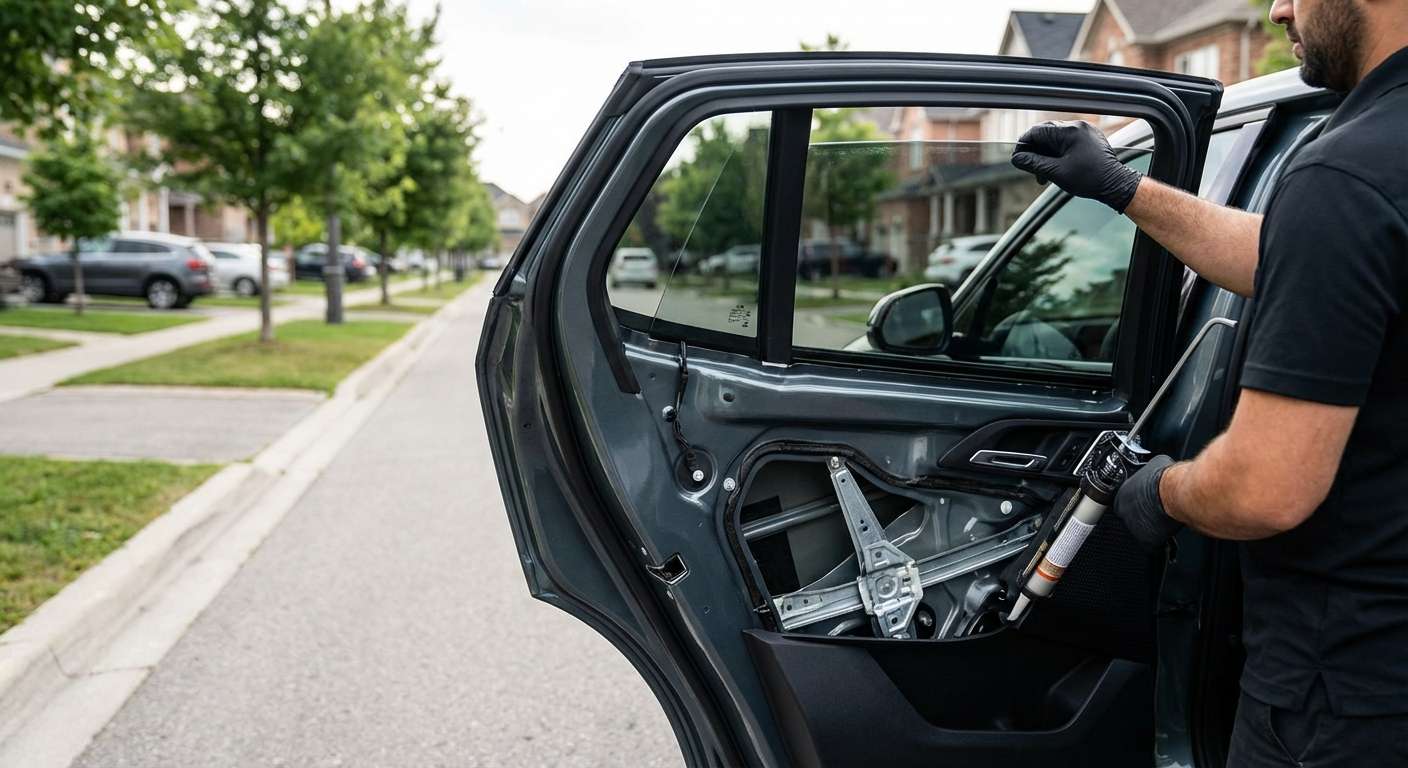
Rear Door Architecture and Division Bar Integration
Replacing the stationary rear door vent window on this crossover requires handling a distinct door design compared to its platform sibling, the U11 X1. While the X1 secures its rear side pane directly to the C-pillar body sheet metal, the U10 incorporates this pane straight into the rear door's framed sash. The glass sits immediately behind the main drop window, locked into place by a vertical division bar that doubles as the rear guide run for the descending window pane.
Because the unit uses a fully framed door construction with perimeter rubber channeling rather than a bonded quarter opening, accessing it involves taking down the interior door card, vapor seal, and unbolting the lower division bar anchor inside the door cavity. The glass assembly itself comes encapsulated with an integrated perimeter rubber seal. I back every replacement with a lifetime guarantee on my labor alongside a one-year warranty on the replacement glass itself, ensuring the encapsulated moulding seats flush against the exterior shadowline or satin aluminum window trim without wind whistle.
Factory Tint Variations and Glazing Identification
The stationary rear glass on the U10 is made of tempered solar-control safety glass. Depending on whether your vehicle came equipped with factory rear sun protection glazing, the tint density differs substantially. Standard production utilizes a clear pane with a mild green solar hue, while optioned models carry dark privacy glass that must match the adjacent rear drop glass and back hatch.
| Glass Position | Glazing Type | BMW Reference Number |
|---|---|---|
| Left (Driver Side) Rear Vent | Standard Solar (Green/Clear) | 51375A2FC95 |
| Right (Passenger Side) Rear Vent | Standard Solar (Green/Clear) | 51375A2FC96 |
| Right (Passenger Side) Rear Vent | Sun Protection (Factory Privacy) | 51375A30366 |
North American configurations omit the complex embedded glass-break alarm loops and radio antenna grids sometimes fitted to European variants, simplifying the electrical perimeter of the pane. However, the exact depth of the encapsulation profile remains critical to maintain a smooth seam where the glass meets the lower waist weatherstrip.
Critical Tolerances Along the Window Guide Channel
The primary mechanical risk during replacement involves the vertical division bar that separates the stationary vent from the power drop glass. If this channel shifts even two millimeters out of parallel during reassembly, the adjacent power window will bind, chatter, or trigger its anti-pinch safety reverse mechanism when rolled up.
- Division Channel Alignment: The guide must remain parallel to the front sash channel so the main roll-down glass slides without drag.
- Waist Moulding Seat: The lower edge of the encapsulated vent frame must tuck neatly beneath the exterior waist seal to prevent water pooling inside the lower door skin.
- Sash Seal Compression: The upper curved corner must fully bottom out inside the framed door sash to prevent high-speed aerodynamic turbulence along the rear pillar.
By loosening the lower internal guide rail fasteners before seating the new vent assembly, the glass slips into its framed channel without tearing the delicate corner vulcanization on the encapsulation seal. Re-tensioning the division bar only after the stationary glass is trued against the upper frame ensures smooth operation for the power window and an airtight seal against the exterior trim.


