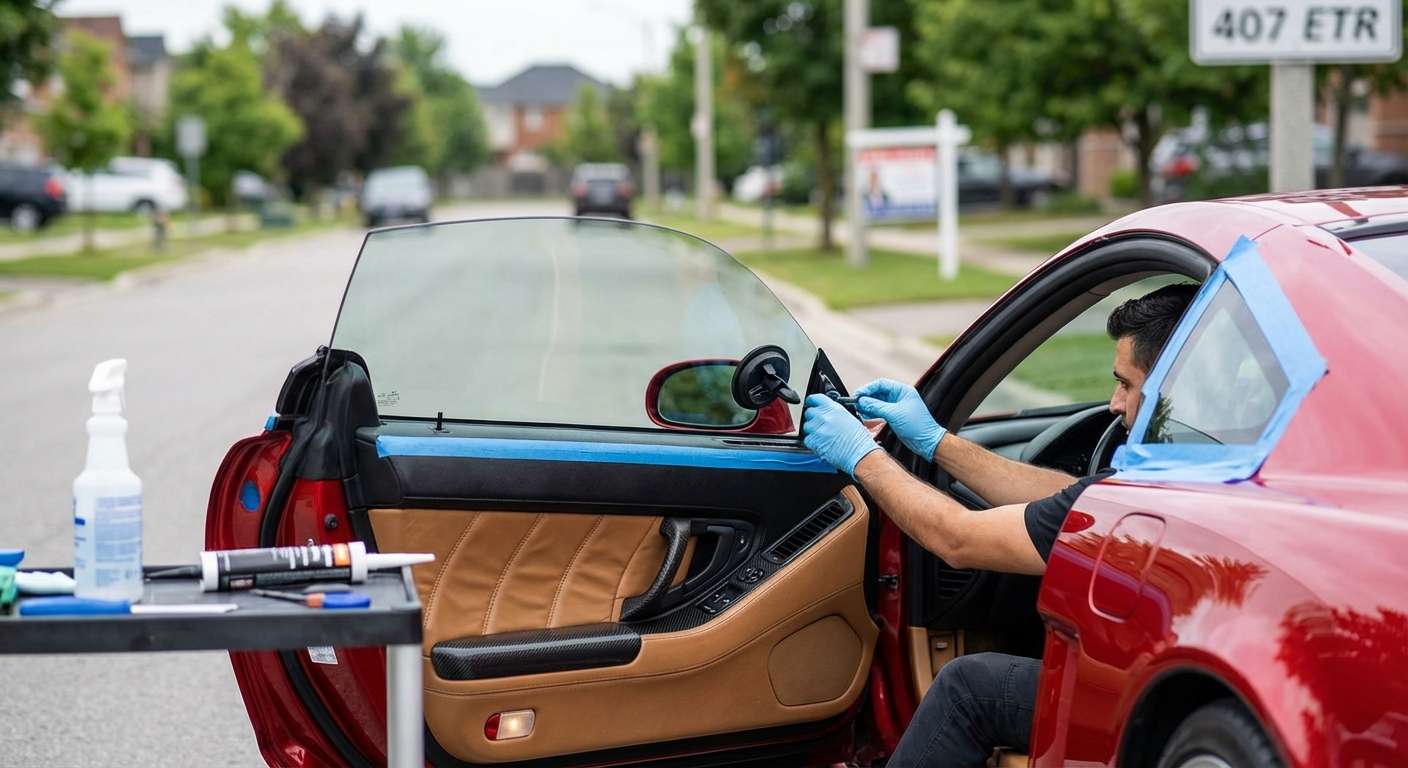
Fixed Quarter Glass Geometry and Part Identification on the NC1
When searching for side vent glass on this mid-engine hybrid, it helps to understand how the glazing layout was designed. The car does not feature a traditional movable or triangular front-door vent pane; the side glass profile relies on a full frameless roll-down window paired with stationary rear quarter glass bonded behind the B-pillar. In factory parts microfiche, these side units are categorized as quarter windshields rather than front vents. The Acura parts registry lists the left-hand driver side under part number 73551-T6N-A01 and the right-hand passenger side under 73501-T6N-A01.
For independent cataloging, these parts correspond to national auto glass standards: NAGS cross-references designate the driver side as FQ27725 and the passenger side as FQ27724. The original factory panes were produced by Pilkington, manufactured with an integrated green solar tint designed to manage cabin heat gain across the compact interior. Because the vehicle uses a specialized mid-engine layout, the positioning of these fixed panels is closely tied to the aerodynamic side air intakes that channel airflow directly toward the engine bay and intercoolers.
Glazing Characteristics and Multi-Material Frame Alignment
Unlike modern windshields or rear hatches, these stationary quarter panels remain completely free of complex electronics. You will not find embedded defroster grids, integrated radio antennas, humidity sensors, or forward-facing camera mounts on these side units. The design focuses entirely on structural flushness and thermal management using factory-matched heat-absorbing green glass.
Because the body shell incorporates an advanced space frame built from aluminum and ultra-high-strength steel, aligning the fixed glass demands exact physical tolerances. The glass nests directly against the exterior rear pillar garnish and borders the interior composite trim moldings. When I replace these quarter panels, I supply high-grade aftermarket glass manufactured by trusted producers like Pilkington, PGW, FYG, or XYG to match the original curvature and optical clarity precisely. If a quarter glass sits even a millimeter too proud of the adjacent pillar garnish, the high-velocity air directed toward the engine side scoops will cause noticeable cabin buffeting at highway speeds.
Post-Replacement Inspection Checklist
Once your new quarter glass is set, take a few minutes to inspect the exterior panels and the surrounding cabin trim before taking the car up to speed.
- Pillar garnish alignment: Verify that the outer surface of the glass sits completely flush with the exterior rear pillar garnish piece and adjacent body panels, without steps or uneven gaps.
- Frameless door glass seal: Roll the frameless door window completely up and verify that its rear edge seats uniformly against the vertical weatherstripping along the leading edge of the new quarter glass.
- Solar tint match: Check the glass in natural daylight to ensure the green heat-absorbing hue blends seamlessly with the front frameless door glass.
- Interior composite trim: Examine the interior cabin trim behind the headrest area to make sure the interior garnishes are properly snapped back into their factory clips without distortion.
- Aerodynamic wind sealing: Listen for air hiss or whistling behind your ear along the B-pillar during your first highway drive, which indicates an air path near the side intake tract.


