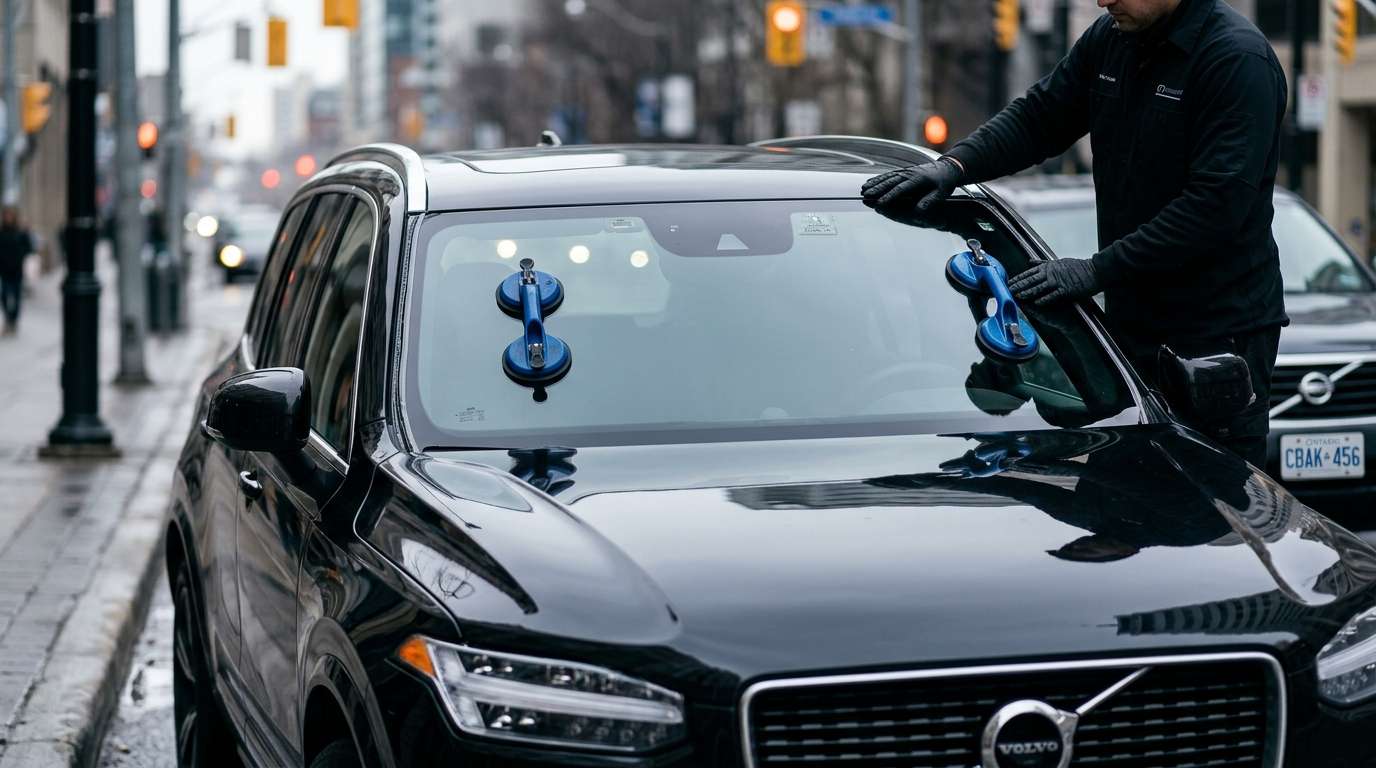
Fixing the Volvo ECM-4003 Calibration Error After a New Windshield
I see this exact issue roll into the shop all the time. A customer gets a new windshield put on their XC90 or V60, drives off, and suddenly their dash lights up with a camera error. If you are pulling the ECM-4003 diagnostic trouble code, your Volvo's Forward Sensing Module (FSM) is basically flying blind. Let's break down what this code actually means, why it happens after a glass swap, and how we get your safety systems back online.Symptoms: What Happens When the Code Triggers
When the ECM-4003 fault registers, your car instantly shuts down its Advanced Driver Assistance Systems (ADAS) to prevent dangerous miscalculations on the road. You will likely notice a few obvious signs:- City Safety unavailable warning message on your dash.
- Lane Keeping Aid (LKA) completely disabled and unresponsive.
- Adaptive Cruise Control refusing to engage.
- A persistent orange or red information triangle on your driver display.
Common Causes for Camera Failure Post-Replacement
Swapping a windshield isn't just about the glass anymore. The camera mounted behind your rearview mirror is incredibly sensitive. Here is what usually goes wrong during a sloppy install:- Skipped Calibration: The glass was replaced, but the technician didn't hook up the diagnostic system to recalibrate the camera geometry. The car still thinks it's looking through the old windshield.
- Bad Bracket Seating: If the camera isn't clipped into the new windshield bracket perfectly flush, it throws off the pitch and yaw angles. Even a millimeter off will trigger the code.
- Distorted Aftermarket Glass: Cheap, low-quality glass often has waves or distortion right over the camera lens area. Your Volvo's sensors will reject the bad image quality immediately.
- Smudges or Debris: A greasy fingerprint left on the camera lens or the inside of the glass during the swap is enough to block the sensor and throw a fault.
Step-by-Step Solutions to Clear the Code
Here is exactly how we tackle the ECM-4003 fault on the shop floor to get things working again:- Step 1: Inspect the Lens and Glass. We pop off the interior plastic cowling and check the camera lens and the glass in front of it. A quick wipe with a lint-free cloth and some isopropyl alcohol often solves minor read errors caused by sloppy handling.
- Step 2: Verify the Physical Mount. We make sure all retaining clips on the bracket are fully engaged. A loose camera vibrates while driving, which ruins the calibration process. We snap it in tight.
- Step 3: Run VIDA Calibration. We plug into the OBD2 port using Volvo's VIDA software. We clear the ECM-4003 code and initiate a dynamic calibration. This requires driving the car on clearly marked Canadian roads at specific speeds until the system relearns its parameters and aligns with the new glass.
- Step 4: Check Glass Quality. If the calibration fails repeatedly, the windshield itself is the problem. The only fix here is to cut it out and install a high-quality OEM-equivalent piece that meets strict optical standards.


