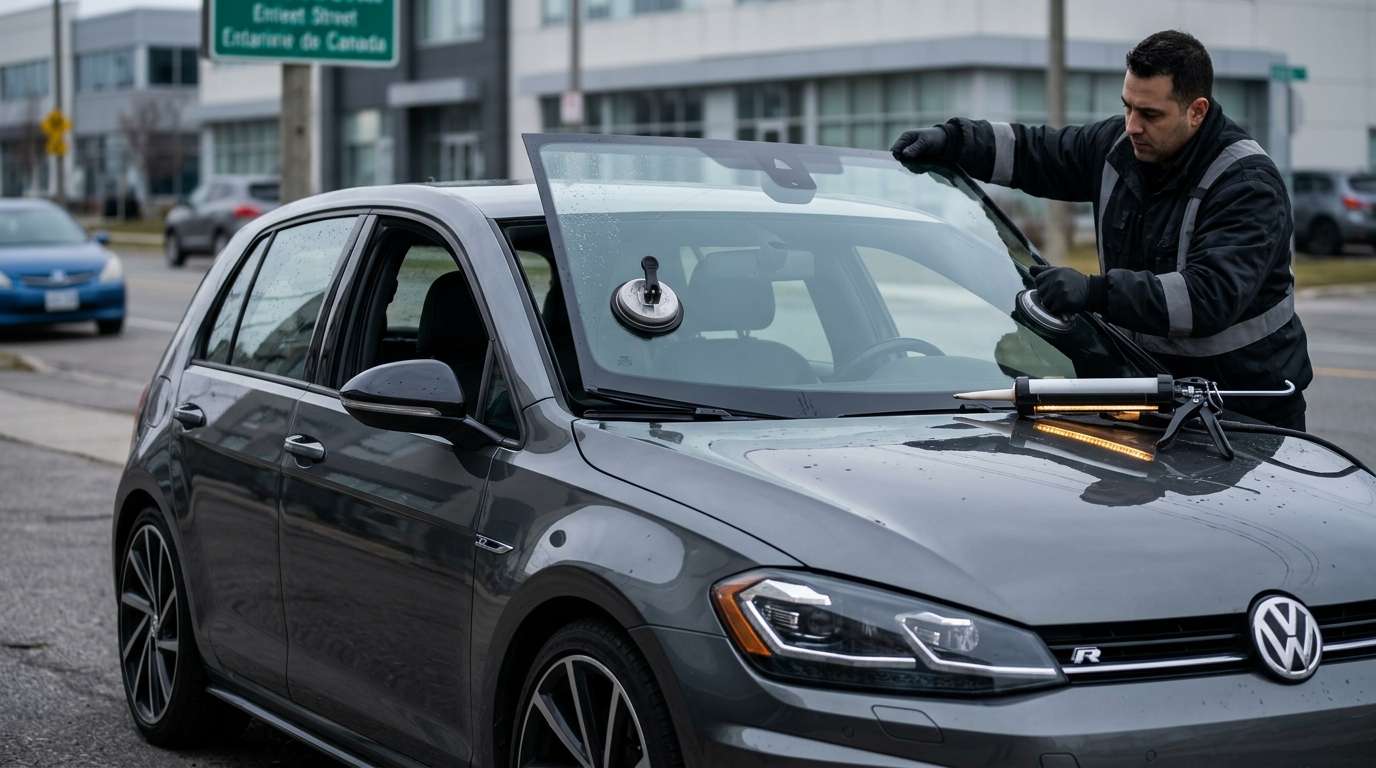
Fixing the VAG 10060 Rain Sensor Error After a Windshield Swap
You just got a fresh windshield installed on your VW, Audi, or Porsche, but now your automatic wipers have a mind of their own. Sound familiar? I see this in the shop all the time. You hook up your scanner and there it is—the VAG 10060 Rain Sensor Adaptation Error staring back at you. Let's talk about why this happens and exactly how to fix it.What Does the 10060 Code Actually Mean?
When the rain/light sensor (RLS) loses its calibration or can't read through the new glass properly, your car gets confused about what is happening outside. You will usually notice a few obvious symptoms:- Erratic wipers: Your blades might scrape aggressively across dry glass or do absolutely nothing during a heavy downpour.
- Headlight issues: Your automatic headlights stay locked on during a sunny afternoon in Toronto.
- Dash warnings: A persistent light or message pops up telling you the auto-wiper and light system is currently disabled.
Why Your Sensor is Acting Up
As a tech, I always look at the physical installation before I start blaming the software. Here is what usually triggers the 10060 code after glass work:1. The Gel Pad is Messed Up
Between the sensor and the windshield sits a clear silicone gel pad. If the installer reused an old pad, trapped air bubbles, or got a fingerprint in there, the sensor's infrared beam scatters. If the beam scatters, it can't "see" the rain on the glass.2. Incorrect Glass Specs
VAG vehicles are incredibly picky. If the replacement windshield has the wrong tint level or lacks the proper infrared cutout at the rearview mirror bracket, the sensor won't be able to calibrate.3. Missed Software Adaptation
Sometimes the hardware is perfect, but the car's computer just needs to re-learn the light refraction angle of the brand new glass. Every piece of glass bends light a little differently.How to Fix the 10060 Adaptation Error
Grab your VCDS or ODIS diagnostic tool. Here is my standard shop procedure to clear this up and get your wipers acting normal again.Step 1: Physical Inspection
- Look closely at the sensor from the outside of the windshield. Do you see milky spots, dirt, or bubbles in the gel? If yes, you need to pop the sensor off, clean the bracket thoroughly with alcohol, and install a brand new gel pad.
- Make sure the sensor is physically snapped tight into the metal retaining clip. A loose sensor throws off the focal point.
Step 2: VCDS Recalibration
Clearing and Adapting
- Plug in your diagnostic tool and open Module 09 (Central Electronics).
- Navigate to Subsystem 2, which is usually your RLS or RLFS module.
- Clear the existing 10060 fault code.
- Run the basic settings or adaptation for the rain/light sensor. The system will ping the glass to measure and save the new refraction angle.


