Mercedes B10/009 Rain Sensor Internal Fault: Repair and Reset Guide
Pulling into the shop with wipers that have a mind of their own? If you scan your Mercedes and pull the B10/009 error code, your rain/light sensor is throwing an internal fault. I've dealt with this specific code hundreds of times in the bay, usually right after a botched windshield replacement. Let's break down exactly what's going on and how to get your automatic wipers working right again.
Recognizing the Symptoms
When the B10/009 fault triggers, your Mercedes essentially goes blind to moisture. You will generally notice a few obvious signs:
- The automatic wiper setting does absolutely nothing during a downpour.
- Wipers swipe continuously on a bone-dry, sunny day.
- Automatic headlights stay on constantly or fail to trigger when driving into tunnels.
Common Causes Behind the Code
The scanner might say "Internal Fault," but the module itself isn't always dead. Here is what I usually find when diagnosing this issue on the floor:
- Bad Silicone Gel Pad: This is the biggest culprit. The sensor relies on a clear gel pad to "see" through the glass. If air bubbles get trapped during a sloppy windshield install, the optical sensor gets confused and throws a code.
- Hardware Failure: Sometimes the electronic board inside the sensor simply burns out from age or heat exposure.
- Loose Wiring: A loose connector at the overhead control panel can interrupt the signal to the SAM module.
Step-by-Step Repair Process
Don't just throw parts at the car. Follow these steps to fix the problem properly.
Step 1: Inspect the Glass and Gel Pad
Look at the sensor from the outside of the windshield. Do you see milky spots, dirt, or air bubbles near the rearview mirror housing? If the gel pad is damaged, pop off the plastic mirror cover from the inside, unplug the harness, and gently unclip the sensor. You can buy a replacement gel pad, clean the old silicone off the glass with rubbing alcohol, and carefully apply the new one.
Step 2: Replace the Sensor Module
If the gel pad is crystal clear and perfectly seated, your sensor module is likely fried. Grab an OEM replacement. Clip the new sensor into the mounting bracket and reconnect the wiring harness. Make sure it sits completely flush against the glass without any gaps.
Step 3: Reset and Recalibrate
You can't just plug the new sensor in and drive away. The car needs to learn the new optical baseline.
Using the Right Diagnostic Tool
You need a Mercedes-compatible scanner like XENTRY/DAS or a high-end aftermarket bidirectional tool. First, clear the stored B10/009 code. Next, navigate to the overhead control panel module and run the rain sensor adaptation process. The windshield must be completely clean and dry when you do this. Once the adaptation finishes, spray some water over the sensor area to test the wipers. They should sweep and park normally.
Get It Done Right the First Time
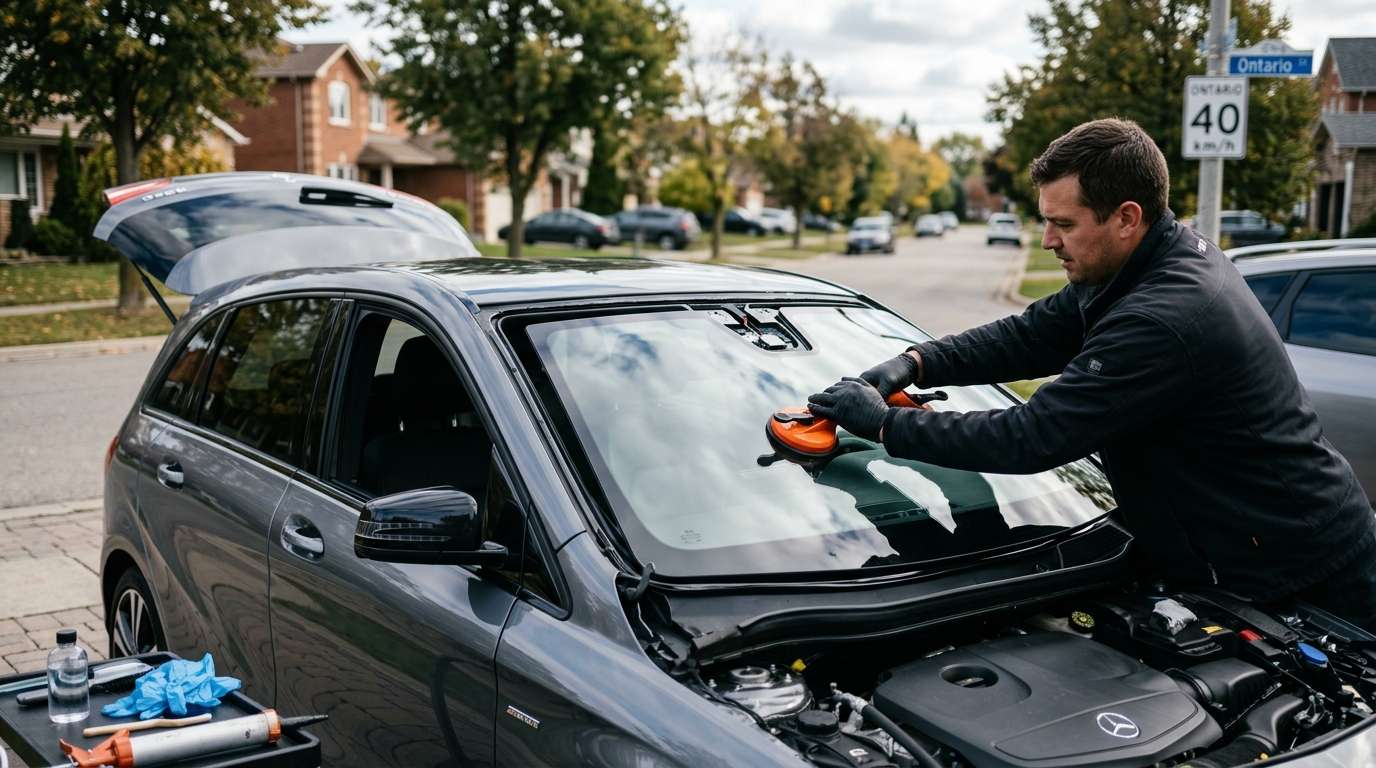
Dealing with Mercedes sensors can be a massive headache, especially if the issue started after getting new glass installed. If you are in Canada and need your windshield replaced properly without the electrical gremlins, reach out to AlexWindshield. We specialize in mobile auto glass services across the GTA, ensuring all your complex sensors and cameras are perfectly mounted and calibrated right in your driveway. Plus, we back every job with a Lifetime Warranty. Give us a call and we'll get you back on the road safely.


