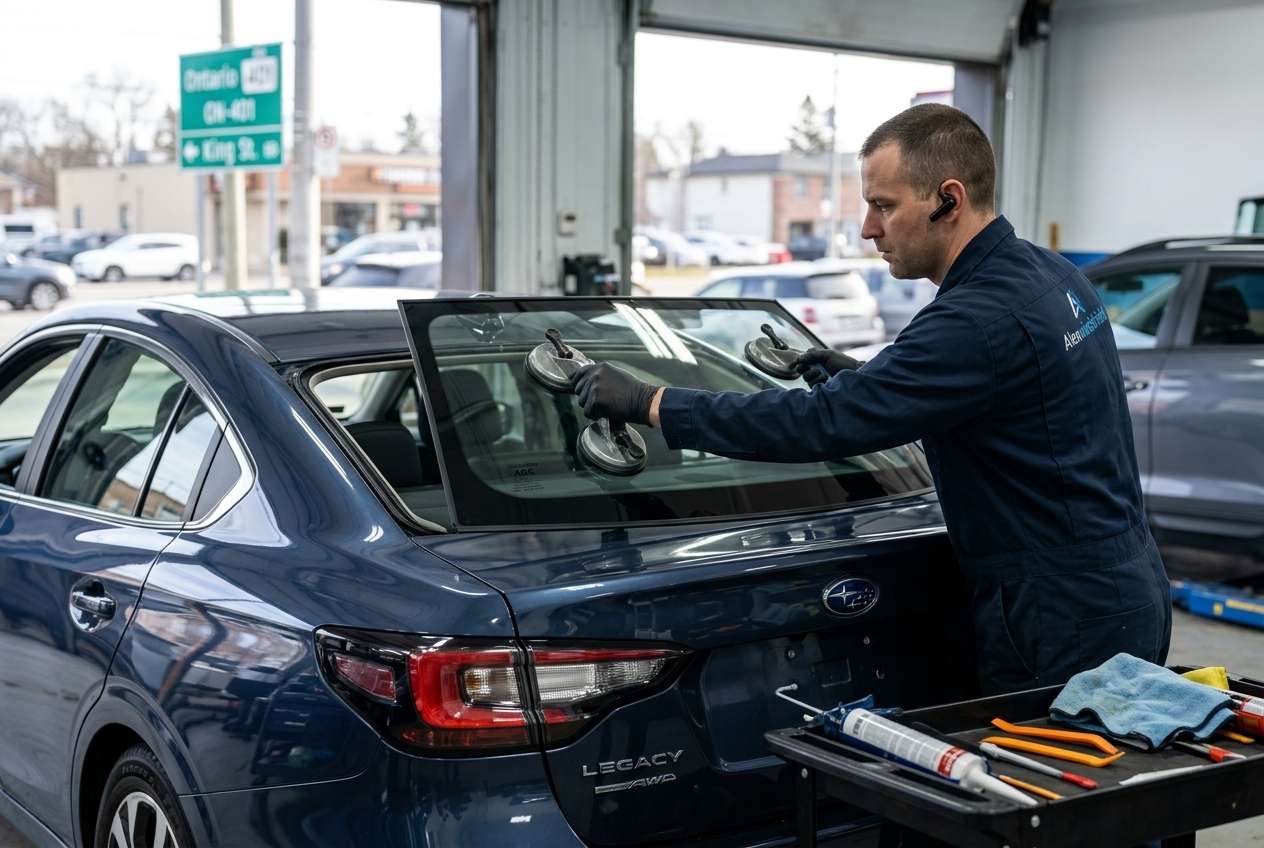
Shared Back Glass Across Base, Touring XT, and Mid-Trims
Subaru kept the rear window configuration remarkably uniform across this sedan's final production run, using a single stationary tempered glass profile whether your car is a standard 2.5-liter Base, a Premium, a Limited, or a turbocharged 2.4-liter Touring XT. While the front windshield on these cars undergoes multiple variations depending on heating elements and acoustic layers, the back glass uses one universal footprint: OEM part number 65109AN00A, matched in the aftermarket catalog under NAGS number FB28277 (often listed as FB28277 GTY). Even with the mid-cabin power tilt-and-slide moonroof equipped on the higher trim levels, the steel roof stamping above the rear window remains identical, maintaining the exact same glass opening down to the final 2025 model year.
Because the car is built strictly as a conventional notchback sedan, the glass stays fixed in place between the welded steel C-pillars. Unlike its crossover sibling, the Outback, there is no rear wiper assembly passing through the bottom edge, nor are there any glass-mounted EyeSight driver assist cameras to contend with at the tail end. When I travel directly to your home or office across Toronto and the surrounding GTA to replace this panel, I focus strictly on managing the perimeter interface and clearing the broken tempered fragments out of the cabin space.
Defroster Grid and Parcel Shelf Clearance Details
The entire rear panel is a green-tinted, solar-absorbing unit manufactured with a full-coverage electric defogger grid. The electrical solder tabs connect on the interior lateral edges, running high-draw current through horizontal ceramic lines baked onto the inside glass surface. Because these exposed lines are sensitive, physical trauma from heavy cargo stacked on the rear deck or abrasive scrapers used during past tint removals will sever the connection permanently, requiring a complete glass replacement rather than an electrical patch.
| Component / Feature | Legacy Sedan Spec | Service Consideration |
|---|---|---|
| Glass Part Coding | FB28277 / 65109AN00A | One interchangeable fitment for 2020 through 2025 |
| Glass Composition | Single-layer tempered safety | Shatters into small pebbles under heavy edge impact or stress |
| Perimeter Finish | Flush reveal moulding | Must be replaced alongside the glass assembly |
| Interior Border | Rear package shelf / parcel deck | Tolerances dictate clearance checks near the third brake light |
Single-Use Perimeter Rubber and Trim Tolerances
The border surrounding this rear window relies on a specific sequence of alignment pins and rubber dampening strips along the upper, side, and lower channels. When the rear window fractures—often spontaneously from thermal shock cycles or torsional stress acting on a microscopic stone chip near the outer edge—these rubber components cannot simply be smoothed down and reused. The factory service design specifies fresh upper and lower rubber dams to prevent metal-on-glass contact against the pinchweld, along with a new outer flush reveal moulding that seals the aerodynamic transition from the roofline and quarter panels to the glass surface.
Inside the cabin, the glass terminates right against the hard interior C-pillar upper garnishes and drops down behind the edge of the rear parcel shelf. Subaru positions the third brake light directly in this lower viewing zone. When setting the new glass into the opening, maintaining the factory elevation height with the correct lower spacer blocks prevents the bottom ceramic frit from rubbing against the package tray trim, eliminating cabin squeaks and protecting the bottom rows of the heating grid from being abraded over rough pavement.


