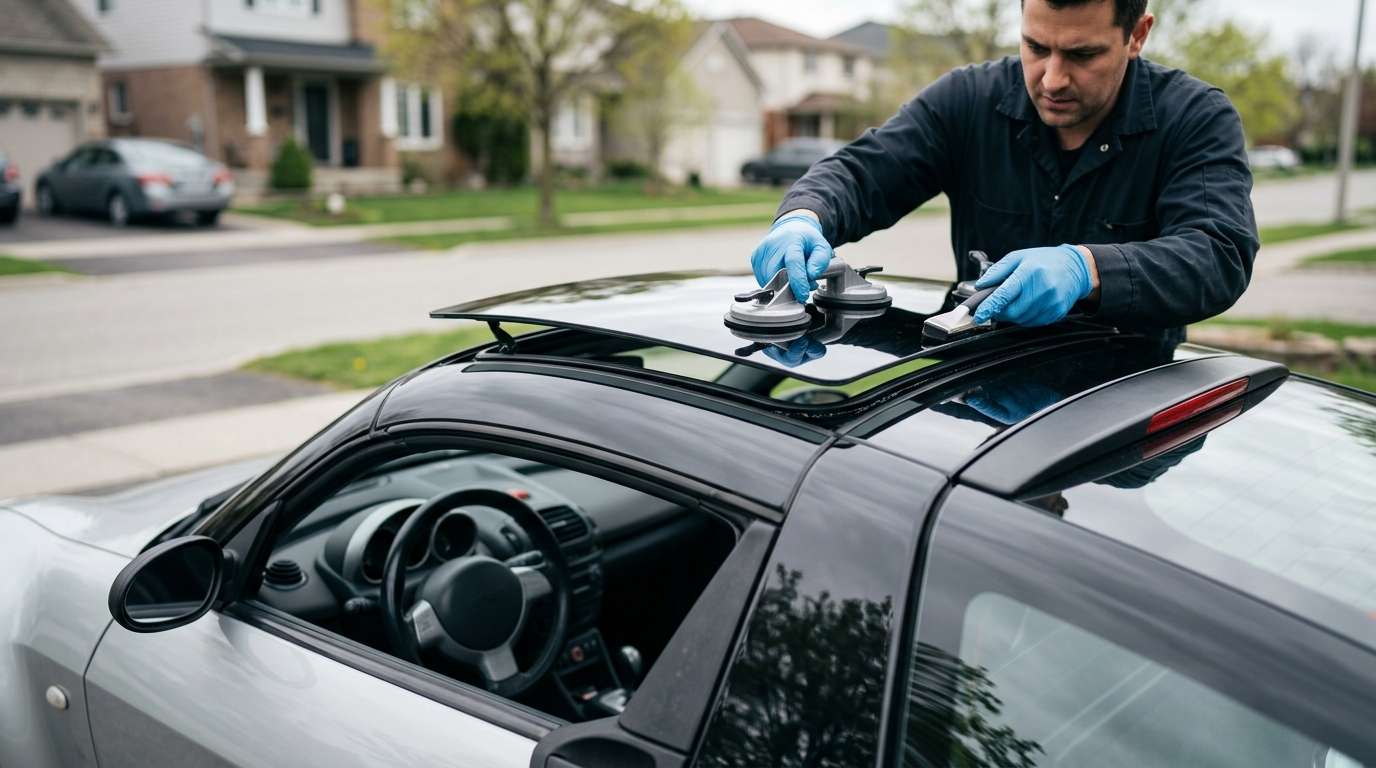
Why Your Roof Panel Is Not Automotive Glass
When you look up at the overhead panel of your car expecting to replace cracked or shattered automotive glass, you will quickly discover that Smart built this platform without a traditional glass sunroof. Whether you drive the notchback Roadster or the bubble-backed Roadster Coupe, Mercedes-Benz engineered the overhead opening around two distinct modular layouts: an electric folding fabric soft top or a removable two-piece solid roof shell. Neither variant relies on glazed safety glass overhead, meaning typical auto glass catalogs carry no standard panoramic or sunroof panels for this setup.
The hard panels many drivers mistake for tinted laminated or tempered glass are actually lightweight composite polycarbonate shells. These rigid units clamp into place above your head, interlocking between the top of the windshield frame and the structural B-pillar of the steel Tridion safety cell. If an aftermarket fabricator or past owner fitted a universal pop-up vent directly into those composite shells, it is a bespoke modification rather than a factory glass assembly, so replacement requires custom fabrication rather than standard glass ordering.
Identifying Your Roof Configuration and Side Rail System
Determining how your overhead assembly is constructed comes down to inspecting the latching mechanisms and the longitudinal frame members spanning the cabin.
| Roof Configuration | Material Construction | Key Structural Markers |
|---|---|---|
| Electric Folding Soft Top | Multi-layer weatherproof fabric | Permanent motorized drive cables inside removable longitudinal side roof rails; folds rearward above the engine bay. |
| Two-Piece Modular Hardtop | Molded composite polycarbonate | Split central seam, front header rail locking catches, and designated B-pillar receivers; panels stow in luggage compartment. |
| Custom Pop-Up Conversion | Aftermarket tempered glass insert | Manual toggle latch cut directly into composite hardtop halves; lacks factory wiring harnesses or drainage channels. |
To pinpoint your exact setup, look closely at the side roof rails that bridge the windshield header to the Tridion pillar. On cars running the motorized fabric roof, these structural aluminum rails contain integrated runners and guide channels. The rails unlatch manually and stow inside designated foam holders in the front luggage compartment when you want full open-air driving. If your vehicle was delivered with or converted to the two-piece hardtop, the interior lacks those motorized cable tracks; instead, you will find specific mechanical locking receivers mounted at the header and the center of the rear bulkhead.
Whenever I take an inquiry for leak diagnostics or glass work on this model, I typically pull up to your location roughly an hour after we confirm the booking. Because the fixed rear quarter glass panels on the Coupe and the heated rear tailgate window sit in close proximity to the roof structure, owners frequently confuse leaks from surrounding trim rubber with failed overhead seals.
Managing Water Ingress Around the Roof Perimeter
The W452 chassis is infamous for cabin leaks that drip down the A-pillars, soak the floor carpets, and ultimately threaten the sensitive SAM unit tucked beneath the dashboard. Misaligned roof panels and aged perimeter weatherstripping are almost always the culprits. If you are fitting replacement hardtop halves or resolving perimeter gaps around the upper windshield boundary, the alignment of the seals dictates whether the cabin stays dry.
- Confirm that the front edge of the composite panel sits completely flush with the top windshield trim rail to prevent highway wind from lifting the leading edge.
- Inspect the foam rubber seals along the removable longitudinal side rails for cracking, compression set, or tears where they meet the door glass glass drop channel.
- Verify that the door mirror triangles seat tightly against the forward edge of the A-pillar weatherstrip without pinching the side window glass on closure.
- Ensure the central split-line seal between the two hardtop halves is seated evenly without bulging upward or leaving a gap above the interior dome light.
- Check that the rear drainage paths near the Tridion B-pillar receivers are free of road debris so water drains outward past the engine bay rather than inward behind the seats.


