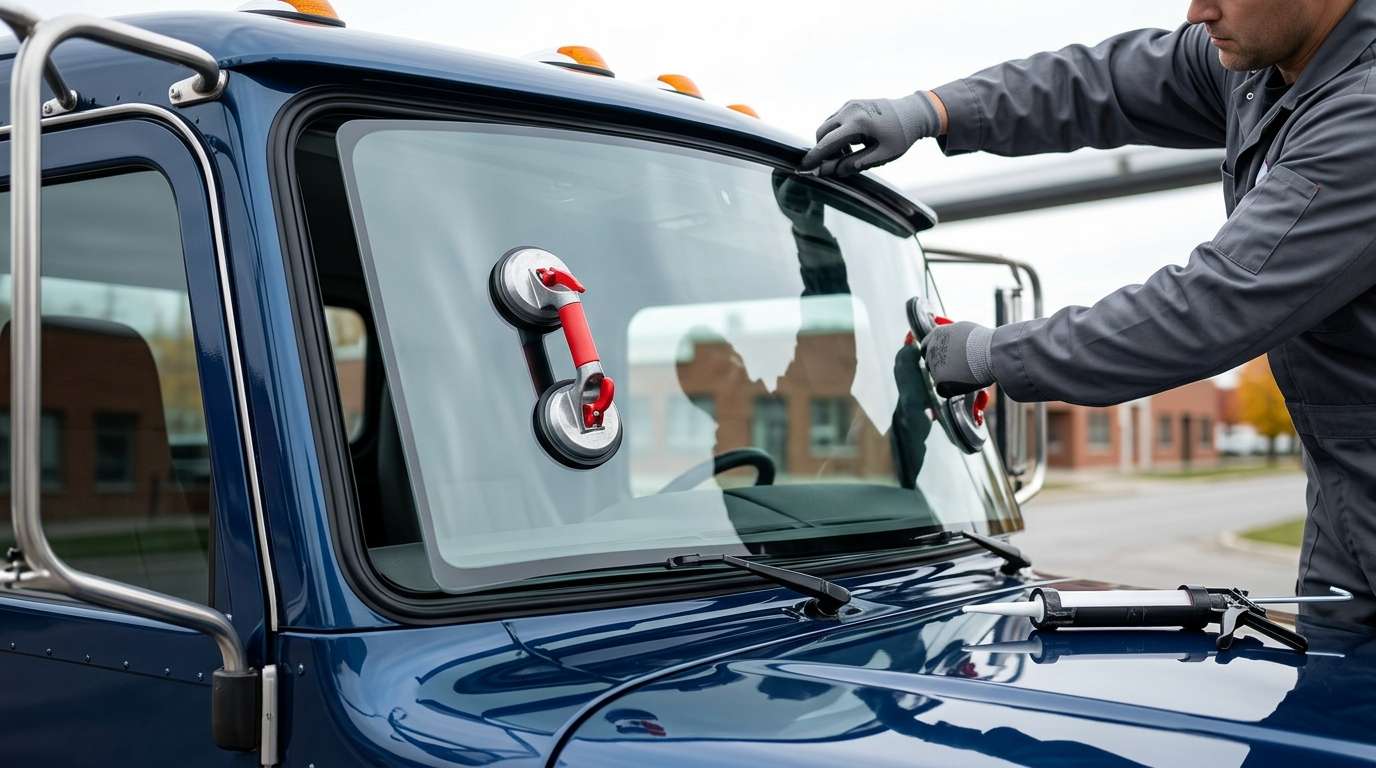
Replacing the Split Windshield on a Peterbilt 337
A cracked windshield on a Peterbilt 337 does not force you to replace the entire front glass assembly. Peterbilt built this cab with a classic two-piece split windshield divided right down the middle by a vertical cab divider bar. Because the driver and passenger sides sit in their own individual channels within the heavy-duty extruded perimeter gasket, I can replace just the damaged half while leaving the intact factory panel undisturbed.
The glass itself is completely straightforward: factory-clear, UV-treated laminated safety glass with perimeter encapsulation. You will not find rain sensors, forward-facing ADAS camera brackets, acoustic interlayers, heating grids for the bottom-pivot wiper arms, or embedded radio antennas anywhere in these panels. The flat, nearly vertical cab profile catches gravel head-on at highway speeds, which makes stone chips, pitting, and straight stress cracks across the field of vision an everyday reality for these medium-duty rigs.
Peterbilt 337 Glass Part Numbers and Mounting Hardware
Whether your truck is set up as a straight delivery truck, a utility bucket, or a roll-off, the glass dimensions on the 337 remain unchanged across its entire production run. The cab shares these exact panels with sibling vocational models like the 330, 335, 348, and the long-hood 389.
| Glass Position | NAGS Part Number | Peterbilt OEM Number |
|---|---|---|
| Driver Side (LH) | DW1037 (DW01037) | 20-14898L / R44-6022 |
| Passenger Side (RH) | DW1036 (DW01036) | 20-14898R / R44-6022R |
Around the glass perimeter, the panels are bordered at the base by the external metal cowl and wiper linkage assembly, flanked by the cab A-pillars, and capped beneath the cab brow and upper clearance marker light housing. Many 337 cabs also feature an exterior three-piece stainless steel trim kit mounted over the rubber seal. I travel directly to your truck yard, terminal, or jobsite across Toronto and the GTA to handle the glass replacement on-site so your rig avoids unnecessary downtime.
The Critical Sealing Difference: Butyl Tape vs Urethane
The Peterbilt 337 relies on a traditional rubber gasket rope-in mounting system rather than modern direct-bonded automotive urethane. Factory service standards specify bedding this heavy rubber gasket with a 1/4-inch foam-core butyl sealant tape (Peterbilt part number 28-00195). Skipping this sealant or installing the rubber dry is the primary reason fleet drivers deal with loud cabin squeaks, high-speed wind buffeting, and water dripping down the inner firewall onto the fuse blocks.
A frequent problem I see on working trucks is a previous installer pumping liquid polyurethane glue into the rubber channel to stop a leak. Liquid urethane chemically bonds and fuses to the rubber encapsulation and the metal pinchweld. When the glass takes another rock hit down the road, that fused urethane makes it nearly impossible to extract the broken panel without tearing the costly extruded rubber gasket to shreds or scratching the cab frame.
Can I replace only the driver-side glass if the passenger side is intact?
Yes. The central vertical cab divider bar isolates each side. The driver panel (DW1037) can be pulled from its dedicated gasket channel and replaced without disturbing the passenger panel (DW1036) or its weather seal.
Why is water leaking inside my cab after a recent glass install?
Water leaks on the 337 almost always trace back to dry-set installations where the factory-specified 1/4-inch foam-core butyl tape was omitted. The split gasket requires that continuous butyl barrier between the pinchweld and the rubber channel to keep wind and highway rain from pushing past the cab brow.


