Coupe Side Quarters Versus the Spyder Rear Window Setup
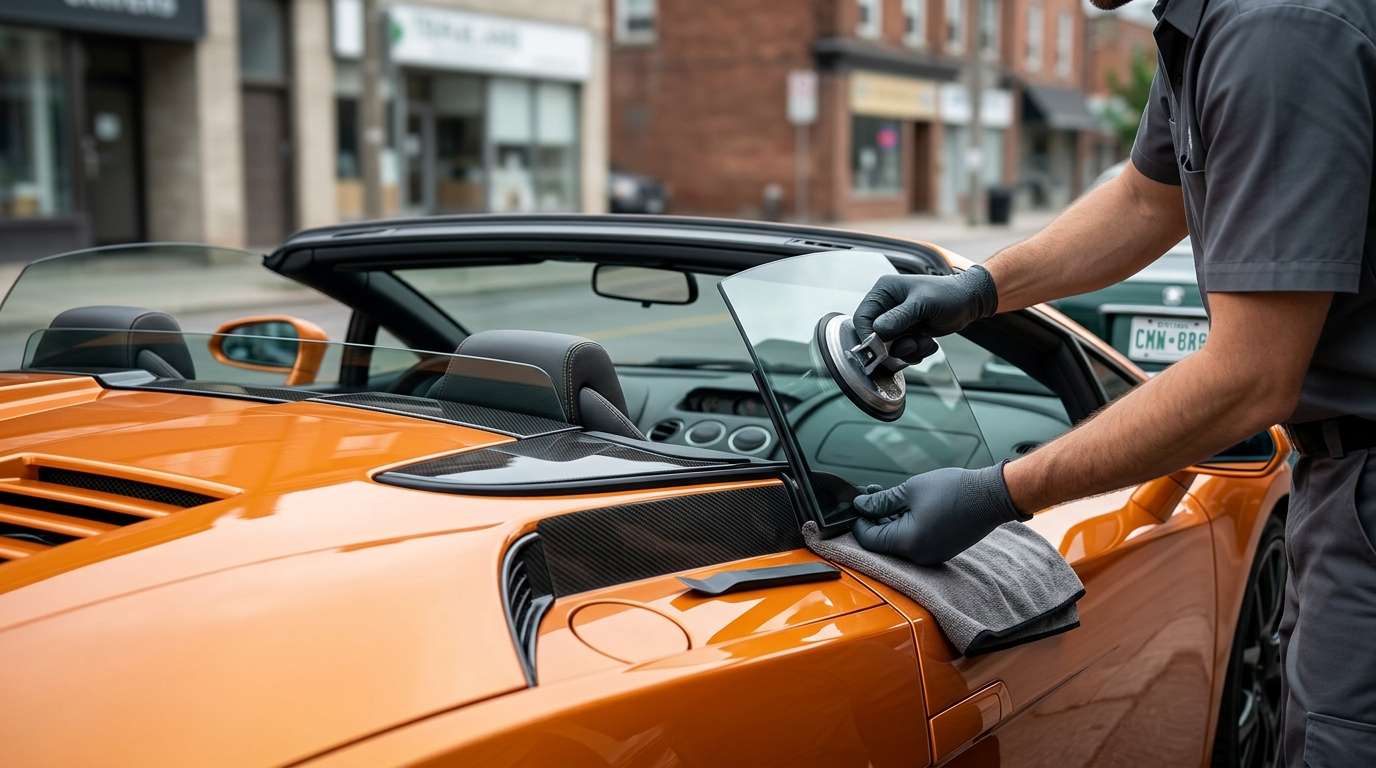
Replacing the secondary glass on this platform depends entirely on whether your car has a fixed roof or a folding soft top. The Gallardo Coupe carries fixed rear quarter panels tucked between the B-pillar exterior trim, the C-pillar roof section, and the upper edge of the rear engine bay air scoops. Up front, the Coupe also relies on a small stationary triangular front vent glass sitting just forward of the frameless door window, cataloged under factory part number 400845116A for the right side. The open-top Spyder eliminates these fixed rear side panes entirely, replacing that zone with structural bodywork and buttresses while introducing a dedicated vertical glass pane directly behind the seats.
This center rear window on the Spyder serves a dual purpose as an electric wind deflector and a conventional cabin backlight. The assembly, cataloged under dealer reference 407845051C, incorporates embedded electric defroster heating lines directly in the glass and runs on a vertical regulator mechanism. When owners encounter issues back there, it is frequently linked to cable binding within the carrier track or motor strain that prevents the window from dropping out of the way when the soft-top header unlatches. On Coupe models, the issue is purely physical damage to the glass or long-term UV weathering of the perimeter edge seal that frames the side aperture.
Glazing Variations Across Standard and Superleggera Models
The standard Gallardo Coupe uses tempered safety glass with a solid black ceramic frit perimeter that shields the bonding area from sun damage. When sourcing replacements for these side panes, I supply aftermarket glass from manufacturers such as Pilkington, FYG, PGW, or XYG, ensuring the curvature and perimeter frit band align precisely with the exterior aluminum spaceframe. The side glass on this car is refreshingly straightforward in terms of tech: it houses no embedded radio antennas, GPS sensors, or driver-assist brackets, meaning physical fitment against the surrounding panels is the only technical hurdle.
Factory lightweight editions deviate noticeably from the standard tempered panels. The stripped-down LP 570-4 Superleggera, along with select performance-focused homologation specials, substituted conventional side quarter glass with molded polycarbonate Makrolon units to shave curb weight. If you have an LP 570-4, standard tempered replacement panes will alter the factory weight profile, whereas standard LP 560-4 and original 5.0-litre cars require standard direct-glazed automotive glass to maintain cabin acoustic insulation and resist scratching.
Interior Access and Surrounding Spaceframe Precautions
The quarter window on the Coupe sits deep within the rear flanks, meaning access is governed by the cabin's rear interior quarter trim and the rear bulkhead upholstery. The inner trim pieces must be withdrawn carefully without distorting the leather or Alcantara wraps, which fit tight against the inner edge of the window frame. Because the entire body structure is aluminum, maintaining the exact perimeter gap between the glass edge, the outer C-pillar finish, and the rear deck air scoop intake trim requires careful attention to the factory spacing so wind noise does not intrude into the cabin at speed.


