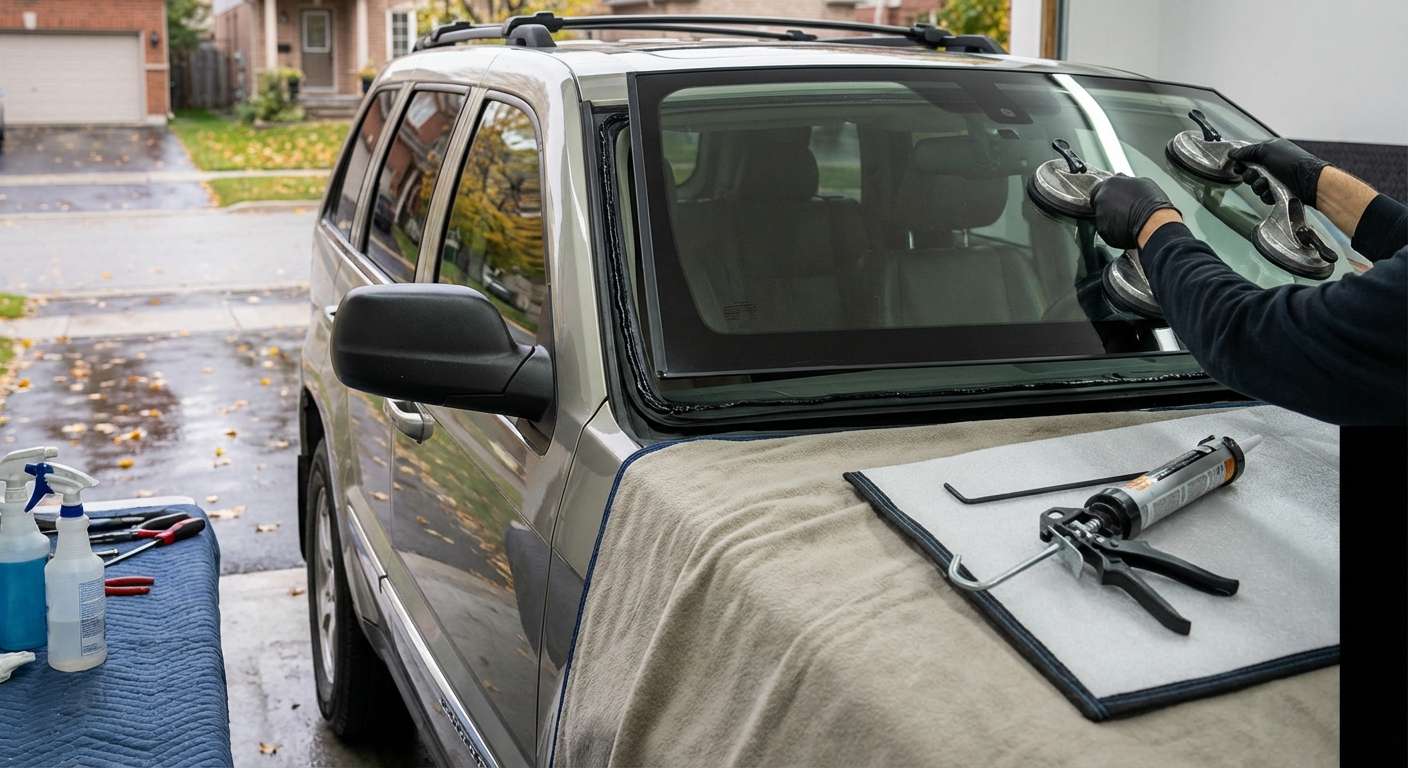
Diagnosing Rain Sensor Glitches and WK Windshield Options
When automatic wipers stop behaving after a windshield swap on a Limited or Overland trim, the optical sensor beneath the rearview mirror is almost always starving for optical clarity. The factory setup relies on an electro-optical sensor pressed against a dedicated mounting bracket using a specialized silicone disc, often serviced with a GGS 903 pad or fresh pre-cast gel. If tiny air pockets or surface dust get trapped between the glass and that sensor face, the light refraction changes completely, causing the wipers to swipe across dry glass or ignore downpours entirely. Ordering the correct replacement glass avoids these bracket-bonding headaches, as glass houses stamp these units under two distinct identifiers: DW01591 for models with basic intermittent wipers, and DW01592, which comes out of the crate with the factory rain sensor bracket already cured in place.
Matching the original glass profile also comes down to the sunshade treatment along the upper brow. Mopar delivered these trucks with either green-tinted glass carrying a green shade band or a contrasting blue shade band, cataloged under dealer references such as 5170272AB for bare glass and 55396872AC for sensor-ready units. While neither variant utilizes complex tech like forward cameras, embedded de-icers, or HUD projections, getting the bracket-equipped DW01592 glass on sensor-equipped trucks eliminates the risk of trying to re-glue a detached factory bracket by hand, which rarely holds up against summer heat cycles inside the cabin.
Exterior Trim Sealing and the Fight Against Highway Whistle
Worn exterior trim along the roofline and A-pillars is the primary source of wind noise complaints on this vehicle, particularly after the glass has been pulled. The top edge depends on a flexible upper reveal molding, referenced in the trade as WFT D1591 or GGG 1591, which must sit perfectly flush against the roof pinchweld to prevent air from tumbling into the gap at highway speeds. Running down the sides, the rigid plastic A-pillar reveal moldings bite into dedicated retainer clips fastened along the steel unibody. If those plastic side clips are fatigued or snapped during teardown, the moulding lifts at speed, creating a fluttering whistle right near the driver ear level.
Down at the base, the two-piece plastic cowl screen must properly interlock beneath the bottom perimeter of the glass without binding against the dual-arm wiper pivots or straining the supply hoses feeding the hood-mounted spray nozzles. Because these exterior trim pieces and bonding surfaces take significant abuse from weather and road vibration, I stand behind my structural installations with a lifetime guarantee on all workmanship, paired with a full one-year defect warranty covering the replacement aftermarket glass itself. Ensuring every clip and the upper reveal molding seat dead-center is what keeps the cabin as quiet as the factory intended.
Passenger Footwell Puddles: Windshield Leak or Clogged Drains
A wet passenger carpet often leads owners to assume the front windshield seal has failed, but the WK layout has two notorious culprits that mimic a leaking glass perimeter. The HVAC evaporator housing drain nipple passes directly through the firewall into the engine compartment, where it frequently blocks, backing gallons of condensation straight down behind the interior A-pillar garnish panel and onto the floorboard. Similarly, the front sunroof cassette drains run down tubes tucked right behind the windshield pillars, and when debris plugs those outlets, water overflows the headliner and tracks along the edge of the glass.
Verifying a true glass leak means pulling back the upper overhead console trim and inspecting the urethane track directly, rather than assuming water on the floor got past the glass. When a windshield does fail along the top perimeter, it is typically accompanied by a sharp, localized air leak long before water ever trickles down the inside pillars. Keeping the sunroof lines clear and verifying the cabin drain routes prevents unnecessary glass repairs while pinpointing the exact origin of moisture inside the truck.


